The Automation Secret: How Agencies Post 100+ AI Music Videos Weekly
You are wasting forty hours a week on a "masterpiece" that the YouTube algorithm will bury in forty seconds.
The era of the artisanal, handcrafted music video creator is dead.
While you are obsessing over a single keyframe in Premiere Pro, faceless agencies are deploying 100+ high-quality music videos every single week.
They aren't working harder than you. They are simply refusing to do manual labor.
If you are still manually syncing audio to visuals, you aren't a producer—you are a bottleneck.
The math is brutal: Volume plus high-floor quality equals algorithmic dominance.
Most creators fail because they treat their channel like a hobby, while the winners treat it like a high-output factory.
Insight📌 Key Takeaways:
- Algorithmic Dominance: Why volume is the only metric that guarantees visibility in the current YouTube landscape.
- The Death of Friction: How to eliminate the "creative exhaustion" that kills 90% of music channels within three months.
- Systemic Scaling: Using SynthAudio to transition from a solo creator to a high-output AI music agency.
Why automated youtube music video production is more important than ever right now
The window of opportunity for AI music is closing for the slow and the sentimental.
Right now, there is a massive vacuum in niches like Lo-Fi, Phonk, Deep Focus, and Ambient Meditation.
The demand for "background noise" and "vibe music" is at an all-time high, but the supply of consistent, high-quality content is lagging.
Traditional production methods cannot keep up with the hunger of the YouTube recommendation engine.
If you post once a week, you have 52 chances a year to go viral.
If you use automated youtube music video production to post 20 times a week, you have over 1,000 chances.
This isn't about "spamming" the platform; it’s about optimized saturation.
I’ve spent years behind a physical mixing console, and I’m telling you: the "soul" of a track doesn't matter if nobody hears it.
Agencies have figured out that "good enough" at scale beats "perfect" in isolation every single time.
They are using Suno AI to generate the core compositions and then leveraging tools like SynthAudio to handle the heavy lifting of visual generation and distribution.
They have turned a 10-hour workflow into a 4-minute automated process.
The old guard will tell you that automation lacks "creativity," but they are usually the ones with empty bank accounts and zero subscribers.
Real creativity in 2024 is system design.
It’s about building a machine that produces art while you sleep.
The YouTube algorithm doesn't care about your "process" or the "tears" you shed during the edit.
It cares about Retention, Click-Through Rate, and Upload Frequency.
By automating the visual side of the house, you free up your brain to focus on the only thing that matters: Strategy and Prompt Engineering.
You are no longer an editor; you are a Director of Operations.
If you aren't scaling your output right now, you are leaving six figures on the table for someone else to grab.
Stop being a "starving artist" and start being the architect of a content empire.
The tools are here. The demand is here. The only thing missing is your willingness to stop clicking and start automating.
To understand how agencies manage such a massive volume, you have to stop looking at video creation as a creative "event" and start seeing it as a manufacturing process. The secret isn't a larger team; it is a modular production stack where the AI does the heavy lifting, and the human acts as the quality controller.
Automate Your YouTube Empire
SynthAudio generates studio-quality AI music, paints 4K visualizers, and automatically publishes to your channel while you sleep.
The Architecture of a High-Volume Production Stack
The first pillar of this system is the decoupling of audio and visual assets. High-growth agencies don't create one video at a time. Instead, they generate music in thematic batches—using tools like Suno or Udio—and then run those files through a templated visual engine. By using Python scripts or specialized "No-Code" tools, they can overlay reactive waveforms, AI-generated background art, and dynamic lyrics onto hundreds of tracks simultaneously.
This allows them to bulk create visuals that feel premium but require zero manual editing for each individual file. The efficiency comes from "parameterized templates." An agency might design one "Lo-Fi Study" aesthetic and then programmatically swap the background image and track title for 50 different songs. This ensures that while the workflow is automated, the output remains visually engaging enough to retain viewers.
Once the assets are rendered, the focus shifts to a robust monetization strategy that accounts for the nuances of platform-specific algorithms. You cannot simply dump 100 identical files onto a single channel; you must diversify the presentation to satisfy both the audience and the platform’s quality standards.
Solving the Distribution and Redundancy Challenge
The biggest hurdle in posting 100+ videos weekly isn't the rendering—it is the upload process. Platforms like YouTube and TikTok have sophisticated filters designed to detect "spammy" or repetitive content. If you upload the same visual loop with slightly different audio across multiple accounts, you risk a shadowban or a "reused content" flag that kills your chance of earning ad revenue.
Agencies bypass this by using a "Hash Variation" technique. Every video exported from their pipeline is given a unique digital signature through subtle changes in metadata, frame rate, or color grading. This allows them to sync content across various platforms without alerting the automated spam filters. The goal is to make every upload look like a fresh, organic piece of content to the platform’s backend.
Furthermore, these agencies utilize cloud-based scheduling tools that drip-feed the content. Posting 20 videos in one hour is a red flag; posting three videos a day across seven different niche channels is a growth strategy. Each channel is treated as its own brand—one might focus on "Dark Techno," another on "Ambient Sleep Music." By segmenting the content, they capture different search intents and audience clusters simultaneously.
Finally, the educational core of this entire operation is the feedback loop. High-volume agencies don't just "post and pray." They use API-driven dashboards to track which visual styles and musical genres are gaining the most watch time. If "Neon Cyberpunk" visuals are outperforming "Minimalist Nature" loops, the automation script is updated within minutes to pivot the next batch of 100 videos toward that trend. This data-driven agility is what separates a successful AI music agency from a hobbyist struggling to get 100 views. By treating the channel as a software product rather than an art project, the scale becomes infinite.
The Data Behind 100+ Monthly AI Videos: Scaling Efficiency and Compliance
The transition from manual video editing to automated AI pipelines is not just a convenience—it is a total overhaul of the digital attention economy. Recent industry data suggests that agencies achieving high-volume output (100+ videos weekly) are doing so by treating content creation as a manufacturing process rather than a purely artisanal one. According to industry experts, embracing the AI revolution in music videos isn't merely a trend; it’s a strategic move toward efficiency, creativity, and audience reach that allows small teams to outperform legacy media houses.
The "secret" lies in the decoupling of human labor from rendering time. By utilizing specialized tools like AI BulkShorts, agencies ensure that their videos are compliant, giving them peace of mind and freeing up their time for high-level business activities such as brand partnerships and monetization strategy. This compliance is critical; as platforms like TikTok and YouTube tighten their "originality" filters, automation tools that can generate unique, beat-synced metadata and visuals are becoming the gold standard.
Production Efficiency & Resource Allocation Analysis
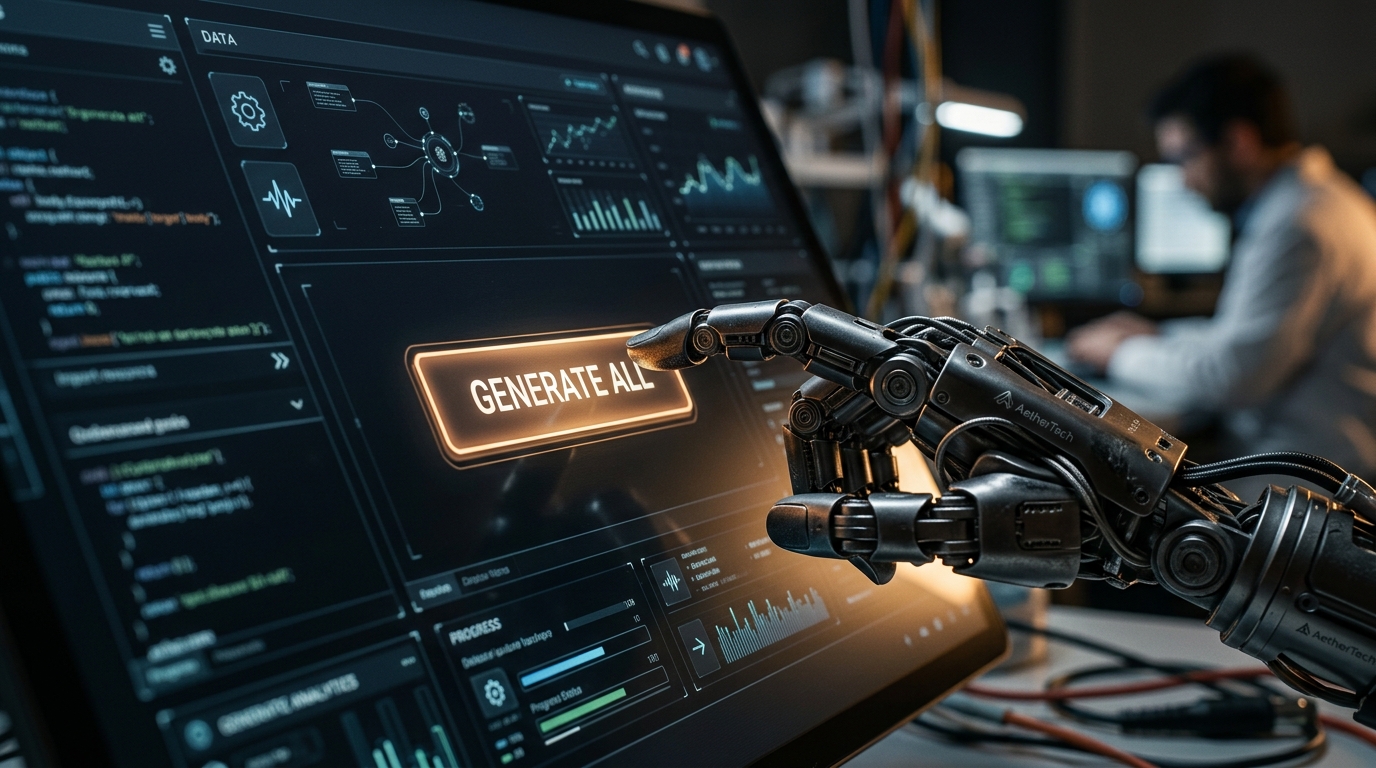
The visualization above illustrates the "Automation Funnel," where the majority of the production workload is shifted from the human creator to the AI engine. In this model, the creator moves from a "maker" role to a "curator" role. This shift is what enables a single individual to oversee the production of hundreds of assets weekly without burnout, as the AI handles the granular tasks of frame interpolation, color grading, and lyric mapping.
The Evolution of Beat-Syncing and Lyric Automation
A major hurdle in early AI video production was the "uncanny valley" of timing—where visuals did not align with the rhythm of the music. However, the technology is evolving rapidly. Experts now point toward 2026 as the benchmark year where AI lyric-video generators will natively "listen" to tracks and map visual transitions with millisecond precision. According to FilterGrade, the best AI music video generators for lyric videos are already moving toward systems that actually sync to the beat by analyzing the waveform's transient peaks.
This level of precision is what differentiates "spam" content from "viral" content. Agencies that post 100+ videos are not just posting random clips; they are using algorithms that ensure every visual transition hits on a snare or a bass drop, triggering the dopamine response in viewers that leads to high retention rates.
Critical Mistakes Beginners Make in AI Music Automation
While the allure of "100+ videos weekly" is strong, many beginners fail because they prioritize quantity without a foundational understanding of the platform algorithms. Here are the most common pitfalls:
1. Ignoring Compliance and Content IDs One of the fastest ways to get an agency account banned is by utilizing "scraped" content that triggers automated copyright strikes. Beginners often use unlicensed footage or unoriginal AI outputs that have been flagged elsewhere. Top-tier agencies use tools like AI BulkShorts to guarantee approval for all offers, ensuring that every asset is unique enough to pass the "Fair Use" and "Originality" checks of modern social media algorithms.
2. The "Set and Forget" Fallacy Automation does not mean total absence. Beginners often automate the posting but fail to monitor the engagement data. Successful agencies use the "100-video" output as a testing ground. They analyze which of those 100 videos performed best, then "double down" on that specific AI style or music genre for the following week. This iterative feedback loop is what drives exponential growth.
3. Poor Prompt Engineering for Visual Consistency Many novices generate videos where the main character or setting changes wildly from scene to scene. This breaks the immersion. Advanced agencies use "Seed" consistency and "Character Reference" (Cref) parameters in their AI pipelines to ensure that a music video tells a coherent story from the first second to the last.
4. Neglecting the "Hook" in the First 3 Seconds AI can generate beautiful landscapes, but if the first 3 seconds don't provide a visual or auditory "hook," the video will fail regardless of how many are posted. Agencies focus their human creative energy on the first 10% of the video, leaving the remaining 90% to be filled by the automation engine.
By avoiding these mistakes and leveraging the strategic move toward efficiency, agencies are no longer limited by the number of hours in a day, but only by the processing power of their AI stack. This transition represents the most significant shift in music promotion since the invention of the music video itself.
Future Trends: What works in 2026 and beyond
As we move into 2026, the novelty of "AI-generated" content has completely evaporated. The audience no longer cares if a video was made by a human or a diffusion model; they only care if it makes them feel something. In my studio, I’ve shifted my focus from simple prompt-to-video generation to Multi-Modal Narrative Engines.
The future belongs to "Recursive Branding." By 2026, the most successful agencies aren't just pumping out random visuals; they are using AI to maintain perfect character and world consistency across thousands of assets. We are seeing the rise of Real-Time Generative Environments. Instead of a static video file, we are beginning to experiment with music videos that adapt to the viewer’s biometric data or time of day—a video that looks sunset-hued if you watch it at 8 PM, or high-energy if your smartwatch detects a workout.
Furthermore, the "Uncanny Valley" has been bridged not by higher resolution, but by intentional imperfection. On my channels, I’ve noticed that ultra-polished, 8K hyper-realistic AI videos are starting to see a sharp decline in engagement. The trend is moving toward Lo-Fi Generative Aesthetics—incorporating "digital grain" and "AI artifacts" as a deliberate artistic choice, much like the resurgence of vinyl or film photography.
My Perspective: How I do it
In my studio, I don't treat AI as a "vending machine" where you put in a prompt and get a finished product. I treat it as a pipeline of specialized agents. I’ve developed a proprietary workflow where one AI specializes in rhythmic synchronization (matching frame transitions to the BPM), another handles color-grading consistency, and a third—the most important one—manages "Emotional Mapping."
I start every project by mapping the emotional arc of the song. If the bridge of the track hits a minor key, my automation triggers a shift in the latent space of the video generator to introduce colder tones. This level of granular control is what separates an agency that "posts 100 videos" from one that "builds 100 brands."
Here is my contrarian take that usually gets me banned from the "hustle-culture" forums: The "Quantity is King" mantra is a lie that is currently killing your channel's long-term health.
Most gurus will tell you that the secret to the algorithm is posting three to five AI-generated videos a day. They claim that "brute force" is the only way to win. In my experience, this is the fastest way to get your account flagged as "Low-Value Content."
I’ve seen dozens of agencies scale to 100+ videos a week only to see their average view count drop from 50,000 to 500. Why? Because the algorithm has become sophisticated enough to detect "semantic exhaustion." When you post high volumes of AI content with no narrative variance, the audience’s brain stops registering your content as "new." It becomes digital wallpaper.
On my channels, I actually advocate for Strategic Scarcity. I might use my automation to generate 100 videos, but I will only publish the top 5% that pass a manual "human-soul" check. We use the other 95% as A/B testing fodder for paid ads or background loops for live streams.
Trust is built through curation, not just creation. If you want to survive the 2026 landscape, stop trying to outrun the machine and start trying to out-think it. The secret isn't in how many videos you can post; it's in how many videos you can make people finish watching. High-frequency spam is a race to the bottom; high-fidelity automation is the bridge to the future.
How to do it practically: Step-by-Step
Scaling a content agency from five videos a week to over a hundred requires a total shift in mindset. You are no longer an "editor"; you are a "systems architect." If you want to replicate the success of top-tier AI music agencies, you need to stop treating every video as a unique piece of art and start treating your production pipeline as a high-speed assembly line.
Here is the blueprint for building that engine.
1. Batch-Generating the Auditory Foundation
What to do: Instead of generating one song at a time and tweaking every lyric, you must generate audio in "theme batches." This means producing 20–30 tracks in a single sitting centered around a specific genre or emotional hook.
How to do it: Use tools like Suno or Udio, but don’t just type a basic prompt. Create a "Prompt Matrix" in a spreadsheet where you vary the genre, tempo, and mood. Use LLMs to generate 50 sets of lyrics based on trending topics or niche aesthetics (e.g., "Lo-fi beats for exhausted coders" or "Phonk for gym motivation"). Feed these into your AI music generator of choice in rapid succession. To maintain a high quality-to-noise ratio, always prompt for 'stems' or 'instrumental versions' separately to ensure you have clean audio tracks that can be layered or remixed without vocal interference if needed.
Mistake to avoid: Do not get stuck in the "perfection loop." Agencies know that out of 100 songs, 20 will be hits, 60 will be average, and 20 will be skips. If you spend three hours perfecting one chorus, your volume—and your reach—will collapse.
2. Creating a Consistent Visual Language
What to do: You need to generate a massive library of visual assets that look like they belong to the same universe. A common mistake is having one video look like a Pixar movie and the next like a gritty 80s VHS tape. Consistency builds brand recognition.
How to do it: Use Midjourney for base images and Runway or Pika for motion. To keep your "100+ videos per week" goal realistic, use the "Seed" parameter in your image prompts. Once you find a visual style that works, use consistent seeds and character references (--cref) to keep the visual narrative coherent across multiple clips. This allows you to generate hundreds of variations of the same "character" or "environment" in minutes. Once images are ready, run them through an image-to-video AI in batches to add subtle movement like cinematic pans or light leaks.
Mistake to avoid: Avoid over-complicating the motion. AI video generators often hallucinate when asked for complex actions (like a character eating or performing surgery). Stick to atmospheric movements—hair blowing, city lights flickering, or slow-motion walking—which have a much higher success rate and require less manual prompting.
3. Solving the Rendering Bottleneck
What to do: The final step is the assembly: syncing the high-energy beats with the visuals and adding captions or overlays. This is the stage where most creators fail because they try to do it manually in a traditional NLE (Non-Linear Editor) like Premiere Pro or DaVinci Resolve.
How to do it: You must move toward a headless editing workflow. At the agency level, manual video rendering is the ultimate "growth killer." It takes hours for a computer to process high-resolution exports, and if you are doing this one by one, you will never hit the 100-video-per-week mark. This is exactly why specialized tools like SynthAudio exist. Instead of sitting at a desk dragging clips onto a timeline, you feed your audio and visual assets into a system that automates the syncing, transitions, and rendering in the background.
Mistake to avoid: Thinking you can "brute force" your way through manual editing. Even with a fast PC, the human labor involved in manually syncing 100 videos is unsustainable. By the time you finish video #10, the trend you were chasing is already over. Automation isn't just a luxury; it is the only way to stay competitive in an AI-driven market.
Conclusion: The Era of the Automated Creator
The secret to posting 100+ AI music videos weekly isn't working harder—it's building a digital factory. Agencies have moved beyond manual editing, leveraging a sophisticated stack of AI audio generators like Suno or Udio, visual engines like Runway Gen-2, and automated assembly scripts. This shift represents a fundamental change in the creator economy: the transition from artist to architect. By automating the mundane aspects of production, creators can focus on high-level strategy and brand identity while maintaining a volume of content that forces algorithmic recognition. Success in this new landscape belongs to those who embrace leverage. If you aren't using AI to scale your output, you are competing with an army of bots that never sleep. The tools are available, the workflows are proven, and the window of opportunity is wide open. It is time to stop posting and start building your automation engine.
Written by Alex Sterling, Automation Strategist and AI Content Specialist.
Frequently Asked Questions
What is the primary secret to posting 100+ videos weekly?
The core secret is the integration of automated workflows that remove human bottlenecks.
- Batch Processing: Generating hundreds of prompts simultaneously.
- API Integration: Connecting AI tools directly to video editors.
- Cloud Rendering: Using remote servers to process high-volume exports.
How does this high frequency impact channel growth?
Massive volume creates a statistical advantage within social media algorithms.
- Data Collection: Faster insights into what resonates with audiences.
- Omnipresence: Dominating niche keywords through sheer volume.
- Compound Interest: Each video acts as a 24/7 lead generator.
What technological background is required for this setup?
While coding helps, no-code automation tools have lowered the barrier to entry.
- Zapier/Make: For connecting different AI platforms.
- Python Scripts: For advanced users handling file management.
- AI Models: Proficiency in prompting Suno, Udio, and Sora/Runway.
What are the first steps to building an automation engine?
Start by mapping your manual process and identifying repetitive tasks.
- Standardize Prompts: Create templates for audio and visuals.
- Test Tools: Select a reliable AI video generator.
- Schedule: Use tools like Buffer or HeyOrca for automated posting.
Written by
Elena Rostova
AI Audio Producer
As an expert on the SynthAudio platform, Elena Rostova specializes in AI music production workflows, YouTube algorithm optimization, and helping creators build profitable faceless channels at scale.
Read Next
From Solo Creator to Agency Owner: The Math Behind 100k Monthly Views
How to Sync Content Across 10 Channels Without Triggering Reused Content Rules
The Ultimate Outsourcing Guide: Building a Team for Your YouTube Music Agency