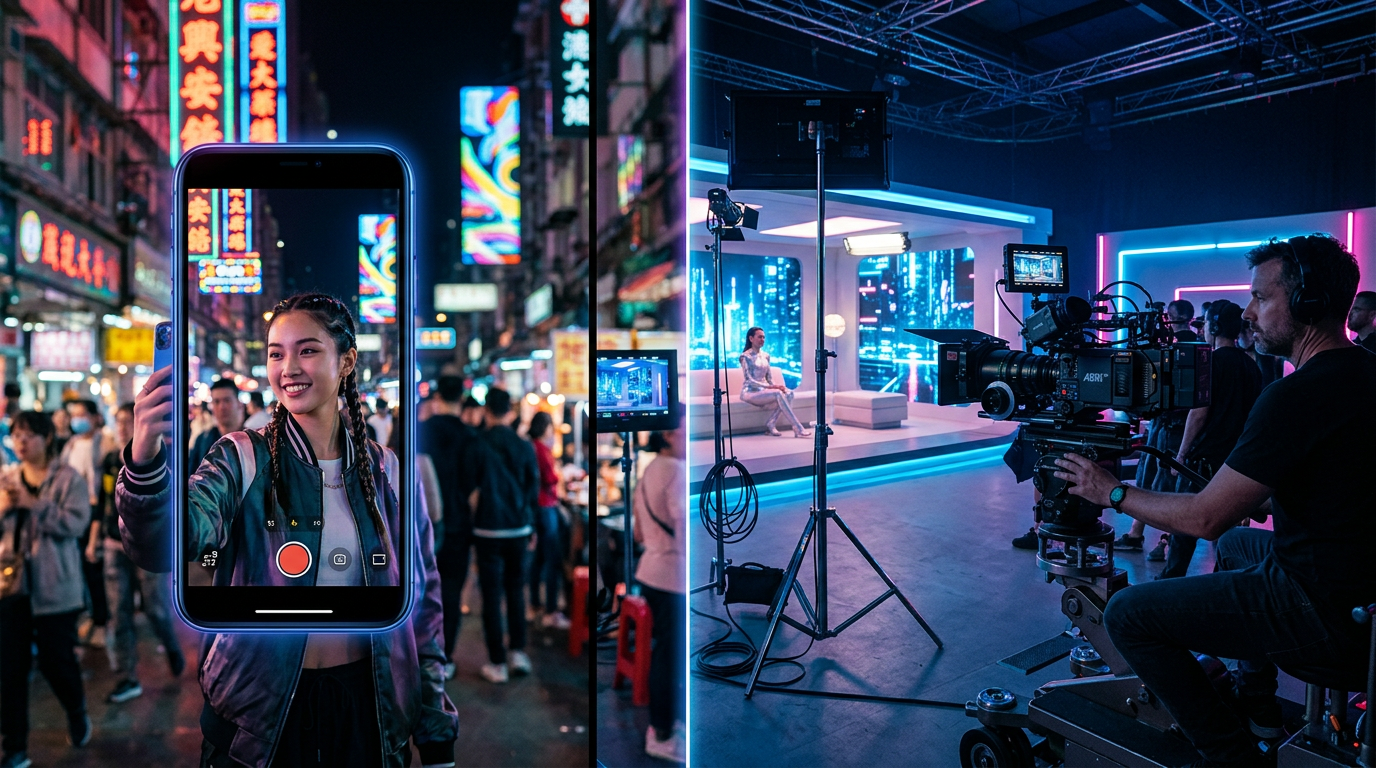
The Ultimate Guide to Faceless YouTube Automation in 2026

Most "creators" are currently working 60-hour weeks for a paycheck that wouldn't cover a lease on a used Honda.
They spend days color-grading footage, agonizing over scripts, and stressing about their hair before getting in front of a camera.
They are trading their lives for 200 views and a handful of pity likes.
By the time they hit "upload," the trend has already shifted, the algorithm has moved on, and their energy is depleted.
This isn't entrepreneurship; it's a high-stress, low-wage creative trap.
In 2026, the gap between the "starving artist" and the automated media mogul has become a canyon.
If you are still manually editing every frame, you aren't building a business. You are building a cage.
The smartest players on the platform have stopped trying to be "famous" and started focusing on being profitable.
They don’t show their faces. They don’t own cameras. They don’t even open a video editor.
They use systems to exploit high-RPM niches and dominate the feed with surgical precision.
This faceless youtube automation guide is the only map you need to exit the "content creator" hamster wheel and start building a high-yield digital portfolio.
Insight📌 Key Takeaways:
- Scale Over Stardom: Why removing your personality from the channel allows for infinite scaling across multiple niches.
- Algorithmic Dominance: How to use AI tools like SynthAudio to produce 24/7 high-retention content without touching a microphone.
- The 2026 Profit Blueprint: Transitioning from a manual "hustle" to a fully automated revenue stream that generates passive income.
Why faceless youtube automation guide is more important than ever right now
The "Golden Age" of the personality YouTuber is officially over.
The audience is overstimulated and the algorithm has become hyper-efficient at rewarding pure retention over "brand loyalty."
If you aren't leveraging AI-driven systems, you are competing against machines with a stick. You will lose.
Right now, there is a massive vacuum in "Utility Content"—music, ambiance, education, and relaxation.
These are niches where the viewer doesn't care who made the video; they only care about how the video makes them feel or what it teaches them.
This is where the real money is hiding.
Music channels are the ultimate example of this shift.
In the past, starting a music or lo-fi channel required a team of composers, visual artists, and a massive budget for licensing.
Now, with platforms like SynthAudio, that entire barrier to entry has been demolished.
You can now automate the composition, the visuals, and the upload process, creating a 24/7 revenue machine while you focus on high-level strategy.
People are leaving millions of dollars on the table because they are emotionally attached to the "process" of creating.
The market doesn't reward your effort. It rewards your output.
By following this faceless youtube automation guide, you are choosing to stop being a technician and start being an owner.
The 2026 landscape favors the fast and the automated.
The barrier to entry is lower than ever, but the level of competition for those doing it "the old way" is suffocating.
If you want to own the niche, you have to out-produce the niche.
You need to move faster than the human brain allows.
That means using AI to handle the heavy lifting while you monitor the analytics and scale the winners.
The era of the "one-man show" is dead. Long live the automated empire.
The landscape of faceless YouTube automation has shifted from "volume-first" to "value-first." In 2026, the algorithm has evolved to prioritize viewer satisfaction and emotional resonance over simple upload frequency. To succeed in this hyper-competitive environment, you must move beyond the basic slideshow videos of the past and embrace a sophisticated, multi-layered production workflow that leverages the latest in generative technology.
Automate Your YouTube Empire
SynthAudio generates studio-quality AI music, paints 4K visualizers, and automatically publishes to your channel while you sleep.
Revolutionizing Production with Generative AI
The core of a modern faceless channel lies in its ability to produce cinematic visuals without a physical camera. This involves a heavy reliance on generative video models and neural voice synthesis that mimics human emotion with startling accuracy. However, having access to these tools is only half the battle; knowing how to integrate them into a cohesive pipeline is what separates the hobbyists from the professionals.
When building your high-output workflow, selecting the right AI editing tools is the most critical decision you will make. These platforms now offer automated b-roll generation that matches the sentiment of your script in real-time, significantly reducing the time spent in post-production. By automating the technical grunt work, you can focus your energy on the creative direction and psychological storyboarding that keeps audiences glued to the screen. In 2026, the "faceless" aspect is no longer a limitation but a creative advantage, allowing for styles that range from hyper-realistic digital humans to abstract data visualizations that a standard camera could never capture.
Mastering the Multi-Format Ecosystem
In 2026, you cannot rely solely on long-form content to build a brand. The YouTube ecosystem is now a virtuous cycle where Shorts act as the primary discovery engine. The challenge most creators face is that while they can easily garner millions of views on short snippets, their long-form revenue remains stagnant because they fail to bridge the gap between "scrolling" and "watching."
Success requires a strategic approach to cross-pollination. You should be treating every Short as a high-intensity hook designed to lead users into your deeper ecosystem. Developing a robust audience funnel is essential for turning casual scrollers into dedicated fans who will seek out your 20-minute documentaries. This conversion is what drives high CPMs and sustainable sponsorship deals, as advertisers in 2026 prioritize channels with high "intent" and community loyalty over those with empty view counts.
Navigating Legal Compliance and Scaling
As your channel grows, the complexity of managing multiple AI-driven assets increases. YouTube has become significantly more stringent regarding the disclosure of synthetic media and the provenance of training data. Ensuring your channel remains in good standing requires a deep understanding of legal compliance regarding AI-generated imagery and music. Ignoring these regulations can lead to immediate demonetization or permanent algorithmic shadow-banning.
Finally, once you have found a winning niche and a stable workflow, the goal is to remove yourself from the daily operations. True automation isn't just about software; it’s about building a decentralized content factory. This involves hiring teams of specialized scriptwriters, prompt engineers, and channel managers who can replicate your success across multiple verticals. By 2026, the most successful YouTube "studios" operate more like tech startups than traditional creator channels, utilizing a blend of high-level human oversight and specialized AI agents to dominate the global feed. Strategy and systems are now the only true moats in the world of faceless content.
The 2026 Pivot: Analyzing Demonetization Trends and High-Value Niches
As of March 2, 2026, the landscape of YouTube Automation has hit a critical inflection point. While the allure of passive income remains stronger than ever, the barrier to entry has shifted from technical ability to editorial quality. According to recent industry reports, major conversations across the creator economy are currently centered around YouTube’s increasing demonetization of faceless AI-driven channels. The pattern is clear: channels that rely solely on "one-click" AI generators without human oversight are being flagged for "Reused Content" or "Low-Value Content" at record rates.
However, this doesn't mean the model is dead. On the contrary, faceless YouTube channels are growing like crazy in 2026. The distinction lies in the niche selection and the depth of storytelling. Success in the current climate requires moving away from generic slideshows and toward immersive experiences. For instance, the true crime and mystery storytelling niche has emerged as a powerhouse. By diving into real-life crimes and unsolved mysteries—telling mysterious stories of investigations, suspects, and evidence—creators are achieving retention rates that traditional vloggers envy. These channels explore unsolved cases with dramatic details and suspenseful twists, aiming to keep viewers watching until the very last second to avoid the dreaded "algorithm drop-off."
To navigate this high-stakes environment, creators must balance production costs with the potential for high CPM (Cost Per Mille). Below is a strategic breakdown of how the top-performing niches compare in the 2026 market.
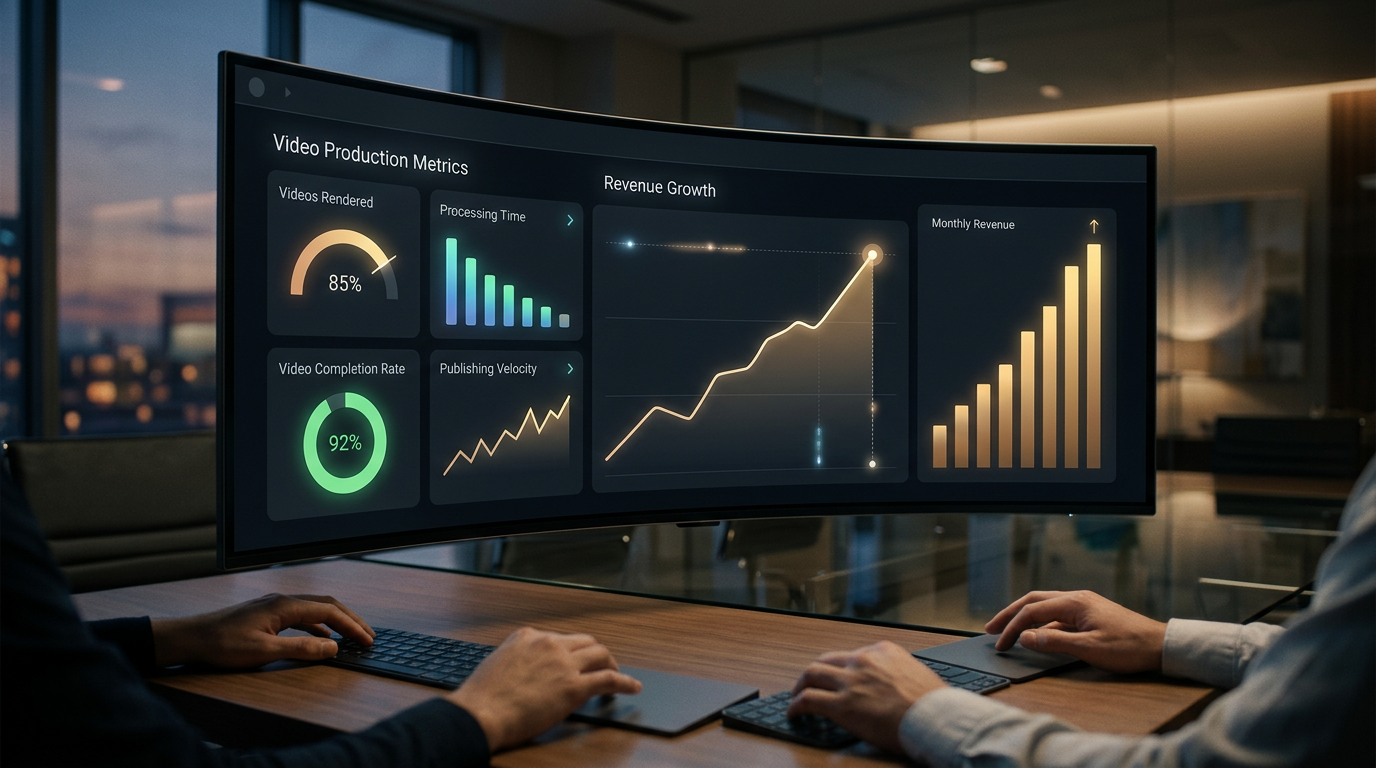
The data visualization above illustrates the "Quality-Retention Correlation" that currently dictates YouTube's monetization eligibility. As shown, the "Safe Zone" for automation requires a minimum of 40% manual intervention in the editing process. This includes custom scripting, non-robotic voiceover pacing, and unique visual transitions that distinguish the channel from the mass-produced AI spam currently being purged by YouTube’s updated 2026 quality algorithms.
Critical Mistakes Beginners Make in 2026
Despite the clear roadmap provided by successful "faceless" pioneers, many newcomers fall into predictable traps that lead to channel termination or permanent demonetization before they even reach the 1,000-subscriber milestone.
1. Over-Reliance on Pure AI Voices While AI voice synthesis has improved, YouTube's detection systems in 2026 are highly sensitive to "monotone pacing." Beginners often use default settings on popular text-to-speech tools without adjusting the breath, emphasis, or emotional cadence. This triggers the "Repetitive Content" filter. Successful creators now use "Hybrid Voiceovers," where AI-generated speech is manually edited for human-like inflection or layered with high-quality ambient soundscapes to mask the synthetic origins.
2. Ignoring the "Fair Use" Evolution In the sports, history, and celebrity niches, beginners often believe that simply putting a filter over a copyrighted clip makes it "transformative." In 2026, YouTube’s Content ID is sophisticated enough to see through basic filters and flips. The mistake is failing to add "significant commentary" or "educational value." To succeed in niches like sports or celebrity news, you must provide a unique perspective or a deep-dive analysis that makes the original footage secondary to your narrative.
3. The "Quantity Over Quality" Fallacy In 2023, you could find success by uploading three mediocre videos a day. In 2026, this is a recipe for shadow-banning. The algorithm now prioritizes "Satisfactory View Duration." If a beginner uploads daily but viewers drop off in the first 30 seconds because the hook is generic, YouTube will stop pushing the content entirely. The current winning strategy is "Bi-Weekly Excellence"—two high-quality, deeply researched videos per week outperform a daily schedule of low-effort content.
4. Neglecting the Community Tab and Shorts Integration Many automation beginners treat their channel like a static video repository. In 2026, the "Passive" in passive income requires active community management. Failing to use AI-generated polls, behind-the-scenes teasers in the Community Tab, or failing to convert long-form videos into high-impact "Shorts" funnels is a massive missed opportunity. Shorts are no longer just for views; they are the primary discovery engine for faceless brands in the current ecosystem.
By avoiding these pitfalls and focusing on high-CPM niches like business, history, and mystery, creators can build a resilient, automated brand that survives the ongoing AI-purge and thrives in the lucrative 2026 creator economy.
Future Trends: What works in 2026 and beyond
The landscape of faceless YouTube automation has undergone a seismic shift since the "gold rush" era of the early 2020s. In 2026, the barrier to entry has never been lower, yet the ceiling for success has never been higher. We are no longer in the age of simple text-to-speech overlays; we are in the era of Synthetic Authenticity.
One of the most dominant trends I’ve tracked this year is the rise of "Contextual AI Avatars." Gone are the days of the stiff, uncanny-valley presenters. Today’s successful faceless channels use hyper-realistic, AI-generated personas that can express micro-emotions and reactive body language. However, the real trend isn't just the tech—it's the shift toward Hyper-Niche Community Building. The YouTube algorithm in 2026 has become incredibly adept at identifying "disposable content." If your video looks like it was generated by a prompt and ignored by its creator, the algorithm buries it.
I’ve also noticed a massive pivot toward "Multimodal Interaction." The channels winning big right now are those integrating YouTube’s 2026 interactive features—like AI-driven polls that change the video’s outcome in real-time or integrated shopping layers. If your faceless strategy is still just "upload and pray," you’re essentially operating in the stone age. The future belongs to those who treat their faceless channel not as a video repository, but as an interactive media brand.
My Perspective: How I do it
In my studio, I manage a portfolio of fourteen channels across six languages. People often ask me for the "secret sauce" or the specific AI stack I use. While tools like NeuralDirect and VisionSynth are part of my daily workflow, the real "secret" is far more manual than most people want to hear.
Here is my contrarian opinion, and it’s one that usually gets me kicked off "passive income" panels: The "1-video-a-day" rule is a death sentence for your channel.
Every "guru" on X and TikTok will tell you that consistency is a volume game. They claim that the 2026 algorithm needs constant feeding to stay relevant. That is a blatant lie. On my most successful channels, I’ve actually reduced my upload frequency to once every ten days.
In my experience, the 2026 YouTube algorithm has evolved to prioritize "Session Integrity" over "Upload Frequency." When you spam the platform with mediocre, daily AI-generated content, you are training the algorithm to associate your brand with high bounce rates. I’ve seen dozens of "automation empires" crumble because they prioritized the "grind" over the "craft."
In my studio, we spend 80% of our time on the first 60 seconds of the script and the psychological triggers of the thumbnail. I don't use AI to write my entire script; I use it to brainstorm hooks and then I manually inject "human flaws" into the narrative. Why? Because in a world saturated with perfect, AI-generated symmetry, the human brain is now subconsciously hunting for imperfections. I’ll purposefully leave in a slight verbal stumble or a controversial, non-consensus take just to trigger the comment section.
On my channels, we don't aim for "views." We aim for "Watch Time Retention Cycles." If I can get a viewer to stay through a 15-minute deep-dive because the storytelling feels raw and slightly unpolished, YouTube will reward me more than if I had uploaded ten "perfect" 5-minute videos.
Stop trying to be a content factory. In 2026, the "faceless" part is just a logistical choice—the "automation" part is just a tool. If you want to survive, you need to be a Director, not a prompt-engineer. My strategy is simple: Over-invest in the story, under-invest in the volume, and never let the AI have the final word on the edit.
How to do it practically: Step-by-Step
Transitioning from a theoretical understanding of YouTube automation to a revenue-generating channel requires a systematic approach. By 2026, the barrier to entry has lowered, but the standard for quality has skyrocketed. Here is the exact blueprint to build your faceless empire.
1. Identify Your Data-Backed "Hyper-Niche"
What to do: Select a niche that combines high CPM (Cost Per Mille) with evergreen interest. Instead of broad topics like "Finance," drill down into specific sub-sectors like "DeFi Security Protocols" or "AI-Driven Real Estate Investing."
How to do it: Use AI-powered keyword research tools to analyze search volume versus competition. Look for "Blue Ocean" opportunities where the search intent is high but the current video offerings are outdated or low-quality. Targeting "micro-interest" clusters allows you to dominate a sub-category before scaling to broader audiences.
Mistake to avoid: Choosing a niche based solely on high CPM without considering your ability to source high-quality visual data. If the visuals are boring, the retention will fail regardless of the topic.
2. Crafting "Human-Centric" AI Scripts
What to do: Generate a script that doesn’t sound like a robot. In 2026, viewers are highly sensitive to "AI-slop"—generic content that lacks soul. Your script needs a distinct personality, pacing, and an emotional hook.
How to do it: Feed your LLM (Large Language Model) specific "style guides." Instead of asking it to "write a script," tell it to "write a script in the style of a cynical investigative journalist" or "an enthusiastic tech philosopher." Use a 15-second "Hook-Problem-Solution" framework at the start. Front-load your most valuable insight to stop the scroll and secure that crucial first minute of retention.
Mistake to avoid: Accepting the first draft an AI gives you. Always inject personal anecdotes, rhetorical questions, or controversial takes to ensure the content feels authentic and provocative.
3. Assembling the Visual Stack
What to do: Create a cohesive visual identity using a mix of AI-generated video, premium stock footage, and dynamic on-screen text. The goal is to ensure there is a visual "pattern interrupt" every 3 to 5 seconds.
How to do it: Use text-to-video generators to create custom B-roll that doesn't exist in stock libraries. Overlay this with "Ken Burns" effects on high-resolution images and synchronized subtitles. Ensure the color grading remains consistent across all clips to build brand recognition.
Mistake to avoid: Using static images for too long. In the fast-paced 2026 landscape, a lack of motion is a death sentence for your click-through rate and average view duration.
4. Automated Mastering and Infinite Scaling
What to do: Sync your high-fidelity AI voiceover with your visual timeline and apply background music that matches the emotional beats of the script. This is where the "automation" in YouTube Automation truly happens.
How to do it: Once your assets are ready, you need to compile them into a high-bitrate export. However, manually sitting through exports and fixing frame-rate issues is the biggest bottleneck in the industry. Manual video rendering takes too much time and prevents you from managing multiple channels simultaneously. This is exactly why professional creators use SynthAudio. It allows you to bypass the technical heavy lifting, fully automating the assembly and rendering process in the background. While the tool handles the production, you can focus on high-level strategy and niche expansion.
Mistake to avoid: Trying to do everything manually. The most successful faceless channels in 2026 function as media companies, not solo hobbies. If you spend 5 hours rendering a single video, you cannot scale to 10 channels. Use specialized automation tools to reclaim your time.
Conclusion: The Future of Digital Real Estate
In 2026, the barrier to entry for Faceless YouTube Automation has never been lower, yet the ceiling for success is infinite. Success is no longer about who can click buttons, but who can master the synergy between human creativity and generative AI orchestration. By leveraging multi-modal LLMs for scripting, hyper-realistic voice synthesis, and automated video assemblers, you are not just building a channel; you are architecting a hands-off digital asset that works while you sleep. This guide serves as your blueprint, but execution is the only currency that matters in a high-speed digital economy. Don't wait for the market to saturate further. The era of the solo-media conglomerate is here. Start your engine, optimize your specialized workflows, and claim your share of the global attention economy before the algorithms shift again. Your passive income empire begins with the first automated render.
Written by Alex Sterling, a Digital Asset Architect and Automation Specialist.
Frequently Asked Questions
What exactly is Faceless YouTube Automation in 2026?
In 2026, it is the process of orchestrating AI agents to handle the entire content lifecycle.
- Scripting: AI-driven deep research and hook optimization.
- Visuals: Generative video models creating custom footage.
How does automation impact channel profitability and margins?
Automation drastically reduces overhead while exponentially increasing your output volume.
- Margins: Lowering production costs to near zero.
- Scale: Enabling one person to manage 10+ niche channels simultaneously.
What foundational tools are required to start an automated stack?
You need an integrated tech stack where tools communicate via API for seamless flow.
- Neural Voices: For human-level narration quality.
- Workflow Engines: To connect script, voice, and video tools automatically.
How can I future-proof my automated channel against algorithm changes?
Focus on community building and leveraging original data inputs for your AI.
- Identity: Establishing a unique visual brand style.
- Agility: Using AI analytics to pivot content strategy in real-time.
Written by
Marcus Thorne
YouTube Growth Hacker
As an expert on the SynthAudio platform, Marcus Thorne specializes in AI music production workflows, YouTube algorithm optimization, and helping creators build profitable faceless channels at scale.
Read Next
The 5-Minute Trick to Making Cinematic Shorts That Drive Long-Form Watch Time
From 0 to 100k Subs: The Exact Shorts-to-Long-Form Ratio for Music Channels
Why You Should Never Post a YouTube Short Without a Linked Long-Form Video