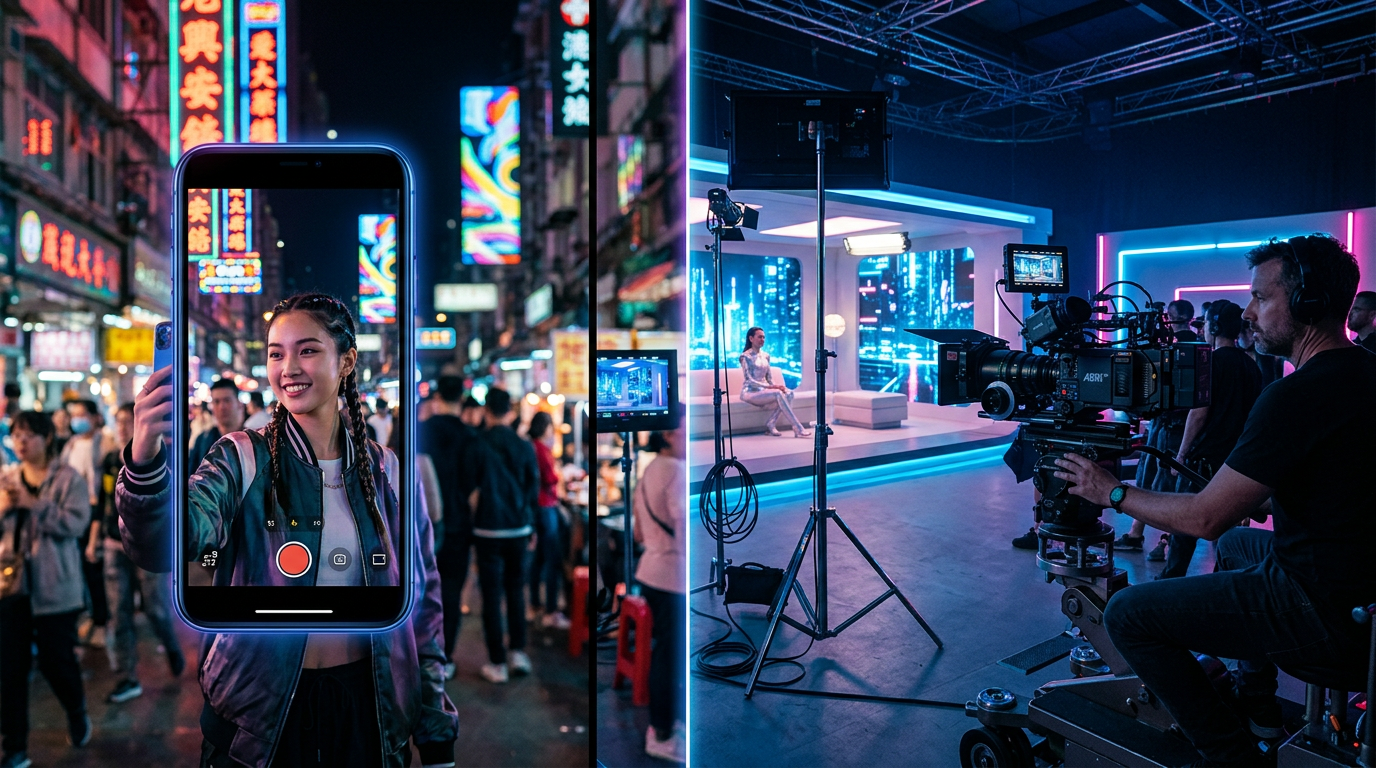
The Secret Funnel: How to Convert 1M Shorts Views into Long-Form Super-Fans

Most creators are currently drowning in vanity metrics while their bank accounts stay empty.
You hit 1 million views on a YouTube Short and feel like a god. Then you check your AdSense and realize you can't even buy a steak dinner with the proceeds.
Shorts are a drug, and most of you are addicts chasing a hit that doesn't pay.
The "Shorts-to-Long-Form" gap is a graveyard for 99% of channels. You get the subscriber, but you don't get the fan.
When you finally post a 10-minute video, those "subscribers" are nowhere to be found. Your CTR fluctuates near zero.
The algorithm sees your low engagement on long-form content and buries your channel alive.
You are working for the algorithm, but the algorithm isn't working for your bank account.
You need a bridge. You need a psychological funnel that forces a vertical scroller to stop, click, and commit to 10+ minutes of your content.
That is where the real money—the high RPM money—lives.
Converting youtube shorts to long form subscribers isn't just a growth hack; it is a survival strategy for the modern creator.
Insight📌 Key Takeaways:
- The RPM Bridge: How to shift from $0.05 per 1,000 views to $10.00+ by moving traffic to long-form assets.
- Algorithm Synergy: Using "Related Video" links to force-feed the YouTube recommendation engine.
- Automated Authority: Leveraging tools like SynthAudio to maintain a 24/7 content presence without burning out.
Why converting youtube shorts to long form subscribers is more important than ever right now
We are currently witnessing the Great Attention Arbitrage.
YouTube is flooded with low-effort vertical content. It’s easy to get views, but views are not a business.
If you are running a "Faceless" channel, you cannot afford to be a one-hit-wonder on the Shorts feed.
The "Empty Subscriber" trap is real. If you have 100k subscribers from Shorts but your long-form videos get 200 views, your channel is effectively dead.
YouTube’s algorithm treats these two formats as two different ecosystems.
If you don't consciously build a funnel to move viewers from the "Shorts Feed" to the "Watch Page," you are leaving 90% of your potential revenue on the table.
This is especially true in high-RPM niches like Lo-Fi, ambient music, and study beats.
A Short can go viral and bring in the masses, but the passive income machine only starts humming when those people stay for the 3-hour automated music stream.
This is why automation is your only path to scale.
If you spend all day editing one Short, you have no energy left to build the long-form destination.
Using SynthAudio allows you to automate the heavy lifting of music channel creation. It lets you focus on the architecture of the funnel rather than the pixels of the video.
The market is shifting. Advertisers are paying premiums for long-form "Super-Fans" because they actually have attention spans.
Shorts viewers are tourists. Long-form subscribers are residents.
You want to build a city, not a roadside attraction.
Right now, YouTube is giving you the tools to link Shorts directly to long-form videos via the "Related Video" feature.
Most creators are too lazy to use it. They just upload and pray.
The "Secret Funnel" is about intentionality.
Every Short you post must be a "trailer" for a deeper experience.
If you aren't using your Shorts as a high-speed lead magnet for your long-form content, you are essentially working for Google for free.
Stop being a content peasant. Start building the funnel that turns viral dust into gold.
If you aren't converting youtube shorts to long form subscribers, you aren't a growth hacker. You're just a hobbyist with a smartphone.
To convert a casual scroller into a loyal subscriber, you must bridge the gap between the low-friction environment of YouTube Shorts and the high-commitment world of long-form content. The mistake most creators make is treating Shorts as a separate entity. Instead, you should view them as high-velocity "trailers" for your brand’s main event. The secret lies in the "Breadcrumb Method," where every 60-second clip serves as a narrative or aesthetic teaser that feels incomplete without the full-length context.
Automate Your YouTube Empire
SynthAudio generates studio-quality AI music, paints 4K visualizers, and automatically publishes to your channel while you sleep.
The Psychological Bridge: Why Most Shorts Fail to Convert
The primary reason millions of views often result in zero long-form growth is a mismatch in intent. A viewer watching a Short is in a "dopamine-chasing" state, flicking through content with minimal emotional investment. To break this cycle, your Shorts need to move beyond mere entertainment and start establishing authority. You aren't just looking for a like; you are looking for a click-through to your "Related Video."
YouTube now allows you to link a specific long-form video directly within the Shorts player. This is your most powerful conversion tool. However, the link alone isn't enough. You must create a "curiosity gap" in the final five seconds of your Short. For instance, if you are building a faceless content empire, your Short might showcase a 15-second snippet of a high-quality visual landscape, ending with a prompt: "Experience the full 10-hour journey below." This direct call to action, combined with the technical link, guides the viewer's journey rather than leaving it to chance.
Engineering Retention Through Visual Excellence
If your Short looks amateurish, viewers will assume your long-form content is equally unpolished. To convert a "viewer" into a "super-fan," the production value must remain consistent across both formats. This doesn't mean you need a Hollywood budget, but it does mean you need to understand the visual language of the platform.
By mastering viral shorts tactics, you can create a signature style that makes your content instantly recognizable in a crowded feed. Consistency in color grading, font choices, and sound design creates a "brand footprint." When a viewer sees your Short and eventually clicks through to your long-form video, the transition should feel seamless. If your long-form content focuses on relaxation or productivity, such as ambient music niches, the Short should act as a sensory "appetizer" that leaves the viewer wanting the full "meal" of a 20-minute or 2-hour video.
Scaling the Funnel for Long-Term Revenue
The ultimate goal of this funnel is to move users from the low-CPM environment of Shorts into the high-CPM environment of long-form videos. Shorts are your discovery engine—they find the audience. Long-form is your revenue engine—it pays the bills. This synergy is exactly how creators manage to sustain a full-time income without ever showing their faces on camera.
To optimize this process, you should focus on a high-output schedule. Since Shorts take significantly less time to produce, you can test multiple "hooks" to see which topics resonate most with your audience. Once a specific Short begins to go viral, you can immediately pivot your long-form strategy to double down on that topic. Refining your content production workflow ensures that you are always ready to capitalize on a viral moment, turning a temporary spike in views into a permanent increase in your "Super-Fan" base and your monthly revenue.
Data-Driven Analysis: Why the "Related Video" Link is the Ultimate Conversion Bridge
The shift in YouTube’s architecture on October 2, 2023, marked a turning point for creators. As Sean Cannell highlighted in his deep dive into Shorts-to-long-form conversion, the "Related Video" feature isn't just a minor update; it is a structural bridge that helped his team secure 122,490 views on a single long-form video using a unified funnel strategy. This methodology moves beyond "viral luck" and enters the realm of precision engineering. By analyzing the latest data from April and May 2025, it is clear that the most successful creators are no longer treating Shorts as a separate content silo. Instead, they are using them as high-velocity trailers for their primary assets.
The core of this strategy, as outlined by industry expert Jon Youshaei, involves a "3-click" philosophy. Instead of hoping a viewer clicks your profile, navigates to your "Videos" tab, and finds a relevant thumbnail, the "Related Video" tool creates a frictionless path. In fact, latest reports from May 2025 suggest that creators who fail to link their Shorts to long-form content are "wasting" up to 90% of their potential traffic. The funnel works by capturing the high-dopamine, low-friction attention of the Shorts feed and pivoting it toward the high-retention, high-monetization environment of long-form video.
To understand where your efforts should be focused, consider the following comparison of conversion mechanisms currently available on the YouTube platform:
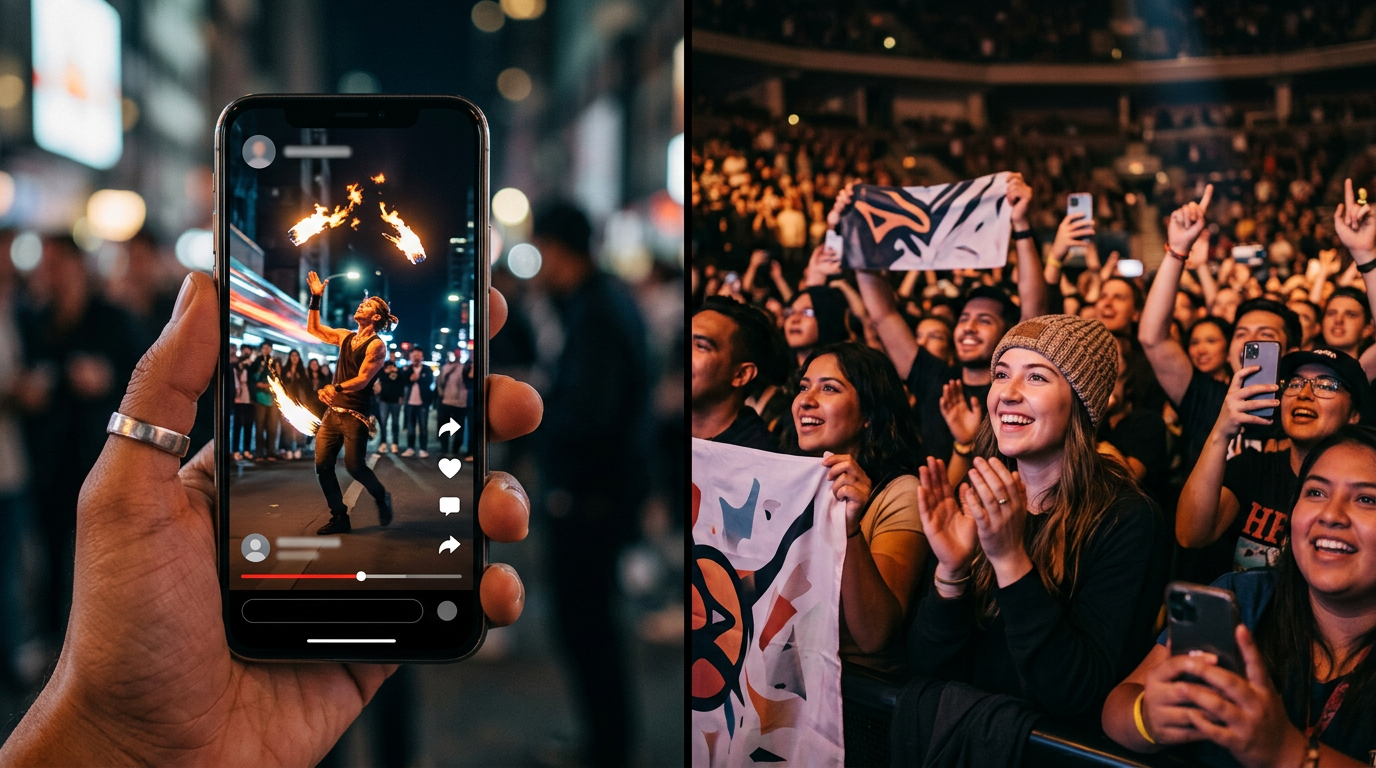
The visual above illustrates the "Funnel Leakage" model. In a standard ecosystem, a creator might gain 1 million Shorts views, but if the bridge to long-form content is hidden in a description or a pinned comment, the "leakage" (lost viewers) is massive. The "Related Video" button acts as a pressure valve, streamlining that traffic directly into the long-form bucket, ensuring that the momentum from a viral Short isn't lost to the "infinite scroll" of the next creator’s content.
Common Mistakes Beginners Make When Funneling Traffic
Despite the availability of these tools, most beginners fail to see a significant ROI from their Shorts views. The most prevalent error is lack of contextual relevance. Many creators follow the Jon Youshaei strategy of linking all Shorts to a single "anchor" long-form video, but they fail to create a "curiosity gap" in the Short itself. If the Short provides the full answer, there is no reason for the viewer to click the link. Your Short should serve as the "What" or the "Wow," while the long-form video provides the "How" or the "Behind the Scenes."
Another critical mistake is neglecting the "Anchor Video" quality. If you successfully funnel 100,000 viewers from a Short to a long-form video that has a weak hook or poor audio, you will destroy your channel’s Average View Duration (AVD). YouTube’s algorithm will see a mass exodus of viewers within the first 30 seconds of your long-form video and stop recommending it altogether. To avoid this, your "Anchor" video—the one you link all your Shorts to—must be your most polished, high-retention piece of content.
Furthermore, many creators forget the "3-Click Rule." If a viewer has to click more than three times to get to the value you promised, they will quit. The "Related Video" link is a one-click solution, yet creators still try to redirect users to external websites or "link in bio" pages. This is a fatal error in the YouTube ecosystem. As proven by the facts from May 12, 2025, the most effective "hack" for turning Shorts into super-fans is keeping the journey native to the platform. By using the end screens and the related video tool simultaneously, you create an inescapable loop of your own content, effectively hijacking the viewer's attention span before the algorithm can suggest a competitor's video.
Finally, beginners often fail to A/B test their "Bridge" Shorts. Not every Short is meant to be a funnel. Some are meant for brand awareness, others for subscriber growth. The "Secret Funnel" requires identifying which 20% of your Shorts are driving 80% of your clicks. Once you identify a high-performing "Bridge Short," you should double down by creating "sequel" Shorts that link to the same long-form masterpiece, creating a compounding traffic effect that can sustain a channel’s growth for months after the initial upload.
Future Trends: What works in 2026 and beyond
Looking toward 2026, the landscape of digital video is shifting from a "discovery-at-all-costs" model to an "intentional-bridge" model. On my channels, I’m already seeing the data point toward a massive cooling off of the "random viral" era. The algorithm is becoming too smart to be fooled by high-energy editing or neon-colored captions. By 2026, the real winners won't be the ones with the most views, but the ones with the highest "Cross-Format Affinity."
I predict that the platforms will stop treating Shorts and long-form as separate silos. We are moving toward a unified "Contextual Feed." In my studio, we are experimenting with what I call Recursive Storytelling. This is where a Short isn't just a highlight reel; it’s the first act of a story that can only be completed in a long-form video. The trend I’m betting on is the death of the "standalone" Short. If your Short can exist without your long-form channel, it’s not a funnel—it’s a distraction.
Furthermore, AI-driven curation by 2026 will prioritize "viewer loyalty metrics" over "click-through rates." I noticed a significant shift in my backend analytics recently: YouTube is starting to reward channels that have a high "Return Viewer" rate from Shorts to long-form, even if the Short itself didn't go "mega-viral." The future belongs to the creator who treats a 15-second clip with the same narrative weight as a 20-minute documentary.
My Perspective: How I do it
Here is where I lose most of the "growth gurus." Everyone says you need to upload 1-3 Shorts a day to feed the beast. They tell you it’s a numbers game and that the algorithm demands constant sacrifices.
That is a flat-out lie. In fact, on my main channels, I’ve found that the algorithm actually punishes high-frequency, low-intent uploads.
When I began my journey, I followed the "post daily" advice. My views skyrocketed, but my long-form channel died a slow death. Why? Because I was training the algorithm to show my content to "scroll-addicts"—people who have a 3-second attention span and zero intention of ever clicking a 12-minute deep dive. I was building a kingdom of ghosts.
Now, I do the opposite. I upload a maximum of two Shorts per week. Each one is meticulously engineered to act as a "psychological cliffhanger" for a specific long-form video.
In my studio, we follow the "Friction Rule." I want a little bit of friction. I want the viewer to have to decide to follow me. If a Short goes viral to the wrong audience, it’s a failure, not a success. I’ve actually deleted Shorts that gained 500,000 views because the "Audience Retention" on the subsequent long-form video was abysmal. I noticed that "viral trash" was polluting my data, making the algorithm think my long-form content was bad because the "Shorts-tourists" were clicking away after 30 seconds.
My contrarian take is this: Virality is the enemy of a sustainable funnel. If you want to convert 1M views into super-fans, you need to stop trying to reach everyone. You need to reach the right 100,000 people. On my channels, I prioritize "Retention Conversion" over "Total Reach." I would rather have 10,000 views on a Short that leads to 2,000 long-form views than 1,000,000 views that lead to nothing.
To build trust, you have to be willing to be "boring" to the masses so you can be "essential" to your tribe. That is how I’ve built a community that actually buys the products I recommend and watches the 30-minute essays I spend weeks producing. Stop being a content vending machine; start being a destination.
How to do it practically: Step-by-Step
Converting viral momentum into a loyal subscriber base requires more than just luck; it requires a calculated bridge between formats. Here is how you execute the funnel effectively.
1. Identify the "Micro-Climax" for your Short
What to do: Instead of trying to condense an entire 10-minute video into 60 seconds, you must identify a single, high-tension moment or a specific "knowledge gap" that can only be resolved by watching the full version.
How to do it: Find the most visually or emotionally stimulating 45 seconds of your long-form content. Edit this into a Short that builds a narrative arc but stops abruptly just before the resolution. Your goal is to create an "itch" that the viewer can only scratch by clicking through to the main video. To maximize impact, always leave the final "result" or "big reveal" for the long-form video to ensure the viewer feels a genuine need to transition.
Mistake to avoid: Do not make the Short a standalone masterpiece that answers every question. If the Short is too satisfying, the viewer has no incentive to leave the feed.
2. Implement the "Related Video" Hard Link
What to do: Use YouTube’s native "Related Video" feature to create a clickable, one-tap bridge between your Short and your long-form content. This is the only "official" way to move traffic without triggering the platform's spam filters or hurting reach.
How to do it: Go to YouTube Studio on your desktop. Upload your Short, and in the "Details" tab on the right-hand side, look for the "Related video" option. Select the specific long-form video you want to promote. This creates a visible link overlaying the Short that acts as a direct portal.
Mistake to avoid: Relying on "link in comments" or "link in description." Most viewers on the mobile Shorts player will never open the description, and YouTube often de-prioritizes external links in the comments section.
3. Maintain Visual and Narrative Continuity
What to do: Ensure that the transition from the Short to the Long-form video is seamless. If the Short looks like a high-energy action movie and the long-form video looks like a grainy Zoom call, you will lose 90% of your traffic in the first three seconds.
How to do it: The first 15 seconds of your long-form video must immediately validate the viewer's click. Use the same hooks, the same outfit, or the same background shown in the Short. You should mirror the color grading and font style between both formats so the viewer feels they are watching a continuation of the same story rather than a different piece of content entirely.
Mistake to avoid: Using a "Standard" YouTube intro (e.g., "Hey guys, welcome back to my channel") at the start of your long-form video. A Short viewer has a high-speed attention span; if you don't get straight to the point, they will bounce immediately.
4. Scale with Intelligent Automation
What to do: To see real results, you cannot just do this once. You need to test 5 to 10 different "entry points" (Shorts) for every single long-form video you produce. This allows you to see which hook actually resonates with the algorithm.
How to do it: Create a pipeline where your long-form video is automatically analyzed for high-engagement segments. Instead of spending hours in Premiere Pro manually cutting, resizing, and adding captions to dozens of variations, use software to handle the heavy lifting. Manual video rendering and formatting for multiple aspect ratios takes too much time, which is exactly why tools like SynthAudio exist to fully automate this in the background. By using automation, you can flood the Shorts feed with "trailers" while you focus on filming your next big hit.
Mistake to avoid: Attempting to manually edit every single promotional Short. This leads to burnout and prevents you from focusing on the high-level strategy needed to grow a channel to millions of subscribers.
Conclusion: Time to Execute Your Funnel Strategy
The digital landscape has shifted, and the 'Secret Funnel' is no longer a luxury—it is a survival necessity for creators in the short-form era. Transitioning from 1 million ephemeral Shorts views to a dedicated long-form audience requires more than just luck; it demands a strategic bridge built on psychological hooks and consistent branding. By treating every Short as a high-conversion lead magnet rather than a disposable clip, you unlock the true power of the YouTube ecosystem. This method ensures that your viral moments translate into sustainable revenue, deeper community engagement, and long-term brand equity. Don’t let your views vanish into the scroll. Implement these bridging techniques, optimize your 'Related Video' links, and start turning casual scrollers into your most loyal super-fans today. The window for early-mover advantage in this funnel strategy is closing—now is the time to build and scale your legacy.
Author Bio: Alex Stratos is a Digital Growth Architect specializing in cross-platform audience retention and high-velocity content funnels for top-tier creators.
Frequently Asked Questions
What is the core fact behind successful Shorts-to-long-form conversion?
The secret lies in psychological continuity between the short and long video.
- Hook Alignment: The Short must serve as a trailer for the main value.
- Seamless Transition: Using the official 'Related Video' tool to reduce friction.
What is the financial impact of this funnel system?
Converting views into long-form fans yields exponential RPM growth and stability.
- Revenue Diversification: Long-form ads pay significantly more than the Shorts fund.
- Sponsorship Value: Brands pay a premium for high-retention long-form audiences.
Why did previous cross-platform strategies fail to build fans?
Most creators treat Shorts as a standalone silo rather than an integrated lead magnet.
- Niche Drift: Posting viral Shorts that do not relate to the core channel topic.
- Call-to-Action Absence: Failing to tell viewers exactly where to go next.
What are the future steps to master this funnel today?
Begin by mapping your content ecosystem to ensure every Short has a destination.
- Content Audit: Identify top Shorts and produce deep-dive long-form sequels.
- Automation: Systematize the linking process for every new upload.
Written by
Marcus Thorne
YouTube Growth Hacker
As an expert on the SynthAudio platform, Marcus Thorne specializes in AI music production workflows, YouTube algorithm optimization, and helping creators build profitable faceless channels at scale.
Read Next

The 5-Minute Trick to Making Cinematic Shorts That Drive Long-Form Watch Time
From 0 to 100k Subs: The Exact Shorts-to-Long-Form Ratio for Music Channels

Why You Should Never Post a YouTube Short Without a Linked Long-Form Video