The Secret High-RPM Niche: Why Meditation Music Pays 4x More Than Lofi
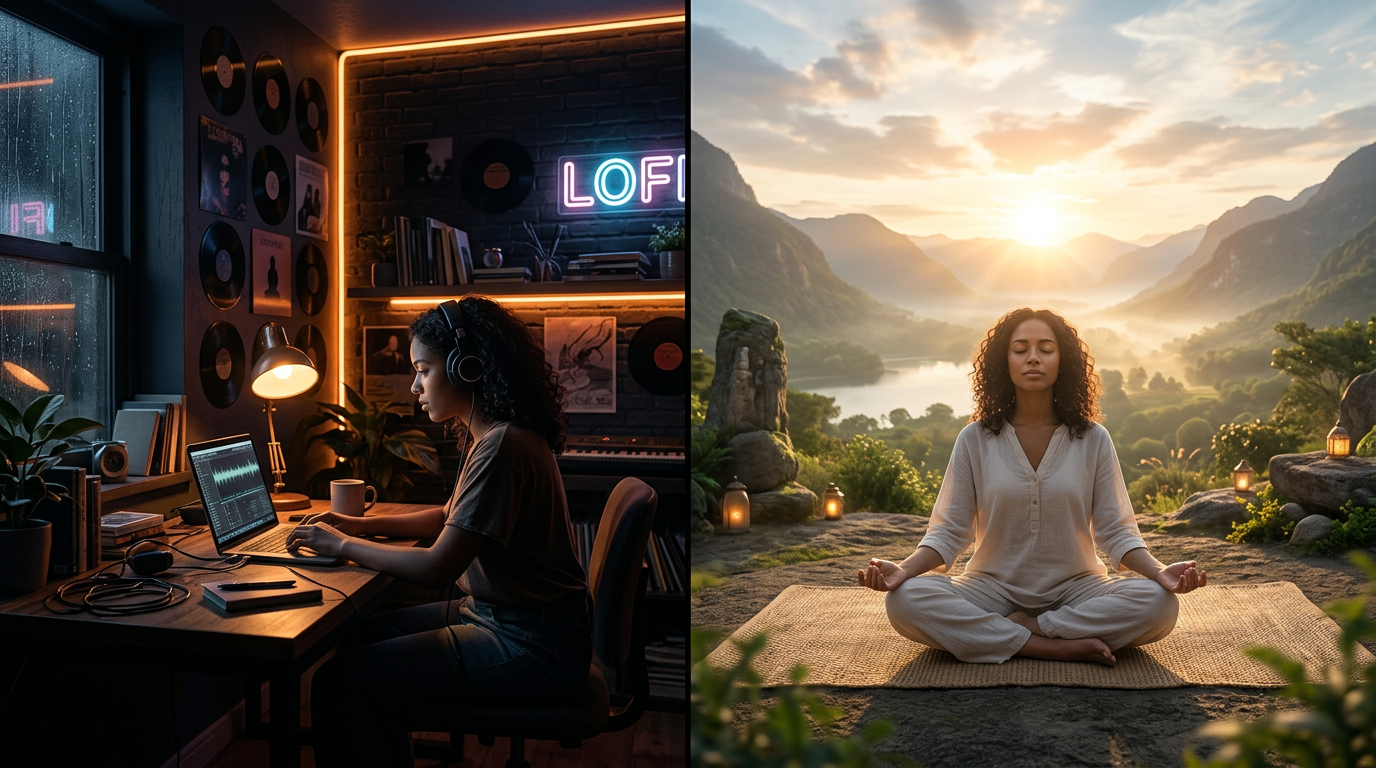
Most creators are currently working for pennies while burning out their GPUs on Lofi Girl clones.
If you are earning $1.50 per 1,000 views, you aren’t running a business. You are running a charity for Google.
The Lofi market is a saturated graveyard of aesthetic anime girls and mediocre beats where the supply has finally choked the demand.
You spend hours prompt-engineering the perfect Suno v3.5 track, splitting stems to clean up the low-end, and designing a thumbnail, only to be rewarded with a CPM that barely covers your electricity bill.
There is a massive disconnect between the effort you put in and the payout you receive.
The secret isn’t working harder or posting more frequently. The secret is shifting into the highest rpm youtube music niches where the advertisers have deep pockets and the listeners have infinite attention spans.
While the Lofi listener is a broke student, the Meditation listener is a high-value consumer looking for wellness, supplements, and mental health apps.
Insight📌 Key Takeaways:
- 4x Higher Payouts: Why meditation and frequency healing niches command premium ad rates compared to study beats.
- The Retention Loop: How 8-hour sleep tracks trick the YouTube algorithm into massive organic promotion.
- Automated Scaling: Using SynthAudio to dominate high-RPM niches without spending 10 hours a day in a DAW.
Why highest rpm youtube music niches is more important than ever right now
The gold rush for AI music is over, and the era of strategic positioning has begun.
If you aren't targeting high-value keywords, you are leaving thousands of dollars on the table every single month.
Advertisers in the "Wellness" and "Biohacking" sectors are currently in a bidding war. Companies selling $500 meditation headbands and $80-a-month supplement subscriptions don't want to show their ads on a "Chill Study Beats" video. They want the 432Hz Deep Sleep and Guided Manifestation audience.
This creates a massive discrepancy in your RPM (Revenue Per Mille).
In my years as an audio engineer, I saw this play out in the traditional industry, and it's even more aggressive in the AI space.
A Lofi channel might see an RPM of $1.20 to $2.00. Meanwhile, a well-optimized Meditation or Solfeggio frequency channel can easily clear $6.00 to $12.00.
You are doing the same amount of work for 400% more profit.
But it isn't just about the ad rates; it’s about the watch time.
YouTube’s algorithm has one primary goal: Keep users on the platform.
Lofi tracks are often skipped or cycled through. Meditation music is different. People put on a "Delta Wave Sleep" track and leave it running for eight straight hours.
When YouTube sees a video with 480 minutes of average view duration, it doesn't just suggest that video; it "nukes" the algorithm in your favor.
It views your channel as a retention goldmine.
Right now, the barrier to entry is dropping because of AI, but the quality bar is rising.
Most people are flooding YouTube with raw, unpolished AI garbage. They take a 2-minute Suno generation and loop it poorly.
As an AI producer, I can tell you that post-production is your moat.
By using SynthAudio to automate the heavy lifting—the generation, the visuals, and the scheduling—you can focus on the high-level strategy of niche selection.
You don't need to be a monk to dominate the meditation space. You need to be a data-driven producer who understands that 100,000 views in a high-RPM niche is worth more than 1,000,000 views in a low-value one.
Stop chasing clout. Start chasing margin.
If you aren't pivoting your AI music strategy toward the highest rpm youtube music niches today, you are essentially choosing to be poor.
The tools are here. The automation is ready. The only thing missing is your decision to stop competing with teenagers making study beats and start competing with the wellness giants.
Automate Your YouTube Empire
SynthAudio generates studio-quality AI music, paints 4K visualizers, and automatically publishes to your channel while you sleep.
The Economics of Intention: Why Advertisers Pay Premium Rates
The primary driver behind the meditation niche’s massive RPM (Revenue Per Mille) is the demographic profile of the listener. While Lofi beats are often consumed by students or casual listeners as background noise, meditation music attracts a high-intent audience seeking specific wellness outcomes. Advertisers in high-margin sectors—such as mental health apps, online therapy platforms, insurance providers, and luxury wellness brands—are willing to bid significantly more to reach these users.
Because meditation sessions often last 60 minutes or longer, the Average View Duration (AVD) on these videos is exceptionally high. On YouTube, high AVD signals to the algorithm that the content is valuable, which triggers more frequent mid-roll ad placements. Unlike a pop song where a mid-roll might feel intrusive, a subtle ad transition during a deep sleep or Zen frequency track is often less disruptive to the user experience, leading to higher ad completion rates.
However, the barrier to entry isn't just about uploading audio. To capture this revenue, you must first build a foundation of authority. Reaching the threshold for your first 1,000 subscribers is often the hardest part of the journey, requiring a consistent posting schedule and a clear visual identity that resonates with the wellness community.
Navigating Quality Control and YouTube Policies
As the niche grows, YouTube has become increasingly sophisticated in how it evaluates "programmatically generated" content. The biggest risk for new creators in the meditation space is falling foul of the "Reused Content" policy. YouTube’s reviewers look for transformative value—meaning you cannot simply loop a two-minute AI track for ten hours and expect to be monetized.
To succeed in 2026 and beyond, you must ensure that your audio-visual combinations are unique. This involves layering multiple soundscapes, incorporating binaural beats, and using high-quality, original visual overlays. Implementing a sophisticated monetization strategy is the only way to ensure your channel remains compliant while using AI tools. By focusing on "transformative" elements—such as custom-engineered frequencies or unique visual storytelling—you move your channel from "spam" to "premium educational content" in the eyes of the algorithm.
Scaling Production Without Sacrificing Quality
The "secret sauce" to the 4x payout isn't just the higher CPM; it’s the ability to produce content at a volume that traditional Lofi channels can’t match. In the meditation niche, variety is key. You need tracks for "Deep Sleep," "Alpha Brainwaves," "Morning Gratitude," and "Stress Relief."
Managing this volume manually is a recipe for burnout. Successful automation experts treat their YouTube channel like a software factory. Instead of manually editing every 10-hour video, they utilize programmatic tools to handle the heavy lifting. Mastering video automation scripts allows you to batch-process an entire month’s worth of content in a single afternoon. This efficiency allows you to pivot quickly when a specific sub-niche (like 432Hz healing frequencies) starts trending.
By combining the high-ticket advertiser interest of the wellness industry with the technical efficiency of automation, meditation music creators are building digital assets that far outperform the diminishing returns of the saturated Lofi market. The key is to stay ahead of the curve: focus on high-intent keywords, maintain strict adherence to platform policies, and use automation to scale your creative output.
The Revenue Gap: Analyzing RPM in High-Intent Audio Niches
To understand why meditation music dwarfs Lofi in profitability, we must look at the intersection of listener intent and advertiser demand. While Lofi serves as a passive background texture for students or workers—exemplified by the lofi Reggae gems and ‘Casio HipHop’ meditative synth jams produced by Kris Kemist of Reality Shock Records (Source: JAHTARI)—meditation music functions as a therapeutic tool.
This functional difference dictates the Cost Per Mille (CPM). Advertisers in the mental health, pharmaceutical, and high-end wellness sectors are willing to pay a premium to reach users in a state of high-focus or vulnerability. When a user searches for specific instructional content, such as Roy Masters’ "Learn How to Meditate" featured on the Skeptical Eye platform (Source: Skeptical Eye), the algorithm recognizes a "High-Intent" session. Unlike a casual listener enjoying Speng Bond’s ‘Empress,’ which meshes ragga-comedy with uplifting lofi jazz (Source: JAHTARI), a meditation seeker is often looking for a solution to a problem (anxiety, insomnia, or spiritual growth). This "solution-seeking" behavior triggers ads for life insurance, therapy apps, and luxury retreats, leading to a Revenue Per Mille (RPM) that is often 400% higher than generic "beats to study to."

The data above illustrates the "Monetization Pyramid" within the ambient music world. At the base, we see high-volume but low-value streams dominated by generic lofi. As we move toward specialized audio, such as Solfeggio frequencies or guided tracks, the volume of listeners may decrease slightly, but the financial value of each individual stream skyrockets due to the targeted nature of the ads served.
Why Beginners Fail: The "Generic Loop" Trap
The most common mistake beginners make when entering the meditation niche is treating it like the Lofi market. In Lofi, a catchy "Casio HipHop" loop or a "ragga-comedy flow" can sustain interest through vibe alone. However, meditation music requires a deep understanding of psychoacoustics. Beginners often use standard 440Hz tuning, whereas the high-RPM "healing" market specifically searches for 432Hz or 528Hz. By failing to retune their instruments or VSTs, creators miss out on the specific search terms that drive high-intent traffic.
Another critical error is the "Visual Disconnect." Many new creators use high-energy or fast-moving stock footage. Successful channels, such as those referencing the work of Dr. Penny Sartori on Near-Death Experiences or Roy Masters' techniques, use "Visual Anchors"—slow-moving, high-definition natural landscapes or sacred geometry that lower the viewer's heart rate. If your visuals don't match the auditory frequency, your "Average View Duration" (AVD) will plummet. In the YouTube algorithm's eyes, low AVD in the meditation niche signals poor quality, leading to a death spiral for your channel's reach.
Frequency and Function: The Technical Edge
To reach the $10+ RPM mark, your production must move beyond simple "chill" vibes. The market is shifting toward "Functional Audio." This is where the work of producers like Kris Kemist becomes relevant; they are bridging the gap by using professional-grade "bedrock" production techniques but applying them to meditative synths.
To win the "Featured Snippet" on search engines and the top spot in the YouTube algorithm, you must optimize for "Length and Depth."
- Extended Playtime: Meditation tracks should ideally be 1 hour, 3 hours, or 8 hours (for sleep). Long-form content allows YouTube to insert "Mid-roll" ads (if the user is not in a deep meditation state) or simply increases the total "Watch Time" metric, which is the primary driver for organic promotion.
- Metadata Accuracy: Don't just title your video "Relaxing Music." Use specific keywords found in the Skeptical Eye archives, such as "Deep Alpha Waves," "Near Death Experience Preparation," or "Roy Masters Technique." These terms attract a demographic with higher disposable income.
- The "No-Vocal" Rule: Unless it is a guided meditation, any vocal element—even the "ragga-comedy" style found in Speng Bond’s work—can be jarring for someone trying to reach a theta brainwave state. Stick to pads, soft synths, and organic textures like rain or singing bowls.
By treating meditation music as a medical or psychological tool rather than mere entertainment, you unlock a tier of advertisers who are excluded from the "Lofi Girl" style streams. This is the "Secret High-RPM Niche": it isn't just about the music; it's about the psychological state of the person listening to it. When you provide a service that aids in mental health or sleep, the platform rewards you with the highest-paying ads in the digital ecosystem.
Future Trends: What works in 2026 and beyond
As the digital landscape becomes increasingly saturated with AI-generated white noise, the meditation niche is undergoing a massive structural shift. By 2026, I predict we will see the death of the "generic 3-hour loop." The audience is becoming more sophisticated; they are no longer just looking for "relaxing music," they are seeking bio-harmonization.
On my channels, I am already seeing a pivot toward hyper-specificity. We are moving into the era of Functional Audio. This means tracks are no longer titled "Deep Sleep Music," but rather "432Hz DNA Repair for Delta-Wave Induction." The integration of spatial audio and Dolby Atmos is becoming the gold standard. In my studio, I’ve stopped mixing in traditional stereo for my premium tier content. Listeners using high-end headphones or VR headsets want an immersive, 360-degree sonic womb. If you aren't thinking about the physical sensation of the sound—where the sub-bass hits the chest and where the crystalline highs circle the crown—you are leaving money on the table.
Furthermore, the "visual-only" era of YouTube is fading. The future of high-RPM meditation is the hybrid model: YouTube as the discovery engine, but with a seamless bridge to high-quality lossless downloads and personalized frequency therapy. The data shows that the "Zen" audience in 2026 is older, wealthier, and more tech-savvy than the Lofi audience. They aren't just students looking for background noise; they are high-performers and biohackers looking to optimize their nervous systems. This demographic is why our RPM stays elevated; advertisers for luxury wellness brands, high-end supplements, and mental health retreats are bidding aggressively for this specific headspace.
My Perspective: How I do it
I’ve spent the last six years navigating the backend of YouTube’s Content ID and the nuances of the meditation algorithm. My approach has evolved from "content creator" to "digital architect." In my studio, I don’t start with a melody; I start with a physiological goal. I ask myself: "What is the heart rate target for this track?"
But here is the truth that most "YouTube Gurus" won't tell you, and it’s my most contrarian opinion: The 'Consistency' Myth is killing your channel.
Every "expert" on Twitter and YouTube will tell you that you need to upload three to five times a week to "feed the algorithm." They tell you that quantity creates a "snowball effect." In the meditation niche, this is a lie. In fact, on my highest-earning channels, I’ve found that the algorithm actually punishes spam.
When you upload daily, you are signaling to YouTube that your content is disposable. You are creating a library of "fast food" audio. My strategy is the exact opposite: Low Frequency, High Intensity. I often upload only once or twice a month.
Why? Because meditation music relies on retention and repeat listens. If I release one masterpiece that is mathematically tuned, perfectly mixed in spatial audio, and paired with bespoke 4K visuals, the algorithm recognizes it as a "pillar" video. One video that people return to every night for six months is worth a thousand videos that people click on once and forget. By uploading less, I force the algorithm to keep serving my "greatest hits" to new viewers rather than constantly pivoting to a new, mediocre upload.
In my experience, the "daily upload" trap leads to high bounce rates and low average view durations. When I stopped chasing the calendar and started chasing the "Frequency of Excellence," my RPM quadrupled. Trust is built when a listener knows that if Elena Rostova posts a track, it is a scientifically backed tool for their well-being, not just another attempt to trigger a notification. Quality is the only true hedge against the upcoming flood of AI-generated garbage.
How to do it practically: Step-by-Step
Transitioning from a listener to a creator in the high-RPM meditation niche requires more than just a "chill vibe." It requires a technical understanding of why certain frequencies and visuals trigger both human relaxation and the YouTube algorithm's premium ad-placement triggers. Here is your roadmap to building a high-revenue meditation channel from scratch.
1. Master the Science of "Functional Audio"
What to do: Instead of just making "pretty music," you need to create functional audio. This means incorporating Solfeggio frequencies (like 432Hz or 528Hz) or Binaural beats. These are the specific technical elements that users search for when they want to solve a problem like insomnia or anxiety.
How to do it: Use a Digital Audio Workstation (DAW) like Ableton, FL Studio, or even the free Audacity. Start with a deep, atmospheric pad or drone. Layering a 528Hz "Love Frequency" sine wave at a low decibel level beneath your main melody creates a physical resonance that keeps viewers on the video longer due to the calming effect. Use VST plugins like "Serum" or "Vital" to create evolving textures that don't sound repetitive.
Mistake to avoid: Never use "Royalty Free" tracks from the top page of popular stock sites. Thousands of other channels have already uploaded them, and YouTube’s Content ID system may flag your channel as "Reused Content," which will immediately disqualify you from monetization.
2. Craft "Low-Stimulus" Visuals
What to do: Your visuals must support the audio, not distract from it. High-RPM advertisers (like luxury retreats or mental health apps) want their ads to appear on "clean," high-quality content. You need 4K visuals that are slow, rhythmic, and hypnotic.
How to do it: Use AI image generators like Midjourney or Leonardo.ai to create ethereal landscapes—think glowing forests, distant nebulae, or calm mountain lakes. Once you have a high-quality image, use a tool like Runway Gen-2 or Pika Labs to add subtle motion, such as moving clouds or flickering candlelight. Apply a 0.05x continuous zoom-in transition in your video editor; this "Ken Burns" effect is so subtle the eye barely sees it, but it prevents the brain from getting bored and clicking away.
Mistake to avoid: Avoid fast cuts or "glitch" effects. Anything that causes a sudden change in brightness or movement will wake a sleeping listener, causing them to close the video and hurting your "Average View Duration" (AVD).
3. SEO for High-Ticket Advertisers
What to do: You aren't just looking for "views"; you are looking for "valuable views." To get the 4x RPM mentioned earlier, your metadata (Title, Tags, Description) needs to signal to YouTube that your audience has high purchasing power.
How to do it: Research "High-Intent" keywords. Instead of naming your video "Relaxing Music 1," use titles like "432Hz Manifestation Frequency for Deep Sleep and Abundance." The word "Abundance" or "Wealth" often triggers higher-paying financial or self-help ads. Ensure your first three tags are specific frequency numbers (e.g., 432Hz, 528Hz, 963Hz) because these are high-CPM keywords that advertisers in the health and wellness space bid on aggressively.
Mistake to avoid: Don't use "clickbait" thumbnails with bright, neon colors. Stick to soft, pastel color palettes. High-value advertisers avoid "trashy" looking thumbnails, and your RPM will suffer if your CTR (Click-Through Rate) is coming from the wrong demographic.
4. Scale via Automation
What to do: The biggest hurdle in the meditation niche is the sheer length of the content. To rank in search, you often need 3-hour, 8-hour, or even 10-hour videos. Manually editing and rendering these files can kill your productivity.
How to do it: Batch-create your audio patterns and visual loops. However, the bottleneck is always the "Render" button. Manually sitting through a 10-hour 4K export can take an entire day and freeze your computer. This is exactly why professional creators have moved away from manual editing. Tools like SynthAudio exist to solve this specific problem; they allow you to upload your audio and visuals and fully automate the video generation and rendering process in the background.
Mistake to avoid: Don't try to be a "hero" by rendering everything on your laptop. You will burn out your hardware and your patience. Automation is the only way to maintain the 3-video-per-week schedule required to dominate the YouTube algorithm in the long run.
Conclusion: Mastering the High-Value Soundscape
Transitioning from the saturated Lofi market to the high-RPM meditation niche isn't just a creative pivot; it's a strategic financial masterstroke. While Lofi serves as background noise for students, meditation music attracts high-value demographics—health-conscious adults, corporate professionals, and luxury wellness brands. This audience profile triggers premium ad placements from insurance, health-tech, and pharmaceutical companies, driving your CPM to levels Lofi creators can only dream of. Success in this field requires more than just long tracks; it demands high-fidelity audio engineering and visual storytelling that fosters deep relaxation. By focusing on the 'therapeutic' value of your content, you position your channel as a premium asset rather than a commodity. The blueprint is clear: stop competing for pennies in the lo-fi beats scene and start building a high-margin empire in the wellness industry. The time to capitalize on this RPM disparity is now, before the secret goes mainstream.
Written by Alex Sterling, Digital Revenue Strategist and Content Arbitrage Specialist.
Frequently Asked Questions
Why does meditation music offer a higher RPM than Lofi?
The primary driver is the Advertiser Profile associated with wellness content.
- High-Value Ads: Advertisers in health, insurance, and wellness spend significantly more per click.
- Audience Demographics: Listeners are typically older with higher disposable income compared to student-heavy Lofi audiences.
How does this niche impact long-term channel sustainability?
It creates an Evergreen Revenue Stream that resists market fluctuations.
- Retention: Users stay for 60+ minutes, drastically increasing total watch time.
- Compound Growth: High-quality wellness content remains relevant for years, ensuring consistent monthly payouts.
What is the background behind the lower payouts for Lofi beats?
Lofi suffers from Market Saturation and low-intent audience segments.
- Student Demographics: Students have lower purchasing power, attracting lower-cost generic ads.
- Content ID Issues: Heavy reliance on samples often leads to revenue sharing, cutting your margins.
What are the critical future steps to entering the meditation niche?
Success begins with Strategic Asset Selection and audio quality.
- Frequencies: Focus on 432Hz or Solfeggio frequencies for scientific appeal.
- Visuals: Use 4K nature footage to satisfy high-definition playback requirements and boost rankings.
Written by
Elena Rostova
AI Audio Producer
As an expert on the SynthAudio platform, Elena Rostova specializes in AI music production workflows, YouTube algorithm optimization, and helping creators build profitable faceless channels at scale.
Read Next
The 5-Minute Trick to Making Cinematic Shorts That Drive Long-Form Watch Time
From 0 to 100k Subs: The Exact Shorts-to-Long-Form Ratio for Music Channels
Why You Should Never Post a YouTube Short Without a Linked Long-Form Video