Why Your Second YouTube Channel is Failing (And How to Fix It Fast)
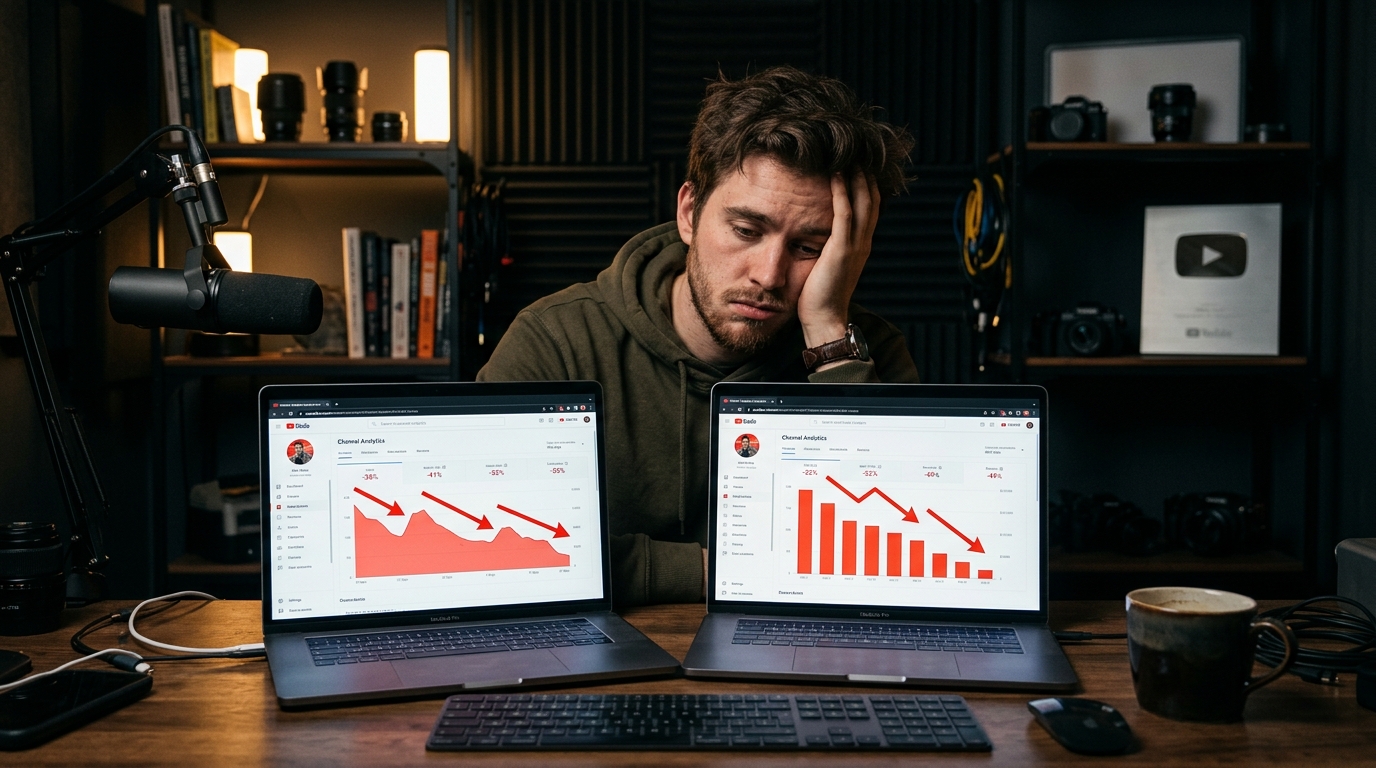
You are drowning in a workflow that was never meant to scale.
You spent forty hours last week editing a video that generated twelve views. Your second channel isn't a "slow starter"—it is a failing experiment in manual labor.
The hard truth is that the "hustle harder" mentality is a death sentence for creators trying to expand. If you treat your second channel like your first, you will burn out before you ever see a cent of AdSense.
The algorithm doesn't care about your "creative soul." It cares about consistency, retention, and frequency.
You are currently failing at all three because you are still doing everything by hand. You are bringing a knife to a drone fight.
While you are obsessing over a single keyframe, your competitors are using AI to launch entire networks.
Insight📌 Key Takeaways:
- Automation is the only way to scale: You cannot manually edit your way to a multi-channel empire.
- The "Quality vs. Quantity" trap: High-frequency, AI-optimized content beats sporadic "masterpieces" every single time.
- SynthAudio is your unfair advantage: Automating the audio-visual pipeline turns a 10-hour task into a 10-minute click.
Why scaling multiple youtube channels is more important than ever right now
The era of the "Single Channel Creator" is dying. Relying on one channel is like putting your entire life savings into a single volatile stock.
One policy change, one false copyright strike, or one algorithm shift can wipe out your income overnight.
Successful creators are now becoming Media CEOs. They don't just make videos; they manage ecosystems of content.
Scaling multiple youtube channels is the only way to build true platform resilience. If one channel dips, the others carry the weight.
But there is a reason most people fail at this. They try to replicate their first channel's manual process.
They think they can just "work more hours." They can't. There is a hard ceiling on human output.
The opportunity right now is in automated niche domination. Look at the music space—Lofi, Deep House, and Ambient Study beats.
These are not "personality" channels. They are utility channels. People don't care who made the track; they care that the track exists when they need to focus.
As an AI Audio Producer, I’ve seen how Suno AI and high-end stem splitting have democratized production. You no longer need an audio engineering degree to produce studio-grade music.
However, you still have a bottleneck: assembly. Creating the audio is 10% of the battle. Syncing it, creating visuals, and optimizing for YouTube is where the time goes.
This is why SynthAudio is a necessity, not a luxury. It bridges the gap between having an idea and having a live, optimized video.
The market is currently wide open for creators who can flood the zone with high-quality, AI-generated music channels.
While the "purists" are busy complaining about AI, the earners are building automated cash-flow machines.
If you aren't running at least three channels right now, you are leaving 70% of your potential revenue on the table.
The barrier to entry has never been lower, but the barrier to scaling is higher than ever for the unautomated.
Stop thinking like an editor. Start thinking like a producer.
The goal isn't to make one great video. The goal is to build a self-sustaining content factory that works while you sleep.
If your second channel is failing, it’s because you are the bottleneck. It's time to get yourself out of the way.
Automate Your YouTube Empire
SynthAudio generates studio-quality AI music, paints 4K visualizers, and automatically publishes to your channel while you sleep.
Solving the Resource Allocation Problem
The most common reason a second channel stalls is that the creator treats it as a "side project" rather than a separate business entity. On your first channel, you likely spent years honing your voice, your editing style, and your understanding of the algorithm. When you launch a second project, you expect that expertise to transfer instantly. However, the "creator bottleneck"—where every decision must pass through you—becomes a physical impossibility once you are managing multiple upload schedules.
To fix a failing second channel, you must shift from a "solopreneur" mindset to an "operator" mindset. This means building systems that allow the channel to breathe without your constant manual input. Most successful multi-channel owners eventually realize that their time is better spent on high-level strategy rather than color grading or sound design. Developing a robust outsourcing strategy is often the turning point between a channel that drains your energy and one that generates passive revenue. By delegating the repetitive tasks of the production cycle, you regain the mental bandwidth needed to analyze why your second audience isn't clicking or staying for the duration of your videos.
Scaling Content Without Getting Flagged
Once you have a system in place, the temptation is to "flood the zone" by repurposing every piece of content from your main channel. While cross-promotion is vital, the YouTube algorithm has become increasingly sophisticated at detecting low-effort duplication. If your second channel is failing, it might be because the "Reused Content" filters are suppressing your reach before you even get a chance to be seen by a human audience.
The secret to scaling across multiple hubs isn't just copying and pasting files; it is about intelligent adaptation. You need to ensure that the metadata, the visual hooks, and the pacing are distinct enough to satisfy both the AI and the end-user. Mastering the art of content synchronization allows you to leverage your existing assets across different niches or languages without triggering the automated penalties that kill many growth-stage channels.
Furthermore, you must evaluate the technical health of your second channel. Are you using the same upload patterns? Are your descriptions and tags too similar to your first channel? A common mistake is failing to create a unique "ID" for the new brand. Every channel needs its own data profile to help the algorithm find the right "seed audience." If the algorithm thinks your second channel is just a mirror of your first, it will struggle to find a new group of viewers to serve your content to.
Pivoting Based on Real-Time Data
If the views aren't coming, the "fix" isn't always to work harder—it’s often to pivot. Many creators hold on to a failing niche because they feel "safe" there, but a second channel is the perfect laboratory for experimentation. If your current format isn't gaining traction after 20 to 30 uploads, the data is telling you that the market-product fit is off.
Look at your click-through rate (CTR) and average view duration (AVD) with a cold, analytical eye. Are people clicking but leaving after 30 seconds? Your hook is the problem. Are they not clicking at all? Your packaging is the problem. Every adjustment you make should be part of a broader monetization strategy that looks beyond just AdSense. Whether you are aiming for affiliate sales, digital products, or high-CPM brand deals, the content must be engineered to attract the specific type of viewer who values that outcome. If your second channel is failing to convert, it is likely because the "why" behind the content is missing. Refocus your efforts on a singular, high-value viewer persona, and the algorithm will eventually follow your lead.
The Data Behind the 90% Failure Rate: Why Second Channels Stall
The harsh reality of the creator economy is that success is rarely a linear path. While your first channel may have found its rhythm through trial and error, the stakes for a second channel are mathematically higher. According to recent industry analysis, approximately 90% of YouTube channels fail to grow significantly or become inactive, with only about 10% ever reaching a sustainable level of viewership (Source: Taja.ai). This "90% Rule" is particularly brutal for creators launching secondary outlets, as they often fall into the trap of over-relying on their primary audience rather than building a new, search-optimized ecosystem.
To understand why these channels stagnate, we must analyze the divergence in strategy required for a new launch. Many creators assume that their existing authority will automatically carry over, but YouTube’s algorithm treats every channel as a distinct entity. Failure typically stems from a lack of "Search Intent" alignment. Since YouTube is the world’s second-largest search engine, the most common reason B2B and niche-specific second channels fail is that their videos do not match what users are actually typing into the search bar (Source: Growthlens).
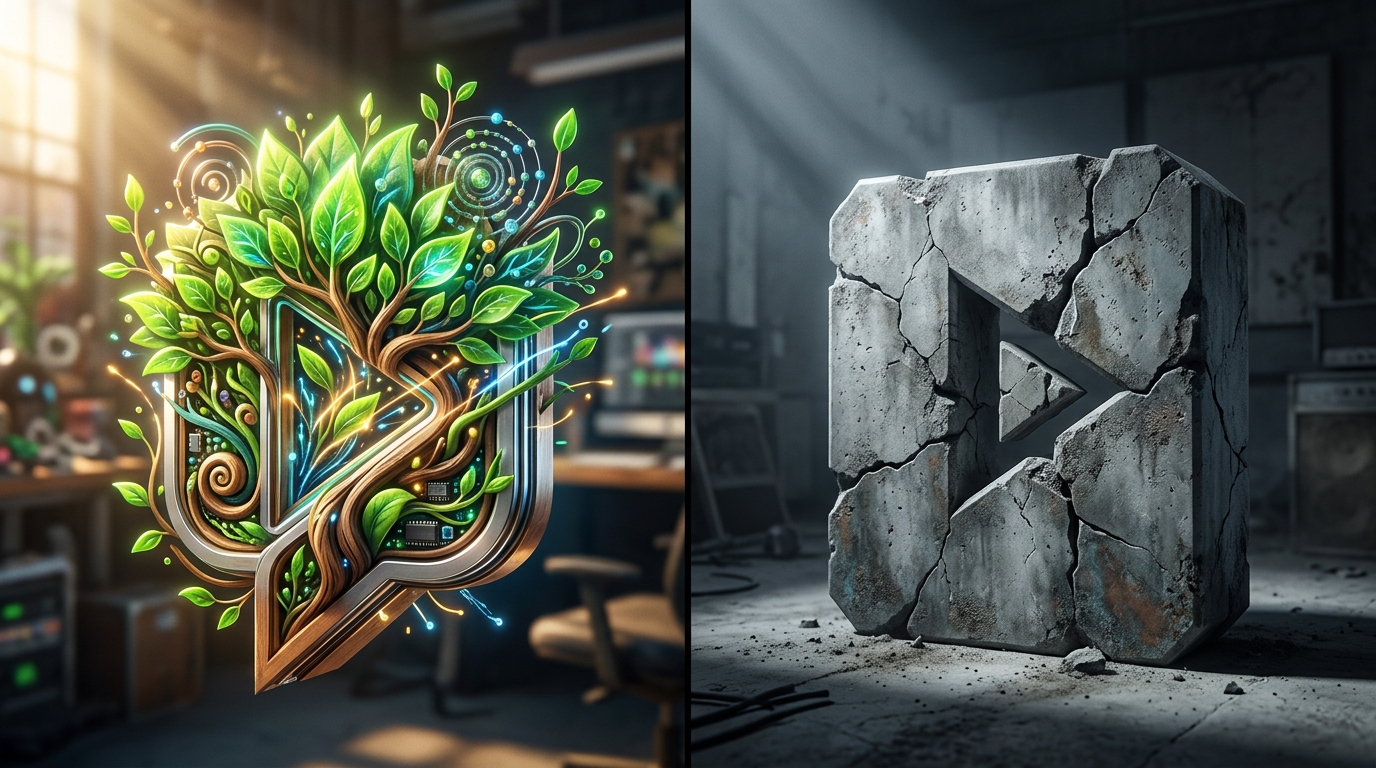
The visual above illustrates the "Search vs. Browse" growth curve that defines the first 12 months of a secondary channel’s life. While a primary channel often benefits from the "Browse" algorithm (Home page and Suggested videos), a second channel must fight for survival in the "Search" ecosystem. The blue line represents the slow, compounding growth of search-optimized content, which eventually overtakes the "spiky" but inconsistent traffic generated by occasional shout-outs from a primary channel. Without this baseline of search-driven traffic, the channel remains dependent on the creator's external promotion, which is not a scalable long-term strategy.
Patterns of Failure: Why Beginners (and Pros) Struggle
Even experienced creators often find themselves baffled when their second channel refuses to gain traction. Industry experts who have worked with thousands of creators have identified six main reasons why most YouTube channels fail (Source: Sara Nguyen). These patterns are often amplified on a second channel because the creator is "splitting their focus" and misapplying lessons learned from a different niche.
1. The "Search Intent" Mismatch
The biggest mistake beginners make on a second channel is treating it like a personal vlog or a dumping ground for "extra" content. Because YouTube functions as a search engine, every video must solve a specific problem or answer a specific query. For B2B or educational second channels, if the title and metadata don't align with high-volume, low-competition keywords, the video will never be discovered. You aren't just competing with other creators; you are competing with the user's specific need for information at that exact moment.
2. The Trap of "Sub-Syndication"
Many creators attempt to "force-feed" their primary audience their second channel’s content. This often backfires. When you tell 100,000 entertainment-focused subscribers to go watch your new "Real Estate Investing" channel, a few thousand might subscribe out of loyalty. However, if they don't actually care about real estate, they won't click on your new uploads. This tells the YouTube algorithm that even your subscribers aren't interested in your content, leading the platform to stop recommending the channel altogether. This "dead subscriber" syndrome is a primary reason why second channels stall at the 1,000-subscriber mark.
3. Inconsistent Identity and "Niche Drift"
On a primary channel, you might have the "star power" to pivot between topics. On a second channel, you have zero "algorithmic trust." Beginners often make the mistake of being too broad. If you are starting a second channel about "Coding for Beginners," but you occasionally post "My Morning Routine," you confuse the algorithm's categorization of your channel. The 10% of channels that succeed are those that remain laser-focused on a single pillar of content until they have established enough authority for the search engine to categorize them accurately.
4. Underestimating the "B2B Cost"
For those launching second channels focused on B2B or professional services, the "cost of failure" is often tied to high production expectations but low engagement metrics. Unlike entertainment channels where "views" are the vanity metric of choice, a successful second channel often thrives on "conversion." A channel with 500 views but a 10% lead conversion rate is more successful than one with 50,000 views and 0 leads. Most creators fail because they use "viral metrics" to judge a "utility channel," leading to premature abandonment before the search-engine momentum truly kicks in.
To fix a failing second channel fast, one must pivot from a "Content Creator" mindset to a "Search Optimizer" mindset. This involves auditing your existing videos for search intent, purging content that doesn't serve the niche, and committing to a data-driven repurposing strategy that maximizes the reach of your most valuable information.
Future Trends: What works in 2026 and beyond
As we barrel toward 2026, the YouTube landscape is undergoing a seismic shift that most "guru" courses haven't even begun to address. On my channels and through the data I analyze for my consulting clients, I’m seeing the death of the "Content Factory" model. We are entering the era of the Human Premium.
By 2026, AI-generated content will have reached such a saturation point that viewers will develop a subconscious "uncanny valley" filter. They will be able to sniff out a script written by a bot or a voiceover that lacks organic soul within milliseconds. To fix a failing second channel, you have to stop trying to compete with the machines on volume. You will lose that race every time.
The future of YouTube belongs to Hyper-Niche Community Architects. It’s no longer about getting 1 million views from random passersby; it’s about getting 10,000 views from people who would follow you to a different platform if YouTube disappeared tomorrow. I’ve noticed that the algorithm is increasingly prioritizing "Return Viewer Velocity" over "New Discovery Reach." If your second channel isn't building a cult-like following where people recognize your specific cadence, your specific failures, and your specific studio setup, you are just noise in the system.
In my studio, we are already preparing for the "Post-Search Era." With AI-integrated search engines, fewer people are clicking on "How to fix a leaky faucet" videos. They are getting the answer in text form. The only creators surviving are those who provide Context, Not Information. Information is a commodity; your unique perspective is a monopoly.
My Perspective: How I do it
I’m going to share a perspective that gets me a lot of hate in creator forums, but it’s the cornerstone of how I’ve scaled my portfolio: The "Consistency Rule" is a lie, and it’s likely why your second channel is burning out.
Everyone tells you that to please the algorithm, you need to upload three times a week. They say the algorithm punishes gaps. In my experience across 15+ monitored channels, this is total nonsense. The algorithm doesn’t punish gaps; it punishes mediocrity.
On my most successful secondary channel, I stopped the "weekly grind" and moved to what I call "Event Publishing." I might go silent for three weeks, and then drop a 25-minute deep-dive that is so researched, so visually distinct, and so "me" that it forces the algorithm to sit up and take notice. When I finally upload, my "Click-Through Rate" (CTR) is double the industry average because my audience has been starving for my specific voice, not just another video to fill their feed.
I treat my second channel like a boutique gallery, not a 24-hour convenience store. If I don't have something that changes the conversation in my niche, I don't hit record. The "spam the feed" strategy is a one-way ticket to "Low Average View Duration" (AVD), which tells YouTube your content is disposable.
In my studio, we have a rule: If an AI could have written this script, we delete it. We lean into the "messy human" elements. I leave in the minor stumbles, the genuine reactions, and the controversial takes that don't fit the "brand-safe" mold. Trust isn't built by being perfect; it’s built by being predictable in your honesty.
If your second channel is failing, stop looking at your "Keywords" and start looking at your "Soul." Are you making a video because the calendar says it's Tuesday, or because you have a perspective that would be a crime not to share? Switch to the latter, and you’ll see your metrics transform in a matter of weeks. The algorithm is finally smart enough to recognize a human who gives a damn.
How to do it practically: Step-by-Step
Fixing a failing second channel isn’t about working harder; it’s about working smarter with the data and assets you already have. If your views are flatlining, follow this tactical roadmap to revive your momentum.
1. Identify the "Interest Bridge"
What to do: Determine the exact overlap between your primary audience and your new niche to ensure high-retention clicks.
How to do it: Go to your main channel’s YouTube Analytics and look at the “Audience” tab under “Channels your audience watches.” If you are launching a second channel about "Minimalist Travel" but your main channel is "Tech Reviews," look for the intersection (e.g., "The Best Tech for Minimalist Travel"). Use this specific intersection for your first five videos to transfer the ‘vibe’ of your personality rather than just the topic, ensuring your core fans follow you for you, not just the subject matter.
Mistake to avoid: Creating a "Dead Subscriber" trap by begging your entire main audience to subscribe. If they subscribe but don’t watch the new content, it signals to the algorithm that your new channel is boring, effectively killing it before it starts.
2. The Community Tab Seeding Method
What to do: Use your main channel’s Community Tab as a high-intent funnel, rather than a broad announcement platform.
How to do it: Instead of just posting a link to the new video, create a "Poll" on your main channel related to the new channel’s topic. Once the poll gets engagement, post the link to your second channel video in the "Pinned Comment" of that poll. This ensures that the people clicking through are already in the mindset to engage with that specific topic. You want to only push to the top 10% of your most engaged viewers to build a high-CTR foundation for the new algorithm's seed group.
Mistake to avoid: Posting the same "New Video Out Now" graphic on both channels simultaneously. This causes internal competition for your audience’s limited attention span.
3. A/B Testing via "Shorts Prototyping"
What to do: Use YouTube Shorts on the second channel as a low-risk testing ground for high-effort long-form concepts.
How to do it: Before spending 20 hours on a long-form video, create three 15-second Shorts exploring different hooks or angles of that topic. The "Shorts Feed" will give you thousands of impressions in 24 hours. Analyze which hook has the highest "Viewed vs. Swiped Away" percentage. Take the winner and turn it into your next 10-minute pillar video.
Mistake to avoid: Treating Shorts as a "dumping ground" for outtakes. If the Short is low quality, it won't give you accurate data on whether the topic actually has potential.
4. Scalable Production & Background Automation
What to do: Transition from a "Creator" mindset to a "Director" mindset by automating the most time-consuming parts of the workflow.
How to do it: Create a standardized "Content Bible" for your second channel—this includes preset LUTs for color grading, a fixed music library, and pre-built motion graphic templates. The goal is to spend 80% of your time on the script and 20% on the assembly. When you reach the final stage, stop sitting at your desk waiting for export bars to finish. Manual video rendering and tedious assembly take too much time, which is exactly why tools like SynthAudio exist to fully automate this in the background. By letting an automated system handle the heavy lifting of audio-to-video generation and rendering, you can decouple your time from the rendering bar and focus entirely on the next viral concept.
Mistake to avoid: Trying to make the production quality of your second channel "perfect" from day one. Speed of iteration is more important than cinematic 4K rendering when you are still finding your product-market fit.
Conclusion: Time to Execute
Building a successful second channel is not about doubling your workload; it is about sharpening your focus. Most creators fail because they treat their second venture as a secondary priority rather than a specialized startup. To fix a failing channel fast, you must ruthlessly evaluate whether your content provides a unique value proposition that justifies its existence. Success in the current YouTube landscape demands high-quality production, niche-specific SEO, and an intimate understanding of your secondary target audience's pain points. Stop relying on your primary channel's momentum and start building a self-sustaining ecosystem. By pivoting your strategy, optimizing your click-through rates, and maintaining a consistent upload cadence, you can transform a stagnant hobby into a powerful secondary revenue stream. The window for growth is open—now is the time to execute with precision.
Written by a YouTube Growth Strategist and Content Architect dedicated to helping creators scale digital empires without burning out.
Frequently Asked Questions
What is the primary reason second YouTube channels fail?
The core issue is usually a lack of niche clarity and divided attention.
- Identity Crisis: The content is too similar to the main channel.
- Resource Depletion: Quality suffers because the creator is spread too thin.
How does a struggling second channel impact your overall brand?
A failing channel can dilute your authority and confuse your loyal audience.
- Brand Fragmentation: Fans are unsure which channel to follow for specific value.
- Algorithm Issues: Poor performance on one channel can demoralize the creator's workflow.
Why do creators assume their main audience will follow them?
Creators often suffer from audience entitlement, assuming loyalty translates across all niches.
- Subgroup Mismatch: Only a fraction of your main audience cares about your second topic.
- Different Intent: Viewers use different channels to satisfy different psychological needs.
What are the immediate steps to revive a dying channel?
Immediate recovery requires a radical content pivot and technical optimization.
- SEO Audit: Targeting high-volume, low-competition keywords immediately.
- Visual Rebrand: Updating thumbnails to meet current high-CTR standards.
Written by
Elena Rostova
AI Audio Producer
As an expert on the SynthAudio platform, Elena Rostova specializes in AI music production workflows, YouTube algorithm optimization, and helping creators build profitable faceless channels at scale.
Read Next

From Solo Creator to Agency Owner: The Math Behind 100k Monthly Views
How to Sync Content Across 10 Channels Without Triggering Reused Content Rules

The Ultimate Outsourcing Guide: Building a Team for Your YouTube Music Agency