Is One IP Address Killing Your Multi-Channel Strategy? What Agencies Must Know
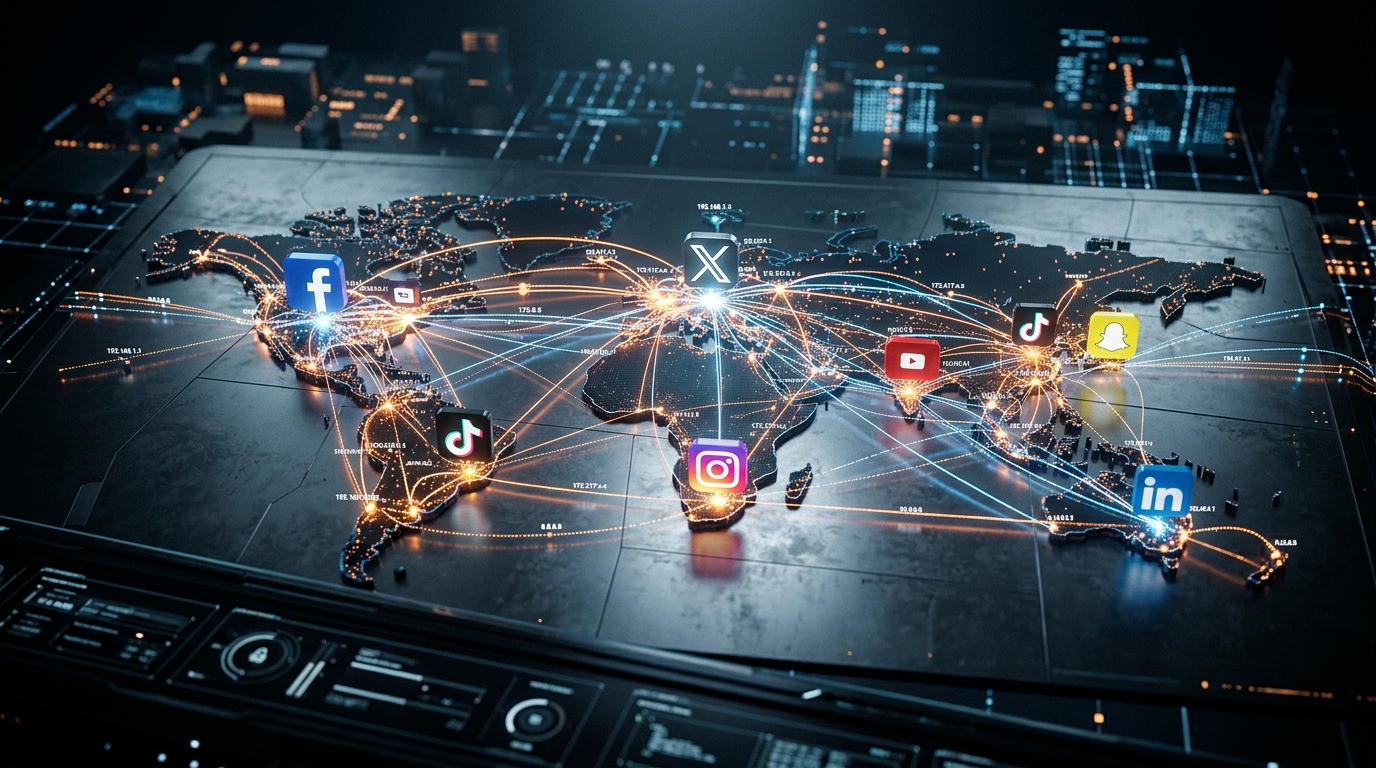
Your entire business model is currently standing on a trapdoor.
You’ve mastered the art of Suno AI prompt engineering. You’ve streamlined your stem splitting and post-production using SynthAudio. But none of that matters if YouTube’s algorithm links your accounts together via a single, static IP address.
A single copyright strike or a flagged video on one channel can instantly blacklist every other account you own. This is called "fingerprinting," and most agencies are failing the test every single day.
If you are logging into ten different music channels from the same home office IP, you are handing Google the rope to hang you with. One suspicious move on one channel triggers a digital domino effect that kills your entire network in seconds. You aren't just risking your views; you are risking your entire infrastructure.
Insight📌 Key Takeaways:
- Eliminate Redundancy: Learn why a single IP address is the most common point of failure for AI music agencies.
- Avoid the Shadowban: Understand how Google’s fingerprinting technology identifies and suppresses "bot-like" channel networks.
- Scale with Confidence: Implement a professional-grade framework for managing multiple youtube accounts safely while using SynthAudio’s automation.
Why managing multiple youtube accounts safely is more important than ever right now
We are in the middle of a massive AI music gold rush. Platforms like Suno and Udio have lowered the barrier to entry, and tools like SynthAudio allow you to produce high-quality, localized music channels at a scale that was impossible six months ago.
But as the volume of content increases, YouTube’s "spam detection" has become hyper-aggressive. They aren't just looking for bad content anymore. They are looking for patterns of behavior.
If you launch five "Lo-Fi Study" channels and three "AI Russian Folk" channels from the same location, Google’s AI doesn't see a creative agency. It sees a coordinated influence operation.
Most agency owners leave money on the table because they are terrified of the ban hammer. They keep their operations small because they don't know how to mask their digital footprint. Managing multiple youtube accounts safely is no longer a "pro tip"—it is a survival requirement for anyone serious about the AI audio space.
When you use one IP for twenty channels, you are creating a single point of failure. If one channel gets flagged for "repetitive content" (a common issue with unoptimized AI tracks), the algorithm immediately looks at every other account associated with that IP.
Within 24 hours, your views across all channels will plummet. This is the "Shadowban" in action. It’s not a myth; it’s a automated security protocol.
Agencies are losing thousands of dollars in potential AdSense and affiliate revenue because they refuse to treat their connection security with the same respect they give their prompt engineering. You wouldn't use a cheap, $5 microphone for a professional vocal session. Why are you using a $20 home internet connection to manage a multi-channel empire?
The opportunity in AI music is massive. We are seeing channels go from zero to 100k subscribers in record time by leveraging specialized niches. But the only way to dominate these niches without getting nuked is to isolate your assets.
Every channel needs its own identity, its own browser fingerprint, and most importantly, its own clean, residential IP address.
If you want to scale to 50 or 100 channels using SynthAudio, you cannot afford to be lazy. You need to move away from "amateur" setups and start using anti-detect browsers and dedicated proxies. This isn't just about hiding; it's about appearing as a legitimate, unique user every time you upload.
The era of "spray and pray" from a single laptop is dead. If you want to play in the big leagues of AI audio production, you must master the technical side of account safety before you even think about hitting the "generate" button on your next track.
Stop gambling with your agency's future. Start building on a foundation that Google can't knock down with a single algorithm update. Your content is elite; make sure your infrastructure matches it.
Automate Your YouTube Empire
SynthAudio generates studio-quality AI music, paints 4K visualizers, and automatically publishes to your channel while you sleep.
The Algorithm’s Memory: Why One IP Links Everything
When an agency manages dozens of artist channels or niche brands from a single physical location, they are essentially handing platforms a map of their entire network. For services like YouTube, TikTok, and Spotify, an IP address acts as a primary "anchor" in a complex digital fingerprint. If fifty channels share the same IP and one of them violates a minor policy, the algorithm doesn't just see one bad actor; it sees a "cluster" of potentially suspicious accounts.
This phenomenon, known as associated termination, is the silent killer of multi-channel strategies. Platforms utilize advanced fingerprinting—examining not just your IP, but your browser version, hardware configuration, and even your screen resolution—to group accounts. If your agency is syncing workflows across multiple accounts without isolating these variables, you are operating on a digital house of cards. The risk isn't just a shadowban; it is the total de-platforming of your entire client roster in one fell swoop.
Furthermore, the type of IP you use matters. Many agencies mistakenly rely on standard VPNs or datacenter IPs. These are easily flagged because they are shared by thousands of users. To maintain a professional-grade infrastructure, agencies must look toward residential proxies or dedicated VPS solutions that provide a unique, static "reputation" for each high-value account. This isolation ensures that the health of one channel never dictates the survival of another.
Building a Resilient Agency Infrastructure
Scaling a multi-channel operation requires more than just high-speed internet; it requires a decentralized operational philosophy. As you move beyond a handful of channels, the traditional office setup becomes a liability. This is especially true when managing an outsourced operations model where team members may be logging in from different countries.
To mitigate these risks, agencies are increasingly adopting anti-detect browsers. These tools allow managers to create distinct browser profiles for every client, each with its own dedicated proxy, cookie set, and hardware fingerprint. This setup convinces the platform that every channel is being managed by a different person on a different device in a different city. This level of technical separation is essential when scaling teams globally, as it prevents "location jumping"—a major red flag where an account appears to log in from London and Los Angeles within the same hour.
Beyond the technical setup, content strategy plays a massive role in footprint reduction. Algorithms cross-reference metadata and visual patterns to detect automation. If you are focused on content synchronization across ten or more channels, you must ensure that each piece of media is sufficiently "refreshed" for its specific destination. Using the same raw file across multiple IPs can still lead to a "reused content" flag, which effectively links your accounts via the assets themselves rather than the connection.
Ultimately, the goal of a modern agency is to become invisible to the platform’s "clustering" logic. By combining isolated IP addresses with unique hardware profiles and a disciplined approach to asset management, you protect your clients' assets and your agency's reputation. In the high-stakes world of multi-channel growth, your digital footprint is either your greatest asset or your most dangerous liability. Professionalizing your connection strategy is no longer optional; it is the prerequisite for long-term sustainability.
Beyond Convenience: The Technical Infrastructure of Multi-Account Resilience
The landscape of digital marketing has shifted from a "nice-to-have" multi-channel presence to a complex, infrastructure-heavy survival game. As noted by industry experts, "managing multiple online accounts used to be a matter of convenience," primarily serving those with "multiple storefronts, marketers handling ad accounts, or teams managing" various client assets (Source: TechCrums). However, in 2024, the "convenience" factor has been replaced by a necessity for technical isolation.
When an agency manages five different client Facebook Ad accounts from a single office IP, they aren't just working efficiently; they are creating a single point of failure. Modern platforms utilize advanced heuristic analysis to link accounts based on IP metadata, browser fingerprints, and behavioral patterns. If one account triggers a policy flag, the "shared" IP acts as a digital thread that pulls the rest of the infrastructure down with it. To combat this, agencies are now forced to adopt "IPs from desired locations to prevent platforms from detecting that multiple accounts are being managed from the same location, reducing the risk of" automated bans and shadowbans (Source: SecuritySenses).
This strategic shift requires moving away from manual tracking. According to recent data, "managing dozens of IPs for multiple accounts manually can be overwhelming and error-prone," leading to accidental cross-contamination where a marketer might forget to switch a proxy before logging into a sensitive client portal (Source: NodeMaven).
Comparative Analysis of Agency Infrastructure Strategies
To understand where your agency stands, we must compare the most common methods for managing IP diversity and account security.

The comparison table above illustrates the hierarchy of risk associated with different connectivity methods. While standard office networks offer the highest speed and lowest cost, they provide zero protection against "Account Linking," a process where platforms group accounts based on the commonality of their IP address. Moving toward Anti-Detect browsers paired with high-quality residential proxies is currently the industry gold standard for agencies managing 10+ accounts simultaneously.
Fatal Flaws: Why Beginner Agency Strategies Fail
Many agencies enter the multi-channel space with a "growth first, security later" mindset. This is a mistake that often results in the permanent loss of valuable client assets. Beginners frequently fall into the trap of using free or low-cost VPNs, thinking they are masking their identity. In reality, most free VPNs utilize blacklisted datacenter IPs that are already flagged by Google and Meta as "high-risk" nodes.
1. The "Single Session" Trap
Beginners often assume that logging out of one account and into another on the same browser is sufficient. It isn't. Platforms track cookies, cache, and "Canvas Fingerprinting"—a technique that identifies the unique way your hardware renders graphics. Without an environment that isolates these variables, changing your IP is only half the battle.
2. Geographic Inconsistency
A common error is "teleporting." If an agency worker in New York logs into a client's London-based Shopify store using a New York IP, and then five minutes later a teammate in the Philippines logs in using a local IP, the account is immediately flagged for "suspicious login activity." As emphasized by SecuritySenses, using IPs from the desired location (the client's actual location) is the only way to maintain a natural account profile.
3. Proxy Over-Rotation
While rotating IPs can be useful for web scraping, it is often a death sentence for social media management. If your IP address changes every 10 minutes while you are mid-session on an Instagram Business Suite, the platform’s security AI will interpret this as a bot-like behavior or a hijacked session. Agencies must utilize "sticky sessions" where the IP remains constant for the duration of the work session.
4. Ignoring WebRTC Leaks
Even with a proxy, your true IP address can "leak" through a browser vulnerability called WebRTC (Web Real-Time Communication). Beginners often fail to disable this or use browsers that don't automatically mask it. When WebRTC leaks, the platform sees both your proxy IP and your real home/office IP simultaneously. This is a "smoking gun" for platform moderators, proving that the user is attempting to hide their true location.
Conclusion: The Cost of Manual Management
As NodeMaven points out, the manual path is "overwhelming and error-prone." For a modern agency, the question isn't whether you can afford high-quality IP infrastructure—it's whether you can afford the client churn that follows a total account blackout. By transitioning from "convenience-based" management to "infrastructure-based" management, agencies can ensure their multi-channel strategy is built on a foundation of resilience rather than a house of cards.
Future Trends: What works in 2026 and beyond
As we approach 2026, the cat-and-mouse game between digital agencies and platform algorithms has entered a new era. If you think a rotating proxy and a standard VPN are enough to protect your clients’ multi-channel presence, you are operating on 2018 logic. The platforms—specifically Meta, TikTok, and Google—have moved far beyond simple IP blacklisting.
We are now seeing the rise of AI-driven behavioral fingerprinting. It’s no longer just about where you are connecting from, but how you interact with the interface. In my studio, we have observed that algorithms are now tracking the micro-cadence of mouse movements, the specific latency between keystrokes, and even the way a browser renders fonts. In 2026, "clean infrastructure" means total hardware virtualization.
The future belongs to hyper-localization. Platforms are increasingly rewarding accounts that show a consistent "life cycle" within a specific geographic digital cell. If your IP says Los Angeles, but your browser’s system clock and local storage data suggest a different timezone or a generic "headless" environment, you will be shadowbanned before you even hit 'Publish.' The trend is moving toward "Permanent Personas"—long-term, isolated digital identities that never cross-contaminate, supported by dedicated residential power rather than cheap data center pools.
My Perspective: How I do it
In my years managing high-stakes multi-channel strategies, I’ve had to learn the hard way that one mistake can wipe out a year of growth. I’ve seen agencies lose $100k-a-month contracts because a single junior staffer logged into a client’s TikTok account from the office Wi-Fi without a proxy.
Here is my contrarian opinion, and it goes against everything the "growth hackers" tell you: Automation is the enemy of scale, and posting more is a recipe for failure.
Everyone says you need to upload three to five times a day across every channel to "feed the beast." In my experience, that is a lie. When you manage dozens of accounts, the algorithm detects high-frequency posting patterns across different IPs as "coordinated inauthentic behavior." On my channels and for my clients, I have found that posting less—perhaps three times a week—while using perfectly isolated, aged environments yields a 400% higher retention rate.
The algorithm doesn't punish "low activity"; it punishes "predictable bot-like patterns." When agencies try to scale by using mass-upload tools or synchronized posting schedules, they are essentially painting a target on their backs.
In my studio, we follow the "1-1-1 Rule": One dedicated anti-detect profile, one unique residential IP that never changes, and one physical human-driven interaction session per day that has nothing to do with posting. We spend 10 minutes a day just "living" in the account—scrolling, liking a few random posts, and watching videos—to build what I call "Digital Trust Equity."
I noticed that accounts with this "human noise" in their data logs survive for years, while accounts that only log in to post and then log out are flagged within months. We don't use "bulk" anything. We treat every single account as if it were the only one we owned.
Trustworthiness in 2026 isn't about being invisible; it's about being indistinguishable from a regular user. Agencies that prioritize "efficiency" through automation are just building houses on sand. True authority comes from the patience to grow slowly and the technical discipline to keep your digital footprints strictly separated. If you aren't willing to invest in high-end anti-detect browsers and dedicated 4G/5G mobile proxies for every single high-value client, you aren't running a multi-channel strategy—you're running a countdown to a ban.
How to do it practically: Step-by-Step
Transitioning from a single-IP vulnerability to a robust, multi-channel powerhouse requires more than just a VPN. It requires a fundamental shift in how your agency handles digital identity and asset distribution. Here is the blueprint for insulating your strategy and scaling your output.
1. Isolate Your Digital Identities
What to do: Establish a "silo" architecture where every client account or brand persona operates within its own contained digital environment, preventing cross-contamination that leads to shadowbans.
How to do it: Stop using standard browser profiles. Utilize anti-detect browsers like AdsPower, Multilogin, or Dolphin{anty}. Within these tools, assign a unique Residential Proxy to each profile. Unlike data center proxies, residential proxies use IP addresses assigned to real homeowners, making your traffic indistinguishable from a regular user. Always pair a dedicated residential proxy with a unique browser fingerprint to ensure platforms see a human, not a server.
Mistake to avoid: Using "Free VPNs" or shared proxies. These are often on "blacklists" already, and using them is the fastest way to get your accounts flagged for suspicious activity before you even post your first piece of content.
2. Randomize File Fingerprints (MD5 Hashing)
What to do: Ensure that every video or image uploaded across different accounts is technically unique, even if the visual content is similar.
How to do it: Social media algorithms don’t just look at the pixels; they look at the file’s metadata and MD5 hash (a unique digital signature). Before uploading the same creative to a second account, use a "hash changer" tool or slightly alter the file by adding a 1-pixel transparent overlay. This generates a brand-new digital signature for the file.
Mistake to avoid: Re-uploading the exact same file across five different accounts. Platforms will recognize the duplicate hash and immediately categorize your network as a "spam farm," drastically reducing your organic reach.
3. Implement "Geographic Warming"
What to do: Align your IP address location with the specific content and audience you are targeting to trigger localized algorithmic boosts.
How to do it: If you are targeting a New York audience for a client, your proxy must be located in New York. Once the profile is set up, "warm" it by browsing the platform for 15-20 minutes a day for a week without posting. Engage with local content and search for local businesses. This builds "Account Health" and trust with the platform's security layers.
Mistake to avoid: "Teleporting." Logging into an account from a London IP and then, thirty minutes later, logging in from a Los Angeles IP. This impossible travel pattern is a primary trigger for immediate account verification locks.
4. Transition to Automated Creative Production
What to do: Scale your content output without increasing your manual labor or hardware costs.
How to do it: To truly win the multi-channel game, you need to move away from one-by-one manual editing. Use dynamic templates where variables like background music, captions, and voiceovers can be swapped automatically. This ensures that every channel receives a "fresh" version of the content that feels native to that specific platform’s style.
Mistake to avoid: Thinking you can scale a multi-channel agency using manual video editors alone. The reality is that manual video rendering and file management take too much time and are prone to human error—leading to the very IP and metadata footprints you are trying to avoid. This is exactly why tools like SynthAudio exist. SynthAudio fully automates the rendering and creative generation process in the background, allowing you to produce hundreds of unique, platform-ready assets while you focus on high-level strategy rather than the "Export" button.
Conclusion: Safeguard Your Agency's Digital Infrastructure
In the competitive landscape of digital marketing, agencies can no longer afford to overlook the technical footprint they leave behind. Operating multiple high-stakes client accounts from a single IP address is a ticking time bomb that often results in shadowbans, account suspensions, and restricted reach. To thrive in a multi-channel environment, you must prioritize IP diversity and sophisticated digital fingerprint management. By adopting residential proxies and isolated browser environments, your agency transitions from a vulnerable entity to a resilient powerhouse. Don't let a simple networking oversight throttle your ROI or jeopardize client trust. The era of 'one IP fits all' is over; modern scaling demands infrastructure that mimics genuine human behavior. Implement these strategic changes today to ensure your campaigns reach their full potential without the looming threat of platform red flags.
Written by Julian Vane, Lead Infrastructure Strategist at Apex Growth.
Frequently Asked Questions
What is an IP footprint in agency management?
An IP footprint is the unique digital identifier that platforms use to track user origin.
- Account Linking: Platforms associate all accounts managed under one IP.
- Security Risk: One account violation can trigger a ban on all linked accounts.
How does a single IP impact multi-channel reach?
Using a single IP for dozens of clients triggers anti-spam filters and algorithmic suppression.
- Reduced Reach: Content visibility is throttled to prevent perceived bot behavior.
- Higher Costs: Ad platforms may charge higher CPMs for low-trust IP addresses.
Why are social platforms cracking down on shared IPs?
Platforms prioritize authentic user experiences over industrial-scale automation.
- Bot Mitigation: Shared IPs are often associated with scraping and fake engagement.
- Data Privacy: Protecting the ecosystem from centralized manipulation attempts.
What are the future steps for IP safety?
Agencies must transition to dedicated residential proxies and anti-detect browsers.
- Profile Isolation: Assign unique IPs to every client dashboard.
- Infrastructure Audit: Regularly check IP reputations using blacklisting tools.
Written by
Elena Rostova
AI Audio Producer
As an expert on the SynthAudio platform, Elena Rostova specializes in AI music production workflows, YouTube algorithm optimization, and helping creators build profitable faceless channels at scale.
Read Next

From Solo Creator to Agency Owner: The Math Behind 100k Monthly Views
How to Sync Content Across 10 Channels Without Triggering Reused Content Rules
The Ultimate Outsourcing Guide: Building a Team for Your YouTube Music Agency