Streamline your 2026 music video publishing with AI

Streamline your 2026 music video publishing with AI
Streamline your 2026 music video publishing with AI
Publishing music videos on YouTube manually drains hours from your creative workflow. Between generating tracks, designing visuals, writing SEO-optimized descriptions, and scheduling uploads, you're stuck in operational tasks instead of growing your channel. AI-driven automation transforms this bottleneck into a streamlined pipeline, cutting production time by over 80% while scaling your output and maximizing monetization potential across high-RPM niches.
Table of Contents
- Introduction To Ai-Driven Music Video Publishing
- Prerequisites: Tools, Knowledge, And Setup
- Step-By-Step Ai-Driven Music Video Publishing Workflow
- Metadata Optimization And Seo For Music Videos
- Scaling, Scheduling, And Monetization Best Practices
- Troubleshooting Common Mistakes And How To Fix Them
- Expected Outcomes And Monetization Benchmarks
- Optimize Your Music Video Publishing With Synthaudio
- Faq
Automate Your YouTube Empire
SynthAudio generates studio-quality AI music, paints 4K visualizers, and automatically publishes to your channel while you sleep.
Key takeaways
Introduction to AI-driven music video publishing
AI-driven music video publishing combines artificial intelligence tools with workflow automation to handle the complete content creation and distribution pipeline. Instead of manually composing tracks, designing album art, writing metadata, and uploading videos, you configure AI systems to execute these tasks automatically while maintaining quality standards.
YouTube music creators benefit from three core advantages. First, time savings free you to focus on strategy and audience growth rather than repetitive tasks. Second, scalability lets you maintain consistent publishing schedules across multiple channels simultaneously. Third, optimization ensures every video launches with SEO-refined metadata tailored to your target niche.
The rise of faceless music channels demonstrates automation's revenue potential. These channels operate without on-camera personalities, relying entirely on AI-generated content and automated workflows. Manual production time drops from 5 hours to 45 minutes when you implement end-to-end automation, letting you publish daily instead of weekly.
Many creators worry automation equals low quality, but this misconception ignores how modern AI tools work. Platforms like AutoStudio AI music video generator produce studio-quality tracks with matching 4K visuals, voice cloning, and stem separation. The difference lies in smart implementation, where AI handles production while human oversight maintains originality and brand alignment.
Insight"AI automation doesn't replace creativity; it amplifies your capacity to execute creative vision at scale while maintaining quality standards that meet platform requirements and audience expectations."
Successful automation requires three elements working together:
- AI music and video generation for content creation
- Workflow orchestration tools for process management
- SEO optimization systems for metadata and discoverability
When you integrate these components properly, you build a content pipeline that operates continuously, publishing optimized videos while you focus on strategic growth decisions.
Prerequisites: tools, knowledge, and setup
Before launching your automated workflow, you need the right tools and technical foundation. Your core platform should handle music generation, visual creation, and metadata optimization in one integrated system. AI music production platforms generate royalty-free tracks across genres like Lo-Fi, EDM, and ambient music, while simultaneously creating matching visuals and SEO-optimized descriptions.
Workflow automation platforms connect your content generation tools to YouTube's publishing infrastructure. Tools like n8n and Zapier orchestrate the sequence from track creation through upload scheduling, eliminating manual handoffs between steps. These platforms trigger actions automatically based on conditions you define, such as uploading a new video every morning at 6 AM.
To monetize your channel, you must meet YouTube Partner Program requirements: 1,000 subscribers and 4,000 watch hours for long-form content, or 1,000 subscribers and 10 million Shorts views in 90 days. Your automation workflow should target these thresholds through consistent publishing and niche optimization.
API integrations form the technical backbone of automation. YouTube Data API v3 enables programmatic uploads, playlist management, and metadata updates. You'll need API credentials from your Google Cloud Console, including OAuth 2.0 client IDs for authentication. SEO tools analyze keyword performance and suggest tags that improve search rankings within your music niche.
AI-assisted storyboarding accelerates pre-production by matching visual sequences to song tempo, structure, and mood changes. This synchronization creates professional-looking videos that maintain viewer attention, directly impacting your retention metrics and algorithmic favorability.
Pro Tip: Use AI storyboarding tools to map beat drops and tempo shifts to visual transitions before rendering, ensuring your videos feel intentionally crafted rather than randomly generated.
Key setup components include:
- Channel verification and branding elements configured
- API credentials created and securely stored
- Automation platform account with workflow templates
- Music genre and target audience clearly defined
- Content calendar structure for consistent publishing
Access the creator academy for metadata optimization to master technical setup details and avoid common configuration mistakes that delay your automation pipeline.
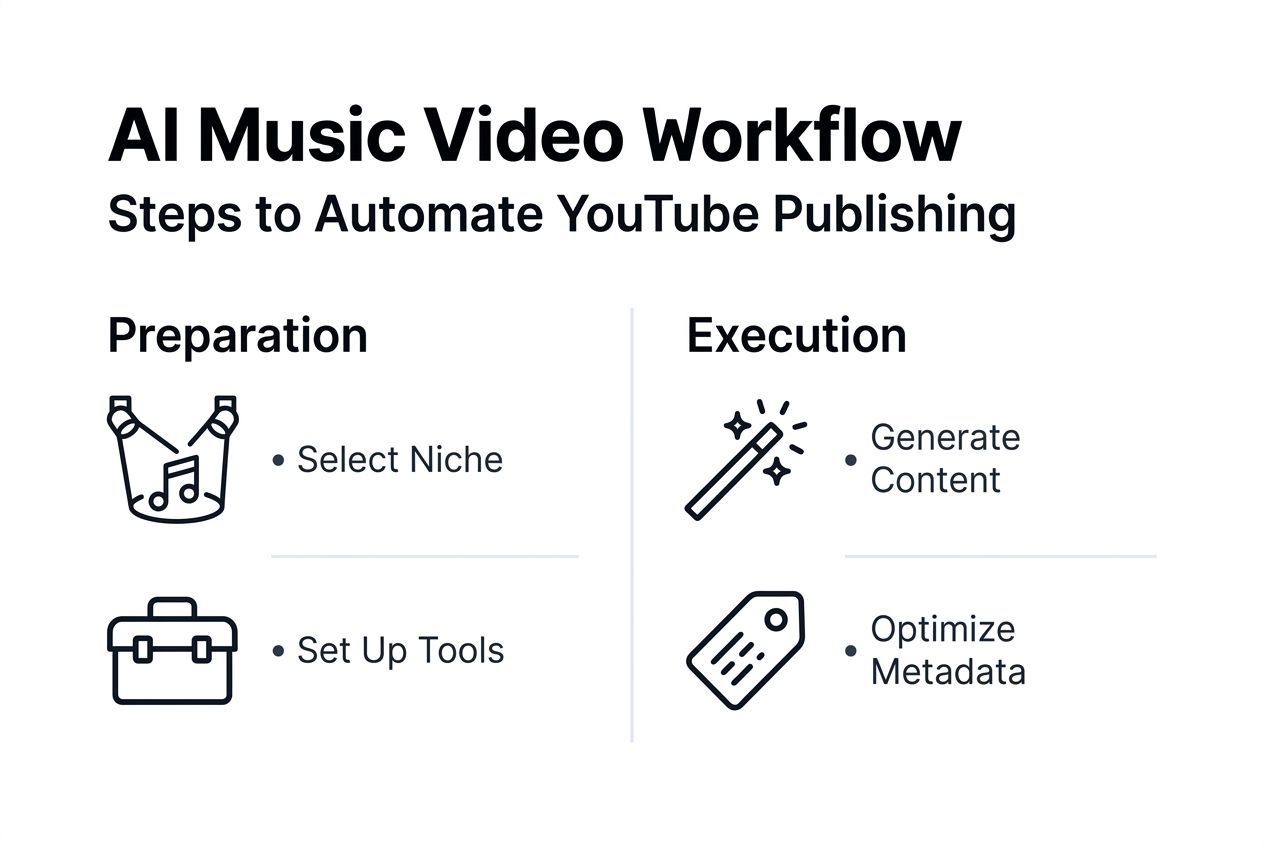
Step-by-step AI-driven music video publishing workflow
Start by selecting a high-RPM music niche aligned with your brand identity and audience interests. Lo-Fi study beats, gym workout EDM, and sleep ambient music consistently generate strong revenue per thousand views due to long watch times and advertiser demand. Your niche choice determines content style, metadata strategy, and monetization potential.
Generate your music and visual content using AI platforms designed for YouTube optimization. Configure your AI music generator with genre parameters, mood specifications, and duration targets. The system produces royalty-free tracks with matching 4K album covers or animated visuals that maintain viewer engagement. Studio-quality audio combined with professional visuals establishes credibility with your audience.

Create SEO-optimized metadata automatically rather than manually researching keywords for each video. AI metadata generators analyze trending searches within your niche, craft compelling titles under 60 characters, write descriptions incorporating relevant keywords naturally, and suggest tags that improve discoverability. Manual metadata creation becomes automated, eliminating the bottleneck of writing unique descriptions for every upload.
Automate scheduling and uploads through YouTube Data API integration within your workflow platform. Configure your automation to rename files using SEO-friendly formats, assign videos to appropriate playlists, apply predetermined tags and descriptions, and schedule uploads based on optimal posting times for your audience. This integration removes manual intervention from the publishing process entirely.
Track performance metrics post-upload and refine your workflow based on data insights. Monitor watch time, click-through rates, and audience retention patterns to identify which content types perform best. Adjust your AI generation parameters, metadata strategies, and publishing schedules iteratively to maximize results.
Pro Tip: Batch content creation and scheduling in weekly blocks to maintain publishing consistency without daily manual intervention, freeing your schedule for strategic planning and audience engagement.
Your publishing workflow follows this sequence:
- Define niche parameters and content specifications
- Generate AI music tracks with matching visuals
- Create SEO-optimized metadata automatically
- Configure upload schedule and playlist assignments
- Publish videos programmatically via API
- Monitor performance and optimize workflows
Key tools and actions at each stage:
- Content creation: AutoStudio publishing workflow for integrated music and video generation
- Metadata optimization: AI-powered SEO analysis and tag suggestion
- Workflow orchestration: n8n or Zapier connecting generation to publishing
- Performance tracking: YouTube Analytics integration for data-driven refinement
Explore the creator academy for publishing tips to master advanced workflow configurations that scale your channel growth.
Metadata optimization and SEO for music videos
YouTube SEO determines whether your music videos reach target audiences or disappear in search results. Effective metadata optimization focuses on four critical elements: titles that include primary keywords within 60 characters, descriptions that naturally incorporate secondary keywords and timestamps, tags that cover broad and specific search terms, and thumbnails that drive click-through rates.
AI metadata tools analyze search trends within your specific music genre, generating tailored optimization strategies rather than generic templates. For Lo-Fi channels, this means identifying long-tail keywords like "Lo-Fi beats for studying 2026" rather than competing for oversaturated terms like "chill music." The specificity improves your ranking potential while attracting highly engaged viewers.
Generic or duplicated metadata triggers YouTube's spam detection systems, potentially limiting your video's reach or demonetizing your channel. Every video requires unique descriptions, varied tag combinations, and distinct titles even when covering similar musical styles. AI generation solves this challenge by creating fresh metadata variations that maintain SEO effectiveness without repetition.
Automated metadata generation increases discoverability by up to 30% by consistently applying optimization best practices across your entire content library. This systematic approach outperforms manual metadata creation, which often becomes inconsistent as publishing volume increases.
Every music video should optimize these metadata elements:
- Primary keyword in title (first 40 characters)
- Description opening with value proposition and keywords
- 10 to 15 relevant tags mixing broad and specific terms
- Timestamps for longer videos to improve user experience
- Playlist assignments that group related content
Insight"Metadata isn't just about algorithms; it's about connecting your content with people actively searching for the specific musical experience you provide, turning casual viewers into loyal subscribers."
Access the metadata optimization guide for niche-specific keyword research strategies and advanced tagging frameworks that maximize your video's discoverability across YouTube search and recommendations.
Scaling, scheduling, and monetization best practices
Consistent publishing schedules directly impact algorithmic favorability and audience retention. YouTube's recommendation system rewards channels that maintain predictable upload cadences, whether daily, three times weekly, or another fixed pattern. Automation enables this consistency by removing the production bottlenecks that cause manual channels to publish irregularly.
Leverage both YouTube Shorts and full-length videos to maximize discovery opportunities and viewer engagement. Shorts attract new audiences through the platform's dedicated feed, while long-form content builds watch time toward monetization thresholds. Faceless music channels publish 5x more content by automating both formats simultaneously, creating multiple entry points for audience growth.
Target music niches with proven high RPM (revenue per thousand views) to maximize earnings from your automation investment. Lo-Fi, Chillhop, and ambient sleep music consistently outperform general music content due to longer average watch times and advertiser demand in productivity and wellness categories.
Building an automation pipeline that integrates music generation, video rendering, metadata creation, and scheduled uploads enables daily publishing to multiple channels without manual intervention. This scalability transforms content creation from a time-intensive activity into a strategic asset that compounds over time.
Pro Tip: Diversify content formats to maximize monetization streams by combining ad revenue with affiliate links to music production tools, sponsorships from audio equipment brands, and merchandise sales for established channels.
Best practices for scaling publishing effectively:
- Schedule uploads during peak audience activity times
- Maintain 2 to 3 week content buffer to handle technical issues
- Rotate between content styles within your niche to prevent viewer fatigue
- Cross-promote Shorts and long-form videos through end screens
- Monitor analytics weekly to identify high-performing content patterns
Explore AutoStudio scalability features and AutoStudio pricing plans to determine which automation tier matches your publishing volume and growth targets.
Troubleshooting common mistakes and how to fix them
Generic, repetitive AI content represents the most common automation pitfall. YouTube penalizes channels producing generic AI content that lacks originality, reducing visibility and potentially disabling monetization. Fix this by implementing human content review at key workflow checkpoints, ensuring each video offers unique value beyond template-based generation.
Metadata errors sabotage discoverability even when your content quality remains high. Common mistakes include keyword stuffing that triggers spam filters, descriptions lacking natural language flow, tags unrelated to actual content, and titles that mislead viewers about video content. Address these issues through AI tools specifically trained on YouTube SEO best practices rather than general copywriting systems.
Manual verification and account setup delays stall automation pipelines when platforms require human interaction during initial configuration. Email verification bottlenecks delay automation by requiring manual inbox checking and link clicking. Programmable email services and comprehensive API integration significantly reduce these failures, maintaining workflow continuity.
Quality control requires human oversight despite automation benefits. Review randomly selected videos from your pipeline monthly to ensure visual and audio quality meet your standards, metadata accurately represents content, and generated descriptions provide genuine value to viewers. This sampling approach catches systematic issues before they affect your entire content library.
Frequent mistakes and practical solutions:
- Repetitive content: Vary generation parameters and add human creative direction
- Poor metadata: Use niche-specific keyword research and natural language optimization
- API authentication failures: Implement token refresh automation and error handling
- Inconsistent video quality: Set minimum quality thresholds in generation parameters
- Missed upload schedules: Build redundancy into workflow triggers and monitoring
Pro Tip: Configure programmable email accounts and automated API credential refresh systems during initial setup to eliminate manual verification bottlenecks that disrupt your publishing consistency.
Access automation troubleshooting tips for detailed solutions to platform-specific technical challenges and workflow optimization strategies.
Expected outcomes and monetization benchmarks
From initial setup to consistent daily publishing typically requires two to four weeks depending on technical complexity and content strategy refinement. The first week focuses on platform configuration, API integration, and workflow testing. Week two through four involve content generation experimentation, metadata optimization, and publishing cadence establishment.
YouTube Partner Program eligibility serves as your first major milestone. Long-form content requires 1,000 subscribers and 4,000 watch hours within 12 months. Shorts-focused channels need 1,000 subscribers and 10 million Shorts views in 90 days. Automated workflows help reach these thresholds faster through consistent publishing and optimized discoverability.
AI-driven faceless channels show 217% higher monetization success compared to similar channels from 2022, largely due to automation enabling niche targeting and volume scaling. This growth reflects both improved AI tools and refined automation strategies that maximize revenue per video.
Viewer retention and RPM improvements emerge as your workflow optimization matures. Well-optimized Lo-Fi channels achieve 60% to 75% average view duration on long-form content, compared to 40% to 50% for generic music uploads. Higher retention signals quality to YouTube's algorithm, increasing recommendation frequency and organic growth.
Key success metrics and milestones:
- Week 1 to 2: Complete technical setup and publish first 5 to 10 test videos
- Month 1 to 3: Reach 100 to 500 subscribers through consistent publishing
- Month 3 to 6: Achieve Partner Program eligibility thresholds
- Month 6 to 12: Scale to 1,000+ monthly views and stable ad revenue
- Year 1+: Expand to multiple channels and diversify monetization streams
Insight"The transformation from manual publishing to full automation doesn't just save time; it fundamentally changes your business model from trading hours for content to building scalable assets that generate revenue continuously."
Explore AutoStudio monetization outcomes to see detailed case studies and revenue projections based on niche selection and publishing volume.
Optimize your music video publishing with SynthAudio
Ready to transform your YouTube music channel from time-intensive manual work into an automated content pipeline? AutoStudio AI music video generator combines music creation, visual generation, metadata optimization, and publishing automation in one comprehensive platform.
Whether you're launching your first channel or scaling existing operations, SynthAudio handles the complete workflow from track generation through scheduled uploads. Generate studio-quality royalty-free music across profitable niches like Lo-Fi, EDM, and ambient genres while AI creates matching 4K visuals and SEO-optimized metadata automatically.
The SynthAudio creator academy provides step-by-step training on metadata optimization, niche selection, and workflow configuration to maximize your monetization potential. Master advanced automation strategies that top-performing channels use to maintain consistent publishing and revenue growth.
Explore AutoStudio pricing plans to find the automation tier matching your publishing volume and growth targets, then start building your automated music video pipeline today.
FAQ
What are the essential AI tools needed for automating music video publishing?
You need three core tool categories. AI music generation platforms like AutoStudio AI music video generator create tracks and visuals. Workflow automation systems such as n8n or Zapier orchestrate your publishing pipeline. YouTube Data API access enables programmatic uploads and metadata management.
How can AI automation improve YouTube music video monetization?
Automation generates SEO-optimized metadata that boosts video discoverability, directly increasing view counts and ad revenue potential. Consistent publishing schedules enabled by automation help you scale content volume significantly. Creators using AI-driven channels show 217% higher monetization compared to 2022 benchmarks. Access the creator academy for metadata optimization for niche-specific strategies.
What are common pitfalls to avoid when automating music video publishing?
Avoid generic AI content that YouTube penalizes for lacking originality. Ensure metadata uniqueness across all videos to prevent spam detection. Incorporate human content review at workflow checkpoints to maintain quality standards. Automate account verification processes to prevent pipeline stalls. Review automation troubleshooting tips for detailed solutions.
How long does it take to set up an automated music video publishing workflow?
Initial setup typically requires two to four weeks from platform configuration through consistent publishing. Week one focuses on API integration and workflow testing. Weeks two through four involve content strategy refinement and publishing cadence optimization. Technical complexity and your experience level affect timeline.
Can automated music channels reach YouTube Partner Program requirements?
Yes, automation actually accelerates reaching monetization thresholds through consistent publishing and optimized discoverability. You need 1,000 subscribers plus either 4,000 watch hours for long-form content or 10 million Shorts views in 90 days. Automated workflows maintain the publishing consistency required to build audience and watch time systematically.
Recommended
Written by
Growth AI
Marketing Expert
As an expert on the SynthAudio platform, Growth AI specializes in AI music production workflows, YouTube algorithm optimization, and helping creators build profitable faceless channels at scale.
Read Next
From Solo Creator to Agency Owner: The Math Behind 100k Monthly Views

How to Sync Content Across 10 Channels Without Triggering Reused Content Rules
The Ultimate Outsourcing Guide: Building a Team for Your YouTube Music Agency