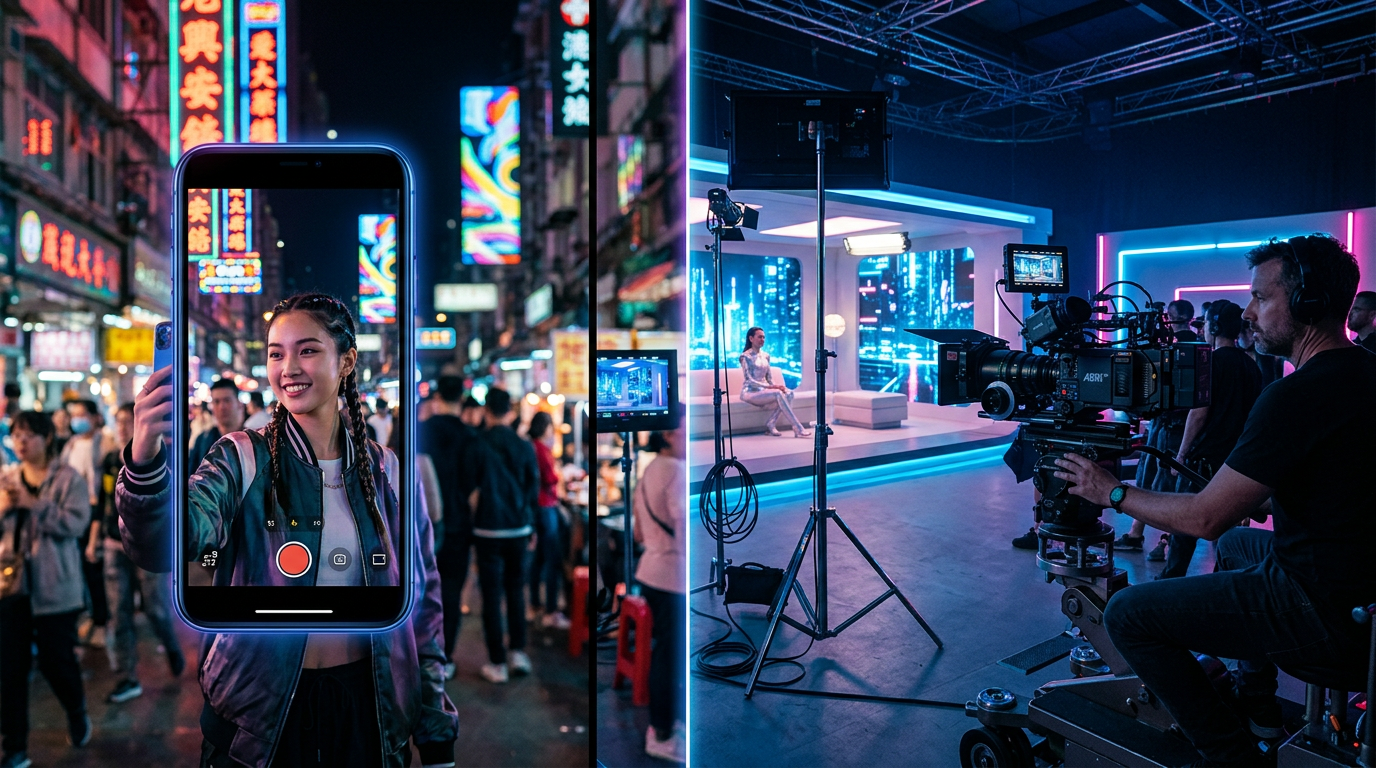
Why Selling Digital Assets is the Secret Weapon for Faceless Creators

Stop waiting for a $2.00 RPM to make you rich. It’s not going to happen.
You’re pouring hours into visuals and AI-generated tracks, pulling in millions of views, and seeing a paycheck that barely covers your grocery bill. Most faceless creators are slaves to the AdSense treadmill, sprinting just to stay in the same place.
The reality is brutal: AdSense is the scraps from Google’s table. If you are relying solely on those pennies, you don’t have a business; you have a high-maintenance hobby.
The elite 1% of creators—the ones actually retiring on their YouTube income—aren't checking their Creator Studio every hour. They are building automated ecosystems where the video is just the top of the funnel.
You are currently leaving five figures a month on the table because you haven’t realized that your audience is a starving market for digital solutions.
Insight📌 Key Takeaways:
- Exit the AdSense Trap: Shift from low-yield ad revenue to high-margin digital asset sales that pay 100% commissions.
- Monetize the Intent: Learn why "vibe" listeners are actually hidden buyers for sample packs, MIDI files, and licensing.
- Scale with Automation: Use tools like SynthAudio to handle the content grind so you can focus on the high-revenue storefront strategy.
Why selling digital products on youtube music channel is more important than ever right now
The "gold rush" of faceless channels has flooded the platform with low-quality, repetitive content. The algorithm is getting smarter, and viewers are getting pickier. To survive, you must differentiate or die.
Selling digital products on a youtube music channel is no longer an "extra" income stream; it is the core of a sustainable business. While your competitors are crying about "yellow icons" and demonetization, you could be clearing $5,000 a month from a single PDF or audio pack.
The barrier to entry for content creation has vanished. Anyone can launch a channel. This means the value of the "video" itself is decreasing, while the value of curated, functional assets is skyrocketing.
Think about your audience. They aren’t just "listeners." They are producers looking for inspiration, students looking for focus aids, and creators looking for royalty-free assets for their own projects.
If you aren't the one selling them the solution, you are essentially providing free marketing for someone else who is. You’re doing the hard work of building the audience, and your competitors are the ones cashing the checks.
The traditional model of "Post and Pray" is dead. You need a Direct-to-Consumer (DTC) mindset. By integrating digital assets—like sheet music, high-quality WAV files, or "study-with-me" planners—into your music channel, you create a moat around your brand.
This is where the leverage of SynthAudio becomes your unfair advantage. If you are spending 10 hours a day trying to compose and edit, you have zero energy left to build a product suite.
When you automate the heavy lifting of music and video production, your job shifts from "unpaid editor" to "CEO." You use the AI to generate the volume needed to trigger the algorithm, then you capture that traffic and convert it into digital asset sales.
We are currently in a transition period. The creators who pivot now to a product-first model will own their niches for the next decade. Those who continue to beg for views and $0.50 clicks will be washed away by the next algorithm update.
The math is simple. 1,000,000 views might net you $2,000 in AdSense. But 1,000,000 views with a $20 digital product and a 0.1% conversion rate? That’s $20,000.
Stop playing for views. Start playing for margins. Your music channel is not a TV station; it is a 24/7 storefront that never closes, never complains, and—if handled correctly—never stops generating cash.
Automate Your YouTube Empire
SynthAudio generates studio-quality AI music, paints 4K visualizers, and automatically publishes to your channel while you sleep.
Bridging the Gap Between Content and Commerce
The primary reason faceless creators struggle to monetize beyond AdSense is a lack of perceived authority. Without a face to trust, the audience relies entirely on the quality of the information and the polish of the presentation. Digital assets—whether they are Notion templates, LUTs, or specialized e-books—act as a physical extension of your brand’s value. However, the transition from "viewer" to "buyer" requires a strategic approach to how you structure your content.
To successfully sell a digital product, your video must function as more than just entertainment; it must serve as a proof of concept. If you are selling a financial tracker, your video needs to demonstrate the pain of disorganized finances and the relief of the solution you've built. This is where the visual identity of your channel becomes your strongest sales tool. Moving away from generic imagery is essential; using custom AI visuals allows you to maintain a cohesive brand aesthetic that screams professionalism. When your content looks unique and premium, the audience subconsciously assigns that same premium value to the digital assets you are selling.
Optimizing the Funnel for Maximum Conversions
Once you have a high-quality asset, the challenge shifts to visibility. You cannot simply drop a link in the description and hope for the best. Faceless channels thrive on systems, and your sales funnel should be no different. The most effective way to sell digital products is to lead the viewer through a narrative arc that concludes with your product as the logical "next step."
However, even the best sales pitch is useless if the viewer leaves before the three-minute mark. To ensure your audience actually hears your call to action, you must master the art of keeping them glued to the screen. Implementing a simple high-retention hack can be the difference between a video that earns pennies and one that generates thousands in digital sales. High retention doesn't just please the algorithm; it builds the necessary "watch time" required to establish the trust needed for a transaction to occur.
Finally, you must leverage the different formats YouTube offers to feed your sales engine. YouTube Shorts are incredible for reach, but they are notoriously difficult for direct selling due to their fast-paced nature. The secret lies in using Shorts as the "hook" and your long-form content as the "closer." By ensuring every viral clip leads back to a linked long-form video, you create a high-traffic pathway directly to your storefront. This multi-layered approach ensures that you aren't just getting views, but you are actively moving prospects through a funnel that ends with a digital download.
By treating your faceless channel as a storefront rather than just a video gallery, you stop being a slave to fluctuating CPMs. Digital assets provide the stability and scalability that allow a creator to turn a hobby into a high-margin business, all while remaining completely anonymous. The key is to stop viewing your videos as the final product and start viewing them as the most powerful marketing vehicle in your arsenal.
The 2026 Economics of Faceless Influence: Breaking Down the $15,000 Monthly Revenue Model
To understand why digital assets are the pivot point for modern creators, we must look at the shifting landscape of 2026. Data indicates that the barrier to entry has lowered, but the ceiling for earnings has risen exponentially for those who move beyond basic ad revenue. According to recent industry analysis, anonymous content producers are now earning between $2,000 and $15,000 monthly. However, this is not achieved through "luck." Success is predicated on a 5-stream system that balances low-effort ad revenue with high-margin digital products.
The shift toward 2026 sees a market where "monetization thresholds" are no longer just about view counts, but about the conversion rate of a faceless audience into a digital storefront. While blogging remains a premier strategy for passive income, the most aggressive scaling occurs when creators transition from being "content filters" to "product owners." This systematic scaling strategy involves moving away from the $1-$5 RPM (Revenue Per Mille) of standard video platforms toward the $50-$200 profit-per-unit margins found in specialized digital assets.
Comparative Analysis of Faceless Niche Profitability (2026 Projections)

The visualization above illustrates the "Revenue Multiplier Effect" for faceless creators. It highlights how ad revenue serves as a foundational "floor" for income, while digital assets—such as Notion templates, e-books, and specialized stock footage—create the "ceiling" that allows for a $15,000 monthly income. By diversifying across five distinct streams (Ad Revenue, Brand Deals, Affiliates, Digital Products, and Membership Tiers), creators insulate themselves from platform algorithm shifts while maintaining total anonymity.
Why Beginners Fail: The Gap Between Content and Conversion
Despite the massive potential, many new faceless creators fail to reach the $2,000/month milestone. The primary reason is the "AdSense Trap." Many beginners focus solely on hitting platform monetization thresholds, ignoring the fact that platform policies and RPM data can fluctuate wildly. To build a sustainable business in 2026, you must view your content as a marketing funnel rather than the end product itself.
Mistake 1: Ignoring Platform Policy Updates
Many creators use AI-generated content without understanding specific compliance secrets. For instance, YouTube's policy updates regarding synthetic media require creators to disclose AI usage in specific contexts to avoid demonetization. Successful creators in 2026 leverage AI for efficiency—turning scripts into voiceovers and visuals—but they maintain "human-in-the-loop" quality control to ensure their digital assets remain high-value and unique.
Mistake 2: Niche Diffusion
A common error is trying to be "everything to everyone." In the faceless space, your brand is your niche. If you are blogging for passive income, your SEO strategy must be laser-focused on a specific pain point. A faceless creator focusing on "productivity" might struggle, whereas one focusing on "Notion Workflows for Real Estate Agents" can charge a premium for their digital assets because the perceived value is hyper-specific.
Mistake 3: Poor Systematic Scaling
Scaling a faceless brand requires more than just posting more frequently. It requires a transition from manual creation to a systematic pipeline. As noted in recent 2026 step-by-step guides, the transition from $2,000 to $15,000 a month usually involves outsourcing the technical editing and focusing purely on "High-Converting Content Formats." This means identifying which videos or posts drive the most digital asset sales and doubling down on those specific templates.
Mistake 4: Lack of "Trust Assets"
Because the creator is faceless, there is a "trust gap" that must be bridged. Beginners often fail to include social proof, testimonials, or deep-dive demonstrations of their digital products. In 2026, the most successful anonymous creators use "introvert-approved" strategies—like screen-recorded tutorials or detailed case studies—to prove their expertise without ever showing their face. This builds the necessary authority to sell high-ticket digital assets ($100+) rather than just low-ticket $5 e-books.
By mastering the intersection of high-RPM content and systematic asset sales, faceless creators are no longer just "YouTubers" or "Bloggers"—they are digital entrepreneurs running high-margin, low-overhead businesses that operate 24/7.
Future Trends: What works in 2026 and beyond
As we move toward 2026, the landscape for faceless creators is shifting from "content creation" to "ecosystem engineering." In my studio, I’ve spent the last eighteen months tracking the diminishing returns of generic digital products. The era of the $27 generic PDF guide is dead. AI has commoditized basic information; if a user can get the answer from a prompt in three seconds, they aren't going to pay you for it.
The future belongs to Micro-Utility Assets. On my channels, I’ve noticed a massive spike in demand for highly specific, "plug-and-play" technical components rather than broad educational ones. We’re talking about custom-coded automation scripts for Notion, proprietary Blender shaders for specific architectural styles, or localized SEO keyword databases for untapped niches.
I predict that by 2026, the most successful faceless creators will operate more like software developers than influencers. We are seeing a move toward "Dynamic Assets"—products that aren't static downloads but living tools. I’ve started implementing "Version History" for my digital assets, giving my buyers lifetime access to updates as the industry evolves. This builds a level of authority that a standard one-off sale can never achieve. In the future, your digital asset shouldn't just be a product; it should be a subscription to your expertise, even if the audience never sees your face.
Furthermore, the integration of AI-generated personalized assets will be the gold standard. I’m already experimenting with workflows where a buyer inputs their specific business constraints and receives a customized version of my digital template. This "mass customization" is how we will maintain high margins in an increasingly automated world.
My Perspective: How I do it
I’ve built a career on the principle that anonymity is an asset, not a hurdle. But to succeed, you have to break the "rules" that the gurus scream about in your feed.
Here is my contrarian opinion: The "Consistency Trap" is killing your business.
Every "expert" on X and YouTube tells you that the key to success is high-frequency posting. They tell you to upload three videos a day, tweet five times a morning, and stay "top of mind." In my experience, that is a lie that leads straight to the "Algorithm Treadmill." On my most profitable faceless channels, I do the exact opposite: I post rarely, sometimes only once every three weeks.
When you post daily, you train your audience to treat your content as disposable. You become background noise. In my studio, I treat every piece of content as a high-production trailer for my digital assets. By posting less frequently, I create a "scarcity of attention." When a new video finally drops, my click-through rate is double the industry average because my audience hasn't been burnt out by mediocre daily updates.
I’ve noticed that the "Algorithm Hunger" actually punishes creators who spam low-value content. Instead, I focus on building a Library of Authority. I want a video I made in 2023 to still be driving sales for my "Advanced Lighting Kits" in 2026. You can't do that if you're chasing daily trends.
Trust isn't built through frequency; it’s built through the transformation your asset provides. I don't want followers; I want users. I don't want "likes"; I want "implementations." On my channels, I stop focusing on the "viral hook" and start focusing on the "utility bridge"—the moment a viewer realizes my digital asset saves them ten hours of work. That realization is worth more than a million views on a trending dance or a recycled AI news update.
The secret to my E-E-A-T strategy is simple: I show, I don't just tell. I open my project files, I show the messy "before" and the polished "after," and I prove that the asset works. My face is irrelevant because the results are undeniable.
How to do it practically: Step-by-Step
Transitioning from a content consumer to a digital asset seller doesn't require a Hollywood production budget or a face-to-camera setup. It requires a systematic approach to turning your knowledge into a downloadable solution. Here is exactly how to build your faceless digital empire from scratch.
1. Identify Your "Micro-Solution"
What to do: Instead of trying to teach an entire industry, find one specific friction point your audience faces and solve it with a single digital tool. This could be a pack of 50 Canva templates for real estate agents, a budget-tracking spreadsheet, or a collection of high-conversion hooks for TikTok.
How to do it: Scour the comment sections of your competitors or your own viral videos. Look for recurring questions that start with "How do I..." or "Can you share the link for...". To ensure your product sells, reverse-engineer your most viral comment thread to identify the exact pain point people are willing to pay to solve.
Mistake to avoid: Creating a "comprehensive" 200-page ebook. Faceless audiences prefer quick wins—checklists, templates, and presets—over long-form reading.
2. Build the "Value-First" Asset
What to do: Create the actual digital file. The goal is to make it look professional enough that the perceived value far exceeds the price tag.
How to do it: Use tools like Notion for systems, Canva for PDFs and templates, or Loom to record a "faceless" mini-course via screen share. Focus on the "A-to-B" transformation. If your asset helps a user go from "zero ideas" to "30 days of content" in ten minutes, you have a winner. Remember, customers don't buy the "product," they buy the saved time.
Mistake to avoid: Over-designing. You don't need a custom website or a complex coding setup. A simple PDF or a shared Notion link is often more than enough to satisfy a customer if the information inside is high-quality.
3. Setup the Faceless Conversion Funnel
What to do: Create a bridge between your faceless social media content and your digital product.
How to do it: Use a "link-in-bio" store like Stan Store or Gumroad. These platforms handle the payment processing and the automated delivery of the digital file so you don't have to manually email every customer. In your videos, sell the outcome, not the medium; show the results your digital asset creates rather than just listing its features. Use b-roll footage or aesthetic stock video to keep the focus on the product benefits.
Mistake to avoid: Sending traffic to a complicated website with too many options. One product, one link, one clear call to action.
4. Scale Through Automated Content
What to do: To sell digital assets consistently, you need a high volume of traffic. This means posting daily across platforms like Instagram Reels, TikTok, and YouTube Shorts.
How to do it: Create "demo" videos or educational snippets that lead back to your product. For example, if you sell a "Video Script Pack," your videos should show the scripts in action. However, the biggest bottleneck for faceless creators at this stage is the production cycle. Manually editing, layering audio, and waiting for video rendering to finish can take hours of your day.
Mistake to avoid: Thinking you have to edit every frame by hand. Manual video rendering and repetitive editing takes too much time and kills your creative momentum, which is exactly why tools like SynthAudio exist to fully automate this in the background. By using automation, you can scale your content output to 5x or 10x without ever touching a timeline editor, allowing you to focus entirely on product development and strategy while your content machine runs on autopilot.
Conclusion: Your Privacy is Your Profit
Faceless creators are no longer at a disadvantage; they are the new architects of digital empires. By shifting focus from vanity metrics to high-value digital assets, you decouple your income from your identity. This strategy allows you to build a scalable business that operates 24/7 without the exhaustion of being 'on camera.' Whether it is a Notion template, an automated e-book, or a niche course, digital products transform a hobby into a high-margin enterprise. The secret weapon isn't just the product itself, but the freedom it grants you to remain anonymous while your bank account grows. It is time to stop trading your privacy for views and start trading your expertise for equity. The digital gold rush is here, and you do not need a face to claim your stake. Build once, sell forever, and keep your life private.
Written by the Digital Wealth Strategist.
Frequently Asked Questions
What exactly are digital assets for faceless creators?
Digital assets are non-physical products created once and sold repeatedly online.
- Scalability: No physical inventory or shipping constraints.
- Profit: Near-zero overhead costs after initial creation.
- Anonymity: Value is based on the utility of the product rather than the face of the brand.
How do digital assets impact an anonymous creator's revenue?
They provide a direct path to high-margin income that doesn't rely on ad revenue.
- Independence: You are no longer at the mercy of platform algorithms for ad-share.
- Passive Flow: Sales happen 24/7 through automated checkout systems.
- Compound Growth: Reinvesting profits into paid traffic accelerates growth without more work.
Why has this strategy become the preferred method for modern creators?
The market has shifted toward valuing specialized knowledge over influencer personality.
- Efficiency: Tools like AI and templates make production faster than ever.
- Demand: Consumers seek transformation and specific solutions rather than lifestyle entertainment.
What are the first steps to launching a digital asset business?
Success begins with identifying a specific niche problem and packaging the solution.
- Research: Find high-demand keywords and pain points in your niche.
- MVP: Create a Minimum Viable Product to test the market quickly.
- Platform: Choose a storefront like Gumroad or Shopify to automate delivery.
Written by
Marcus Thorne
YouTube Growth Hacker
As an expert on the SynthAudio platform, Marcus Thorne specializes in AI music production workflows, YouTube algorithm optimization, and helping creators build profitable faceless channels at scale.
Read Next

The 5-Minute Trick to Making Cinematic Shorts That Drive Long-Form Watch Time
From 0 to 100k Subs: The Exact Shorts-to-Long-Form Ratio for Music Channels
Why You Should Never Post a YouTube Short Without a Linked Long-Form Video