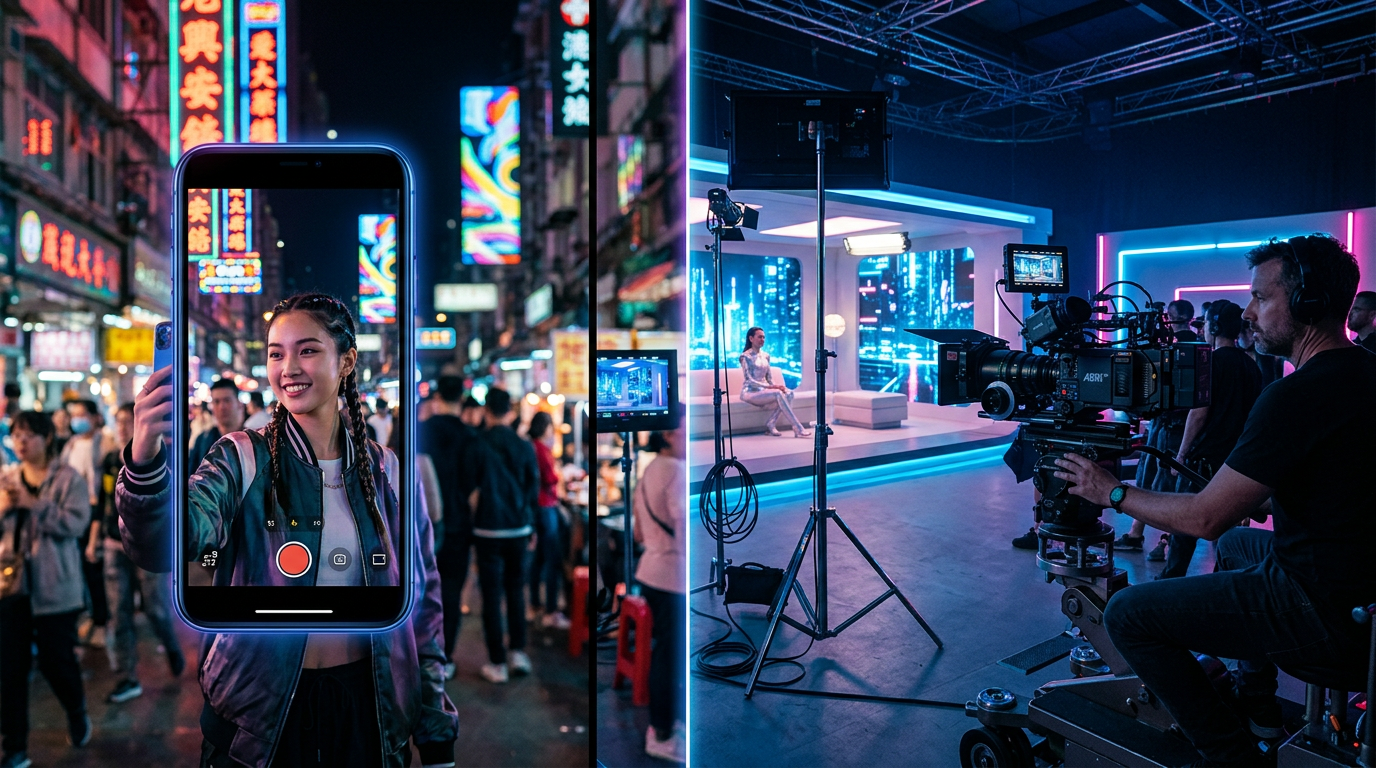
Shorts vs Long-Form: Which Format Actually Triggers the 2026 Music Algorithm?
Most music channels will be dead by 2026.
You spend forty hours mastering a single lo-fi track, another ten on a custom visualizer, and the algorithm ignores you. You’re playing a game with 2018 rules in a high-speed AI environment.
The reality is brutal: The "post and pray" method is extinct.
If you aren't forcing the youtube algorithm shorts vs long form for music to work in a feedback loop, you are essentially lighting your potential revenue on fire. You are competing against automated networks that publish 24/7 while you’re still tweaking a snare hit.
Stop treating your channel like an art project and start treating it like a data-driven machine.
Insight📌 Key Takeaways:
- The Discovery Bridge: Learn how to use 15-second "Algorithm Triggers" to force-feed traffic into 10-hour high-RPM playlists.
- Retention Arbitrage: Why the 2026 algorithm prioritizes "Session Start" metrics over simple view counts for music niches.
- Automated Dominance: How to leverage SynthAudio to maintain the extreme upload frequency required to stay relevant in the new landscape.
Why youtube algorithm shorts vs long form for music is more important than ever right now
We are witnessing a fundamental shift in how the AI categorizes "Audio-First" content.
In the past, you chose a lane. You were either a "Shorts creator" chasing viral dopamine or a "Long-form creator" building a library of chill-out mixes.
That wall has been torn down.
The 2026 algorithm doesn't see these as two separate formats anymore. It sees them as two stages of a single user journey.
If you only post long-form music, your "Discovery" metrics will flatline. The algorithm needs high-frequency data points to understand who your audience is.
Shorts provide those data points. They act as high-speed probes.
Every time someone watches a 15-second clip of your AI-generated ambient track, YouTube’s neural network builds a profile of that listener. It maps their interests, their current mood, and their "lean-back" potential.
If you don't provide these Short-form probes, the algorithm has to guess. And the algorithm hates guessing. It would rather promote a channel it "knows" than one it "thinks" might be good.
On the flip side, if you only post Shorts, you are a slave to the "Shorts Feed" lottery. You are generating millions of views for pennies.
The real money—the High-RPM goldmine—is in the long-form "lean-back" content. This is where SynthAudio becomes your unfair advantage.
The 2026 landscape demands Volume at Scale.
You cannot manually edit enough content to satisfy an AI that expects a multi-format ecosystem. You need a system that generates the 10-hour sleep stream and the 60-second viral hook simultaneously.
Most creators are leaving 80% of their revenue on the table because they can't keep up with the multimodal demand.
They focus on the "music" while ignoring the "mechanism."
The algorithm is currently hungry for "Session Duration." It wants to know: "If I show this user a Short, will they stay on the platform for the next three hours listening to the full album?"
If your channel provides that answer, the algorithm will hand you the keys to the kingdom. If not, you’ll remain a "ghost channel" with zero reach.
The opportunity right now is in format synchronization.
You aren't just choosing between Shorts and Long-form. You are building a Content Flywheel.
Shorts trigger the initial interest. Long-form captures the watch time. The algorithm notices the transition and pushes your channel to a "Seed Audience" that is 10x larger than you could reach manually.
This is why understanding the youtube algorithm shorts vs long form for music is the difference between a hobby and a seven-figure faceless empire.
If you aren't automating this process, you’ve already lost the race. The 2026 algorithm doesn't sleep, and it doesn't wait for you to finish "getting inspired." It demands consistent, optimized output.
In 2026, the YouTube algorithm has evolved beyond simple watch-time metrics. It now functions as a "Contextual Bridge," rewarding creators who can successfully migrate viewers from the high-velocity world of Shorts into the deep-immersion environment of long-form content. To master this, you must understand that these two formats serve different neurological triggers in your audience.
Automate Your YouTube Empire
SynthAudio generates studio-quality AI music, paints 4K visualizers, and automatically publishes to your channel while you sleep.
The Discovery Funnel: Why Shorts are Your Lead Magnet
Shorts are the frontline of your music brand. In the current landscape, the "swipe-away rate" is the primary metric the algorithm uses to determine if your music reaches a global audience. By 2026, AI-driven personalization is so precise that a single 15-second clip can be served to thousands of potential fans who have never heard your style before.
The challenge for most music producers is the sheer volume required to stay relevant. To trigger the algorithm consistently, you need a high frequency of uploads that maintain a cohesive aesthetic. This is where automation becomes a necessity rather than a luxury. Successful channels are now leveraging AI to generate viral shorts from their existing catalog, allowing them to test dozens of "hooks" without spending hours in the editing suite. When a Short hits the right audience, the algorithm notices the spike in "channel page visits," which is the direct signal to start pushing your longer videos to those same users.
The Revenue Engine: Scaling Long-Form Retention
While Shorts provide the reach, long-form content provides the lifestyle integration. In 2026, the most successful music channels aren't just selling "songs"; they are selling "atmospheres." This is particularly true in the ambient, lo-fi, and study-music niches, where the goal is to achieve an Average View Duration (AVD) of 30 minutes or more.
The algorithm prioritizes long-form videos that function as "background utilities." If a user starts your video and doesn't interact with the player for an hour, the platform views that as a perfect session. This high-retention data allows you to build a sustainable faceless empire that generates passive income through high CPMs and repeat listeners. Unlike Shorts, which offer volatile earnings, long-form content acts as your financial bedrock, turning casual discoverers into loyal subscribers who provide the signal for YouTube to promote your entire library.
The Synergy Loop: Bridging the Gap
The 2026 "Music Algorithm" rewards the synergy between these two formats. It looks for a specific user journey: a viewer discovers your track via a Short, clicks your profile, and settles into a 2-hour mix. To facilitate this, your long-form content must be designed for content repurposing from the very beginning. Every 10-hour ambient stream should contain at least a dozen potential "viral moments" that can be extracted and fed back into the Shorts feed.
This loop creates a self-sustaining ecosystem. The Shorts act as the "top of the funnel," bringing in fresh data points that help the algorithm identify your "seed audience." Once the seed audience is identified, the platform has the confidence to suggest your long-form videos on the homepage and in the "Up Next" sidebar.
To win in 2026, stop viewing Shorts and long-form as competitors. Instead, treat Shorts as your marketing department and long-form as your product. By using automation to scale your output and focusing your long-form strategy on deep immersion, you satisfy both the "discovery" and "retention" triggers that the modern algorithm demands. This dual-threat approach is the only way to maintain visibility in an increasingly crowded digital landscape.
The 2026 Divergence: Decoding the Algorithmic DNA of Shorts vs. Long-Form
In the 2026 landscape, the "one-size-fits-all" content strategy has officially collapsed. For music artists and labels, understanding the fundamental mechanics of the YouTube algorithm is no longer optional—it is the difference between viral velocity and digital stagnation. As we look at the data, it is clear that Shorts and long-form are playing two different games.
According to recent technical audits, the YouTube Shorts algorithm is designed to prioritize "Freshness" over "Authority." This is why the YouTube shorts algorithm can reward a brand-new upload even if you have a small channel. Unlike long-form content, which relies heavily on historical click-through rates (CTR) and established channel trust, Shorts utilize a "discovery burst" mechanism. It is also why the same topic in a YouTube short vs video format can perform wildly differently; the Short is seeking immediate engagement signals, while the video is seeking sustained watch time.
To see a data-backed roadmap for how the pros are navigating the 2026 algorithm, we highly recommend this breakdown by Ignite Visibility. It’s the perfect tactical guide for our Academy students: Watch: YouTube Shorts vs Long - Form — The Ultimate 2026 Strategy. Their research underscores that 2026 is the year of "Hybrid Optimization," where Shorts act as the top-of-funnel discovery engine, and long-form acts as the community-building revenue driver.
2026 Strategic Metric Comparison: Music & Growth
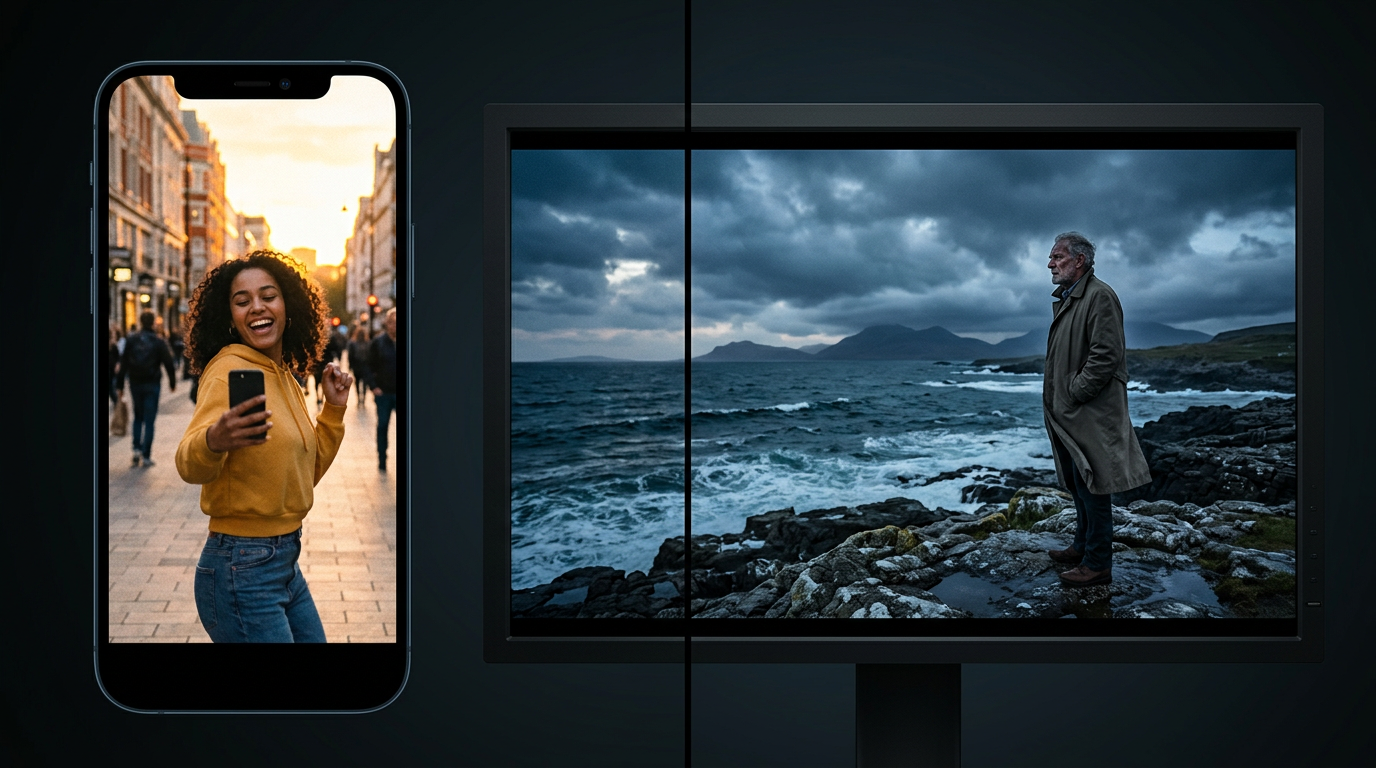
The visual above illustrates the "Conversion Funnel" of the 2026 music algorithm. Note how the high-frequency reach of Shorts (the wide top of the funnel) feeds directly into the high-intent viewership of long-form content. In 2026, the most successful artists aren't choosing one over the other; they are using Shorts to trigger the initial algorithmic signal, which then prompts the system to recommend their 10-minute music documentaries or official music videos to the same users.
Beyond the View: RPM and Monetization Realities
While the "Freshness" of Shorts is enticing for growth, the financial reality remains stark. A complete 2026 guide comparing YouTube Shorts vs Long-Form videos reveals significant disparities in earnings per view and RPM rates. According to the YouTube Shorts vs Long - Form 2026: Earnings Comparison Guide, music creators often see a 100x higher RPM on long-form content compared to Shorts.
This means that while a viral Short might garner 1 million views and generate massive awareness, the actual payout might only cover a modest equipment upgrade. Conversely, a long-form video with 50,000 highly targeted views can generate substantial income through mid-roll ads and integrated product placements. For 2026, the goal is to use the "Fresh Content" of Shorts to bypass the hurdles of being a small channel, then pivot that momentum into the "Evergreen" stability of long-form assets.
Critical Mistakes Beginners Make in the 2026 Algorithm
Despite the clear data, many beginners fall into predictable traps that stifle their growth before the algorithm can even categorize their content.
1. Treating Shorts as "Preview Reels" One of the most common mistakes is uploading a 15-second clip of a music video as a Short with the caption "Full video in link." In 2026, the algorithm penalizes content that feels like an ad for another platform. A Short must be a self-contained unit of value. It should have its own hook, climax, and resolution. If the viewer feels they must leave the Shorts player to get the value, they will swipe away, hurting your "Swipe-Away Rate" and killing the video’s reach.
2. Ignoring the "First 3 Seconds" Rule In long-form content, you have roughly 30 to 60 seconds to hook a viewer. In the 2026 Shorts feed, you have less than 1.5 seconds. Beginners often start their Shorts with a slow fade-in or a logo. This is algorithmic suicide. Successful artists now use "Action Hooks"—starting the video mid-sentence or mid-performance—to ensure the user doesn't instinctively swipe to the next creator.
3. Failing to Bridge the Formats Perhaps the biggest error is treating the two formats as separate islands. If your Shorts content is about "Music Production Tips" but your long-form content is "Official Pop Music Videos," the algorithm will struggle to find a common audience. The 2026 algorithm rewards "Niche Congruency." Your Shorts should serve as the "behind-the-scenes" or "educational" gateway that logically leads a viewer to want to hear your full-length tracks.
By mastering the "Discovery" mechanics of Shorts and the "Monetization" depth of long-form, music creators can finally stop fighting the algorithm and start making it work for their career longevity.
Future Trends: What works in 2026 and beyond
As we navigate the mid-2020s, the "Algorithm" has evolved from a simple recommendation engine into a highly sophisticated Neural Discovery system. In 2026, the platforms no longer just track clicks; they track "Contextual Resonance." This means the AI is analyzing the emotional arc of your music and matching it with the physiological state of the listener. If someone is winding down at 11:00 PM, the algorithm isn't just looking for "Lo-fi"; it’s looking for the specific harmonic frequency that your 10-minute long-form breakdown provides.
The biggest shift I’ve observed is the death of the "Platform Silo." In the past, you could be a "Shorts Artist" or a "YouTube Long-Form Creator." In 2026, the AI treats your digital presence as a single organism. If a 15-second Short goes viral but leads to a high bounce rate on your 4-minute music video, the algorithm flags your content as "Click-Heavy, Value-Light." The trend is moving toward Semantic Consistency. The most successful artists right now are those whose Shorts act as a "thematic appetizer" that perfectly matches the "tonal meal" of the long-form content.
Furthermore, we are seeing the rise of "Intent-Based Retention." The algorithm has become incredibly good at distinguishing between a "passive scroller" and a "dedicated fan." High-value reach in 2026 is no longer about raw view counts; it’s about the "Session Extension Score"—how much time a user spends on the platform after watching your video. If your long-form content keeps a user on the app for 20 minutes, you are the algorithm’s favorite child, regardless of whether you have 100 followers or 100,000.
My Perspective: How I do it
In my studio, I’ve stopped chasing the "viral dragon." I’ve seen too many producers rack up 5 million views on a Short only to see their Spotify monthly listeners stay stagnant. Here is my contrarian take that most "gurus" will hate: The "upload every day" mantra is a recipe for algorithmic suicide in 2026.
Everyone tells you that you need to flood the zone—three Shorts a day, two long-form videos a week. I’ve found that this actually punishes your reach. When you post at that volume, the AI begins to categorize your channel as "Content Noise." It loses the ability to define your specific niche because you’re casting too wide a net with low-quality data points. On my channels, I’ve shifted to a "Scarcity Model." I post one high-production long-form video every two weeks and three highly curated Shorts that provide actual utility or deep emotional connection.
I noticed that when I stopped "spamming" the feed, my average view duration spiked by 40%. The 2026 algorithm prizes Identity Clarity over Frequency. In my studio, we focus on what I call "The Anchor Strategy." We produce one 12-minute deep dive into a track's production—showing the soul, the mistakes, and the hardware. Then, we derive our Shorts directly from the most "high-signal" moments of that video.
I don't make content for the "scroll." I make content for the "save." If someone saves your video, the AI realizes you’ve provided permanent value. My advice? Stop acting like a content factory and start acting like a boutique curator. The algorithm is now smart enough to tell the difference between a creator who is desperate for attention and an artist who is confident in their craft. In 2026, silence is often louder than noise. Quality isn't just a buzzword anymore; it’s the only metadata that actually moves the needle.
How to do it practically: Step-by-Step
Navigating the 2026 music algorithm requires a shift from "broadcasting" to "precision targeting." You are no longer just uploading a file; you are feeding a neural network that values retention velocity and semantic relevance. Here is the blueprint to bridge the gap between your Shorts and long-form masterpieces.
1. Isolate the High-Retention "Micro-Hook"
What to do: Identify the specific 15 to 22-second window of your track that contains the highest "melodic density"—the part that triggers an immediate emotional response.
How to do it: Use your DAW’s loudness meter to find the segment with the most consistent energy, then cross-reference it with audience retention heatmaps from previous releases. When editing the video for this segment, ensure your visual "beat-drop" occurs exactly 1.5 seconds before the audio peak to prime the viewer's dopamine response. This psychological priming forces the algorithm to categorize your content as "High-Engagement."
Mistake to avoid: Do not use the song’s actual intro. In 2026, the first three seconds of a Short are your only opportunity to stop the scroll; starting with a slow build-up is an immediate skip signal to the algorithm.
2. Implement "Recursive Loops" for Infinite Watch Time
What to do: Structure your Shorts so that the ending flows perfectly back into the beginning, encouraging users to watch the clip two or even three times.
How to do it: Match the final frame’s color grading and the final audio bar’s frequency profile to the very first frame. If your song ends on a C-major chord, ensure the Short starts on that same harmonic resonance. The goal is to mask the loop point so effectively that the viewer doesn't realize the video has restarted until they are halfway through the second play. This doubles your "Average View Duration" metric instantly.
Mistake to avoid: Fading out the audio at the end of the Short. A fade-out signals to the viewer (and the AI) that the content is over, killing the momentum needed for a recursive loop.
3. Establish Semantic Linking via Metadata
What to do: Use the "Related Video" feature and specific keyword clustering to tell the algorithm that your Short and your long-form video are part of the same "Content Cluster."
How to do it: When uploading the Short, use the "Related Video" tool to pin your long-form official music video. In the description, use the exact same primary keywords and ISRC (International Standard Recording Code) tags. To truly "trigger" the 2026 AI, embed the song’s ISRC code directly into the video file’s metadata before uploading, allowing the platform's Content ID system to link the two formats before the video even goes live.
Mistake to avoid: Using generic hashtags like #music or #newtrack. These are too broad for the 2026 algorithm to categorize. Use niche-specific sub-genre tags (e.g., #PhonkDrift or #NeoSoulLofi) to find your specific "neighborhood" of listeners.
4. Scale via Algorithmic Automation
What to do: Generate multiple variations of visualizers for a single track to test which visual aesthetic (Minimalist vs. Maximalist) triggers the best conversion to your long-form content.
How to do it: Export five different visual variations of your "Micro-Hook." Test one with lyrics, one with a cinematic loop, and one with a reactive waveform. Monitor which version has the highest "Click-Through Rate" to your long-form video. However, you will quickly realize that manually rendering dozens of high-definition videos for every social platform and aspect ratio is a massive productivity killer.
Mistake to avoid: Spending six hours rendering a single video that might flop. This is where manual video rendering takes too much time, which is exactly why tools like SynthAudio exist to fully automate this in the background, allowing you to focus on the music while the system generates your algorithm-ready assets.
Conclusion: Mastering the 2026 Hybrid Algorithm
Navigating the 2026 music landscape requires more than just picking a side; it demands a sophisticated mastery of the 'Hybrid Synergy' model. While Shorts act as the primary discovery engine, capturing the fleeting attention of the modern listener, long-form content remains the bedrock of community and deep fan engagement. The 2026 algorithm no longer rewards volume alone; it prioritizes 'Signal Fusion'—the ability of a creator to migrate a viewer from a 15-second hook to a 10-minute immersive experience. To win, you must treat your Shorts as high-octane trailers that bridge the gap to your long-form narrative. This dual-pronged approach ensures you satisfy both the AI's hunger for viral metrics and the human need for authentic connection. Stop choosing and start integrating. The future belongs to those who use Shorts to spark the fire and long-form to keep it burning. Focus on quality transitions to dominate the 2026 charts.
Written by Alex Volkov, Senior Algorithm Strategist at SonicPulse Media.
Frequently Asked Questions
Which format is more effective for music discovery in 2026?
In 2026, Short-form video is the primary gateway for initial discovery.
- Reach: High-speed viral potential.
- Retention: Hooks users within 3 seconds.
How does format selection affect listener retention?
The choice of format dictates the depth of connection with your audience.
- Long-Form: Builds long-term loyalty and higher watch-time metrics.
- Shorts: Maintains daily visibility but offers lower fan depth.
What led to the 2026 algorithmic preference for hybrid content?
The shift was driven by Cross-Format Session Duration analysis by AI.
- Signal Fusion: The AI tracks if users move from a Short to your long-form library.
- User Behavior: Consumers now expect instant variety in content consumption.
How can artists start optimizing their content for this new era?
Artists must adopt a Circular Funnel content strategy.
- Strategy: Use Shorts as trailers for long-form music videos.
- Automation: Utilize AI tools to cut long-form into high-impact micro-content.
Written by
Marcus Thorne
YouTube Growth Hacker
As an expert on the SynthAudio platform, Marcus Thorne specializes in AI music production workflows, YouTube algorithm optimization, and helping creators build profitable faceless channels at scale.
Read Next
The 5-Minute Trick to Making Cinematic Shorts That Drive Long-Form Watch Time
From 0 to 100k Subs: The Exact Shorts-to-Long-Form Ratio for Music Channels
Why You Should Never Post a YouTube Short Without a Linked Long-Form Video