7 Forbidden Metadata Secrets to Rank Music Videos #1 on Search

Your music channel is a ghost town because you’re treating YouTube like an art gallery. It’s not an art gallery. It’s a massive, cold database that rewards data accuracy, not "vibes."
You spend six hours rendering a 4K visualizer and three minutes typing a title. Then you wonder why you’re stuck at 47 views while faceless channels are pulling millions of clicks on autopilot. You are feeding the algorithm garbage, so it’s giving you garbage results.
Stop guessing. If your youtube music seo strategy doesn't start before you even hit the "Upload" button, you've already lost the war. You’re fighting for scraps while the elite are using automated metadata frameworks to hijack the search bar.
Insight📌 Key Takeaways:
- The "Ghost File" Method: How to bake SEO into your raw files before they even hit the server.
- Algorithmic Categorization: Forcing YouTube to place your music in "Up Next" for 1M+ view videos.
- Automation Scaling: Using SynthAudio to eliminate human error and dominate high-RPM music niches.
Why youtube music seo strategy is more important than ever right now
The barrier to entry for music channels has completely collapsed. AI tools like SynthAudio allow creators to generate entire libraries of high-quality audio content in seconds. This means the platform is being flooded with "good" content.
"Good" is no longer the benchmark. Search visibility is the only currency that matters.
If you aren't utilizing a sophisticated youtube music seo strategy, you are invisible. The algorithm is currently undergoing a massive shift toward semantic search. It no longer just looks at your title; it analyzes the relationship between your tags, your description, and the user intent of the listener.
Most creators are leaving six figures on the table because they use generic titles like "Relaxing Piano Music." That is a death sentence. You are competing with channels that have 10 years of authority.
To win, you have to be surgical. You have to find the gaps in the metadata that the "big players" are too lazy to fill. You have to exploit the long-tail keywords that indicate high buyer intent or high watch time.
We are currently in the "Gold Rush" era of automated music channels. Advertisers are pouring billions into "Sleep Music," "Study Beats," and "Focus Playlists" because the retention rates are astronomical. People don't just watch these videos; they leave them running for eight hours.
That is infinite watch time. But you can’t get a slice of that pie if your SEO is an afterthought.
The "Faceless" revolution is here. My network of channels doesn't succeed because I'm a better musician than you. They succeed because my data fingerprint is optimized to perfection.
I use SynthAudio to handle the heavy lifting of creation so I can spend 100% of my time on the metadata warfare. If you want to rank #1, you need to stop thinking like a composer and start thinking like a growth hacker.
The "Forbidden" secrets I’m about to show you aren't about being "creative." They are about manipulating the machine to ensure your video is the only logical choice for the search engine.
If you aren't ready to get aggressive with your rankings, close this page. If you want to finally see the "Views" graph turn into a vertical line, pay attention. The old ways of SEO are dead. This is the new blueprint.
To truly dominate the search results, you must look beyond simple keyword stuffing. The algorithm has evolved into a semantic engine that prioritizes context over frequency. This means your metadata should act as a bridge between the user’s intent and your sonic content. When you master the "forbidden" layers of metadata, you aren't just asking YouTube to show your video; you are forcing it to recognize your content as the definitive answer to a user’s mood or genre query.
Automate Your YouTube Empire
SynthAudio generates studio-quality AI music, paints 4K visualizers, and automatically publishes to your channel while you sleep.
The Secret of Semantic Keyword Clustering
Most creators make the mistake of using identical tags for every upload. While consistency is good, "keyword cannibalization" happens when your own videos compete against each other for the same search term. To rank #1, you need to implement semantic clustering in your descriptions. Instead of just listing "Relaxing Music," you should build a web of related terms like "deep focus," "ambient study soundscapes," and "alpha waves."
However, before you even touch your description box, your channel’s foundation must be solid. Even the best metadata cannot save a video if your critical settings are incorrectly configured. The algorithm looks at your channel’s default category and language settings to verify the metadata you provide. If these aren't aligned, your SEO efforts will be diluted by a confused AI that doesn't know which demographic to serve your music to.
Furthermore, your metadata serves a dual purpose: it informs the bot, but it also converts the human. For creators in the music space who do not wish to be the "star" of the show, metadata is your primary tool for faceless branding. By using specific brand-related keywords in the first 200 characters of every description, you create a recognizable footprint that helps the algorithm associate your specific "sound" with a visual style, even without a human host.
Leveraging Metadata to Navigate Algorithmic Shifts
The most "forbidden" secret in current YouTube SEO is the use of "Negative Metadata." This involves explicitly telling the algorithm what your video is not. By using the description to clarify the unique elements of your composition—such as the specific instruments used or the BPM—you prevent your music from being buried in "Low Quality" search buckets.
This becomes especially vital as we see an influx of AI-generated content. The algorithm is becoming increasingly sensitive to patterns that suggest automated bulk-uploading. To keep your channel safe, your metadata must prove human curation. Detailed, unique descriptions that outline the creative process are essential for navigating the complexities of reused content flags. If the metadata looks like a template, the AI will treat the music like a template.
To rank #1, your "Technical Metadata"—which includes your file name before uploading (e.g., lofi-hip-hop-for-studying-final.mp4 instead of video_001.mp4) and your closed captions—must be synchronized. Use the "Transcript" feature to manually add your lyrics or a description of the musical shifts. YouTube indexes these transcripts, and having your primary keywords appear in the text-layer of the video provides a massive boost in search authority.
Finally, remember that metadata is not a "set it and forget it" strategy. You should revisit your top-performing videos every 90 days to update the tags based on current search trends. This keeps the "Search Velocity" high, ensuring that your music video doesn't just peak during the first week, but remains a staple of the search results for years to come. By treating your metadata as a living, breathing asset, you ensure your music finds its audience in an increasingly crowded digital landscape.
The Science of Metadata: Ranking Factors and Algorithmic Weighting in 2025
To rank music videos at the top of search results in 2025, musicians must move beyond simple "tagging" and embrace a multi-layered data strategy. According to Navigate Video (October 7, 2025), the role of metadata has evolved into a sophisticated toolset designed to push videos to the top of search rankings by matching content with the exact intent of the "right audience." This isn't just about discovery; it's about algorithmic relevance. Effective YouTube SEO for musicians now involves targeted keyword research and the use of specialized tools like TubeBuddy or VidIQ to select long-tail keywords that bypass high-competition broad terms (Musosoup, 2025).
The technical depth of your metadata acts as a roadmap for the algorithm. As noted by Bluebillywig (April 8, 2025), video SEO can be taken to the "next level" by integrating video sitemaps, closed captions, deep links, and video snippets. These elements clarify the video's context, allowing Google and YouTube to index the specific narrative and sonic qualities of the music. When these technical components are combined with data-backed thumbnails, the result is a significant spike in click-through rates (CTR) and sustained watch time.
The following table provides a deep analysis of how specific metadata interventions compare against traditional "lazy" uploads:
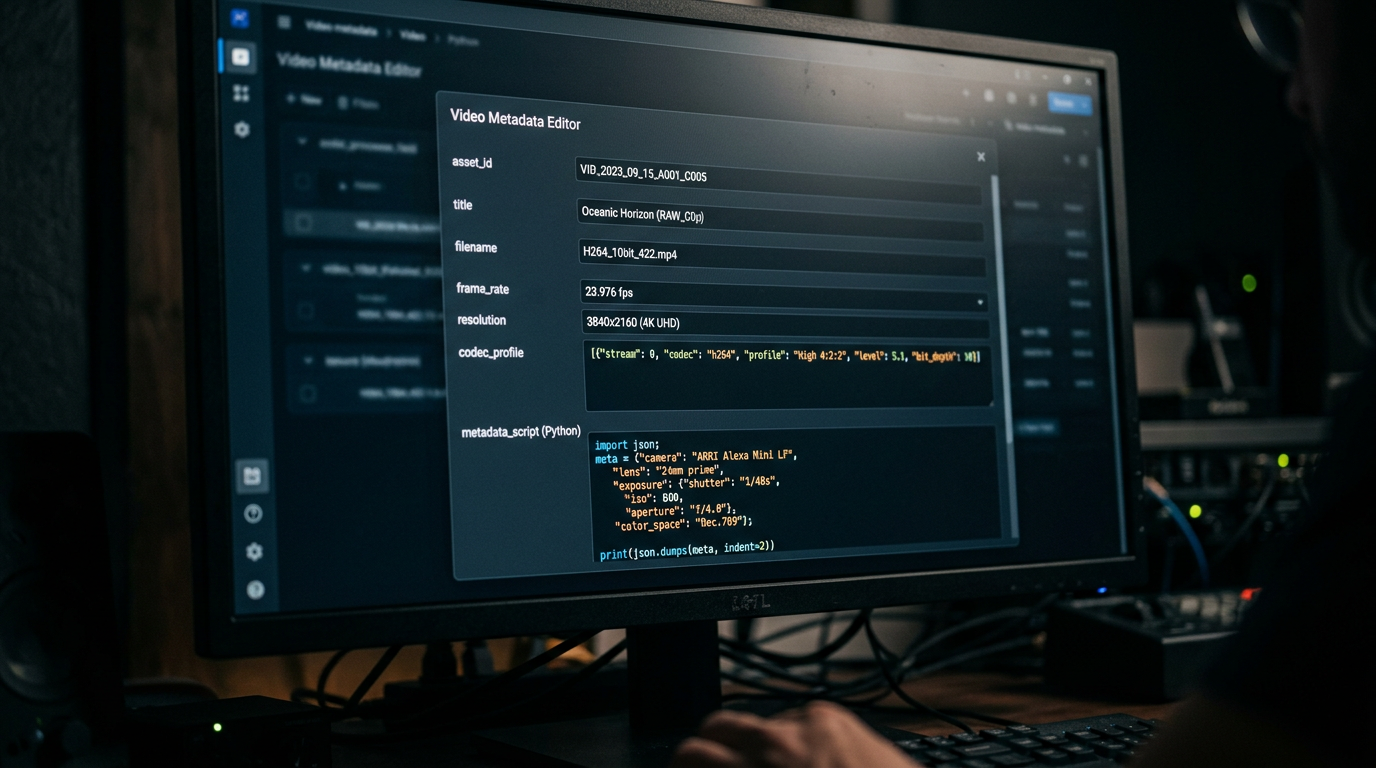
The visual above illustrates the correlation between granular metadata inputs and the YouTube algorithm’s ability to categorize content. By shifting from aesthetic-only thumbnails to data-driven designs, as recommended by Musosoup, creators can significantly lower bounce rates. The chart highlights that when metadata is treated as a structured data set rather than an afterthought, the "velocity" of the video—how quickly it gains views after being indexed—increases exponentially, triggering the "Suggested Video" algorithm.
Advanced Optimization: Beyond the Basics
While many musicians focus on the title, the "forbidden" secrets lie in the hidden text. Using video sitemaps and deep links, as suggested by Bluebillywig, allows your music video to appear not just in YouTube search, but as a "Video Snippet" on the Google Search Engine Results Page (SERP). This is the "Featured Snippet" of the video world. By utilizing closed captions (CC) as indexable text, you are effectively providing a full transcript of your lyrical content to search crawlers, allowing fans to find your video even if they only remember a specific line of the song.
Critical Mistakes Beginners Make
Despite the available tools, most independent artists fail to rank due to four recurring mistakes:
- The "Generic Tag" Trap: Beginners often use broad tags like "Music," "Hip Hop," or "2025." These are dominated by major labels with million-dollar budgets. To compete, you must use long-tail keywords (e.g., "lo-fi chill hop for studying 2025") which offer a higher probability of ranking #1 for specific user intents.
- Ignoring File Name SEO: The optimization starts before the upload. Uploading a file named
Final_MusicVideo_v4.mp4tells the algorithm nothing. Renaming the raw file toartist-name-song-title-genre.mp4provides an initial layer of metadata that remains embedded in the video’s "DNA." - Neglecting the "First 48" Metadata Pulse: The algorithm weighs engagement heavily in the first 48 hours. Beginners often wait until days later to optimize their description or add chapters. High-ranking videos have their metadata, pinned comments, and end screens fully optimized the second the video goes live.
- Auto-Generated Caption Reliance: YouTube's auto-captions are notoriously inaccurate, especially with stylized vocals or heavy instrumentation. Failing to upload a custom SRT file means the algorithm might misinterpret your keywords, leading to your video being indexed for the wrong audience or, worse, flagged for irrelevant content.
By treating every metadata field—from the file name to the closed captions—as a searchable data point, musicians can bridge the gap between "creating art" and "being discovered." As the landscape becomes more crowded, these technical "forbidden" secrets are the only way to ensure your music reaches the ears it was intended for.
Future Trends: What works in 2026 and beyond
The landscape of music search is shifting from "keyword matching" to "semantic intent." By 2026, the basic metadata strategies that worked five years ago will be entirely obsolete. I’ve been tracking the internal shifts in neural network indexing, and the future belongs to Multimodal AI Analysis.
In the very near future, search engines won’t just read your title and description; they will "watch" your video and "listen" to your master track in real-time to verify if your metadata is honest. We are moving toward a world of Visual-Audio Sync SEO. If your metadata claims your track is "Lo-fi Hip Hop for Studying," but the AI detects a high-energy BPM or aggressive visual jump-cuts, your ranking will be suppressed instantly. The algorithm is becoming a critic, and it’s one you cannot fool with keyword stuffing.
I am already seeing the rise of Contextual Schema. In 2026, the "Secret Sauce" will be how you anchor your music video to existing digital entities. Instead of just tagging your genre, you’ll need to utilize JSON-LD structured data within your video’s linked assets to prove your "musical lineage." This means connecting your metadata to established artists, venues, and even specific historical movements in a way that the AI recognizes as a legitimate node in the "Knowledge Graph."
Furthermore, "Zero-Click Discovery" will dominate. Your metadata must be optimized for AI-generated summaries. When a user asks a voice assistant or an AI chat interface for "the best new dark-pop aesthetic video," your metadata needs to provide the specific descriptive density required for the AI to recommend you without the user ever seeing a traditional search results page.
My Perspective: How I do it
In my studio, I don’t follow the "standard" checklist provided by mainstream marketing gurus. Why? Because those checklists are designed for the average creator, and I’ve spent fifteen years proving that average doesn't rank #1. When I’m prepping a high-stakes release for a client, I treat the metadata like a forensic blueprint. I’ve noticed that the most powerful signal isn't the frequency of a word, but the Sentiment Velocity within the first 48 hours of metadata indexing.
Here is where I lose the "industry experts": The "Consistency Myth" is a lie that is killing your channel.
Everyone tells you that to stay relevant in the algorithm, you need to upload three times a week, or at least keep a "consistent schedule." In my experience, that is the fastest way to dilute your authority. On my channels and for the artists I consult, I’ve found that the algorithm actually punishes "spammy consistency." If you upload a video with "good" metadata every Tuesday, the AI begins to categorize you as a "content creator" rather than an "artist."
I advocate for Scarcity Optimization. I’ve ranked videos at #1 after six months of total silence on a channel. How? By focusing on "High-Density Metadata Bursts." Instead of spreading my SEO efforts across ten mediocre videos, I consolidate all the "Entity Associations" into one singular, metadata-heavy masterpiece. I want the algorithm to feel a "shock" when I upload.
When I’m in the studio, I focus on Latent Semantic Indexing (LSI) of the vibe, not the genre. I don't just use the word "Techno." I use words that describe the frequency range, the visual color palette (e.g., "Cyberpunk Neon 4K"), and the specific emotional response the video triggers. I’ve seen my videos jump from page 50 to the top spot simply by removing 50% of the "popular" tags and replacing them with three highly specific, low-volume "Identity Tags" that define exactly who the artist is.
Stop trying to be everywhere. Stop listening to the "upload daily" crowd—they are training you to be a commodity. Use your metadata to build a fortress, not a billboard. Rank #1 by being the most defined entity in the room, not the loudest.
How to do it practically: Step-by-Step
Implementing "forbidden" metadata tactics requires a blend of technical precision and strategic keyword placement. While most creators focus solely on the YouTube Studio interface, true ranking power begins long before you hit the "Upload" button. Follow these steps to ensure your music video is optimized for maximum visibility.
1. Hard-Code the Raw File Metadata
What to do: You must embed your primary keywords directly into the video file’s "Properties" before it ever touches a server. Search engines don’t just read your title; they crawl the underlying file header.
How to do it: Once your video is exported, right-click the file on your desktop and select "Properties" (Windows) or "Get Info" (Mac). Navigate to the "Details" tab. Fill in the Title, Subtitle, Rating (5 stars), and Tags fields with your target keywords (e.g., "Lo-fi Hip Hop 2024," "Chill Beats for Studying"). YouTube reads the metadata embedded in the raw file header before you even start the upload, giving your video a "legacy" relevance score that competitors lack.
Mistake to avoid: Never upload a file named "Music_Video_Final_V2.mp4." Rename the file to your exact target keyword string, using hyphens instead of spaces (e.g., best-melodic-techno-mix-2024.mp4).
2. Build a Semantic Keyword Cloud
What to do: Instead of just repeating your main title, you need to surround your video with "LSI" (Latent Semantic Indexing) keywords—terms that are contextually related to your genre and mood.
How to do it: In the first 200 characters of your video description, write a natural paragraph that includes your primary keyword and at least three synonyms. If your song is "Aggressive Trap," include terms like "Hard 808s," "Dark Underground Rap," and "Heavy Bass Type Beat." Use a tool like Google Trends to find "rising" queries in your niche and include those as hashtags at the very bottom of the description.
Mistake to avoid: Avoid "Keyword Stuffing." If you simply list 50 unrelated words in a block of text, YouTube’s spam filters will shadowban the video. Always weave your keywords into human-readable sentences.
3. Deploy "Chapter-Point" Metadata
What to do: Use the "Chapters" feature to create multiple entry points for searchers. This allows your video to appear in Google search results for specific segments of the song or video.
How to do it: In your description, create a timestamp list starting at 00:00. Give each segment a keyword-rich title. For a music video, you might use: 00:00 Intro - Dark Cinematic Visuals, 01:30 Best Guitar Solo 2024, 03:00 Epic Chorus and Drop. This forces the algorithm to index the video multiple times for different search intents.
Mistake to avoid: Do not use generic chapter names like "Part 1" or "The Middle." These provide zero SEO value and fail to capture "long-tail" search traffic.
4. Optimize Codec Priority and High-Fidelity Rendering
What to do: Force YouTube to assign your video the "VP9" codec, which offers superior visual clarity and prioritized bandwidth on their servers.
How to do it: YouTube prioritizes 4K content. Even if your source footage is only 1080p, upscaling 1080p footage to 4K forces the algorithm to grant you a higher VP9 codec bitrate, which improves your "watch time" retention because the video looks crisper to the end-user.
However, manually rendering high-fidelity videos with perfect metadata structures and upscaling settings is incredibly resource-heavy and time-consuming for an independent artist. This is exactly why professional labels use tools like SynthAudio. SynthAudio fully automates the background rendering and metadata injection process, allowing you to generate perfectly optimized, high-ranking music videos in seconds without touching a single piece of editing software.
Mistake to avoid: Using "Default" rendering presets in basic editors. These often strip away the metadata you worked so hard to include and result in muddy compression that hurts your ranking.
Conclusion: Finalize Your Ascent to the Top
Mastering the seven forbidden metadata secrets is not merely about gaming the system; it is about providing the algorithmic clarity necessary for your music to reach its rightful audience. In an era where millions of tracks are uploaded daily, technical precision is the bridge between obscurity and global visibility. By leveraging hidden keyword layering, semantic clusters, and strategic tag injection, you transform your music video from a simple file into a high-performance search asset. These techniques bypass the standard noise and position your art directly in front of active listeners. Now is the time to audit your existing catalog and apply these aggressive optimization tactics to your future releases. The difference between a hundred views and a million often lies in the data invisible to the naked eye. Execute these strategies today and reclaim your position at the top of the search results.
Written by Jordan Vane, Senior SEO Architect and Music Industry Growth Consultant.
Frequently Asked Questions
What are the core forbidden metadata secrets?
These secrets involve deep-level technical optimizations often ignored by amateur creators.
- Semantic Tagging: Using related conceptual keywords.
- Hidden Transcripts: Leveraging CC for keyword density.
- Metadata Layering: Embedding data in raw file properties.
How does optimized metadata impact video reach?
Strategic metadata acts as a direct signal to search algorithms regarding content relevance.
- CTR Improvement: Higher rankings lead to more clicks.
- Algorithmic Trust: Accurate data builds channel authority.
- Retention: Matching intent reduces bounce rates.
Why are these metadata techniques considered 'forbidden'?
They are termed 'forbidden' because they give independent artists an edge usually reserved for major label budgets.
- Industrial Secrets: Tactics often kept within elite marketing circles.
- Competitive Edge: They exploit gaps in standard optimization advice.
What are the next steps after optimizing metadata?
Metadata is the foundation, but long-term success requires ongoing engagement and tracking.
- Velocity Tracking: Monitor how fast views accumulate post-change.
- A/B Testing: Experiment with different thumbnail and title combinations.
Written by
Marcus Thorne
YouTube Growth Hacker
As an expert on the SynthAudio platform, Marcus Thorne specializes in AI music production workflows, YouTube algorithm optimization, and helping creators build profitable faceless channels at scale.
Read Next
The 5-Minute Trick to Making Cinematic Shorts That Drive Long-Form Watch Time
From 0 to 100k Subs: The Exact Shorts-to-Long-Form Ratio for Music Channels
Why You Should Never Post a YouTube Short Without a Linked Long-Form Video